Mount Fuji before the day begins
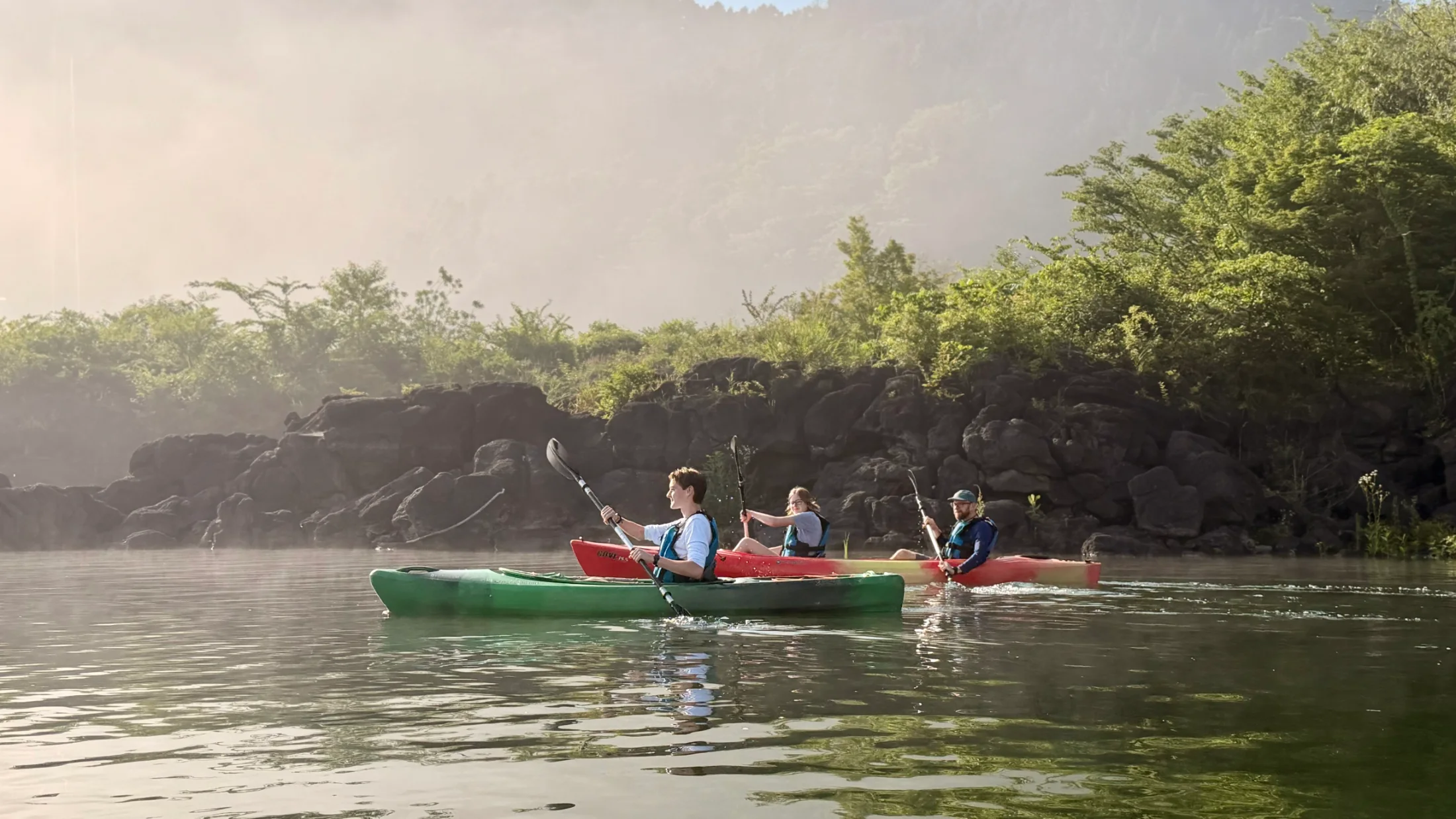
Shortly before 7am, Lake Kawaguchiko feels different from the place most visitors encounter later in the day. The shoreline is quiet, the light is still soft, and the water has often not yet picked up the movement of the morning.
The experience begins at NaturaBase with check-in, a drink, a safety briefing and a short introduction to paddling. Coffee, black tea, green tea and cocoa are currently offered alongside bottled water. Once everyone is comfortable with the equipment, the group moves onto the lake for a guided paddle lasting approximately 90 minutes in total.
For wider regional context, see What “Fuji Five Lakes” Actually Means and JNTO’s Fuji Five Lakes itinerary.
FTC BOOKING PORTALCheck availability hereMorning Kayak Lake Kawaguchiko · Approximately 1 hr 30 min · Guided in English
Why the lake feels different in the morning
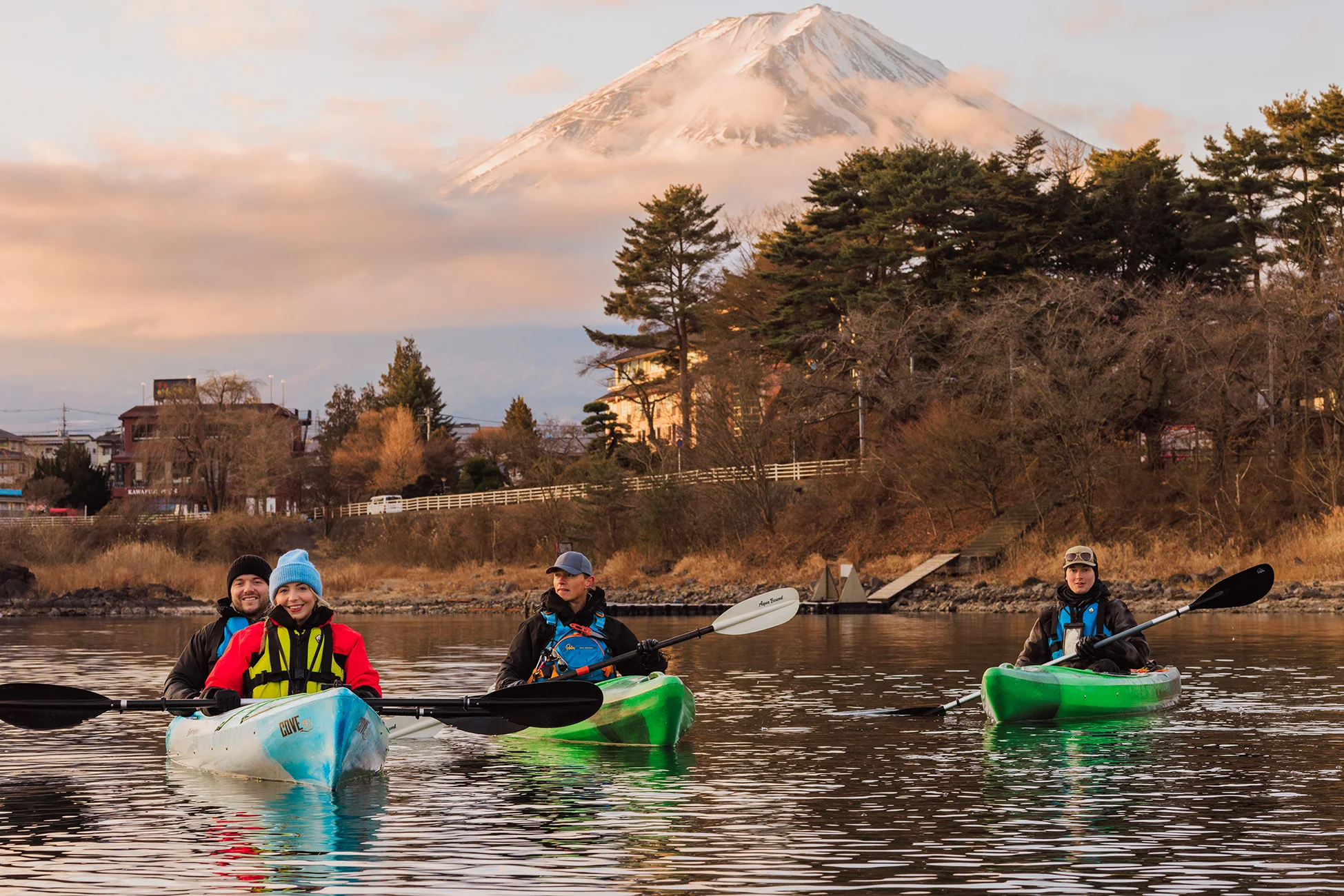
Mount Fuji is visible from many places around Kawaguchiko. From a kayak, however, the relationship with the mountain changes. There is no observation deck, no window and no roadside foreground. There is only the surface of the lake, the surrounding hills and the scale of Fuji beyond them.
NaturaBase schedules its morning tours during the period when the water is generally at its most stable. On calm days, the lake can become almost reflective, with very little sound beyond the movement of the paddle. The route is not fixed at all costs: the guide can adjust it according to wind and water conditions to find the most comfortable part of the lake.
You do not need to cover a great distance for the morning to feel worthwhile. Sometimes the most memorable moment comes when everyone stops paddling and allows the kayak to drift.
A guided experience
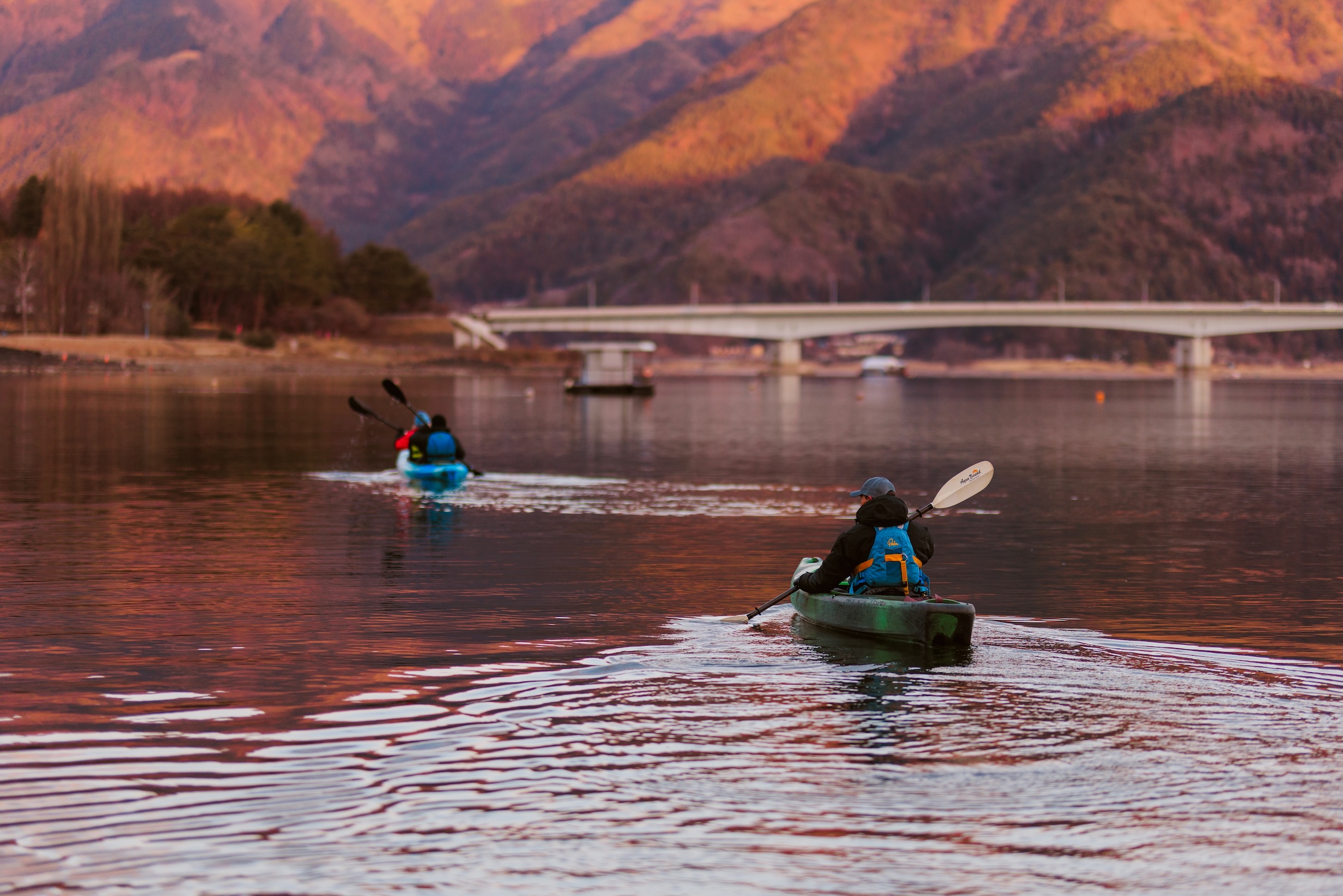
This is not a self-guided equipment rental. Before leaving shore, the guide explains the basic paddle strokes, how to sit comfortably and what to do if conditions change. Beginners are given time to practise before the group moves farther onto the lake.
During the tour, the guide also introduces the landscape beyond the familiar postcard view of Mount Fuji. Depending on the conversation and the conditions that morning, this may include the history of Kawaguchiko, the surrounding mountains, the local environment or everyday life around the lake. The guide also takes photographs during the experience, allowing guests to paddle without spending the entire tour holding a phone. The activity is currently offered as a small-group experience, with listings indicating a maximum of ten participants.
Recent travellers repeatedly mention the same elements: knowledgeable and welcoming guides, a relaxed pace, photographs taken from the water and the feeling of having an unusually quiet part of the lake around them. Several describe the early start as one of the highlights of their time in the Mount Fuji area.
We had an amazing time! The guide was friendly and kind. He even provided hot coffee and took great pictures for us out on the water. The views of Fuji and the surrounding area were spectacular. Most importantly, my kids had fun with an experience they’ll never forget!
Benjamin S
WHAT TRAVELLERS REMEMBER
The quiet water.
The guide’s local knowledge.
Photographs taken from another kayak.
The sense that Mount Fuji is part of the landscape, rather than simply a viewpoint to collect.
Your first time in a kayak? That is normal
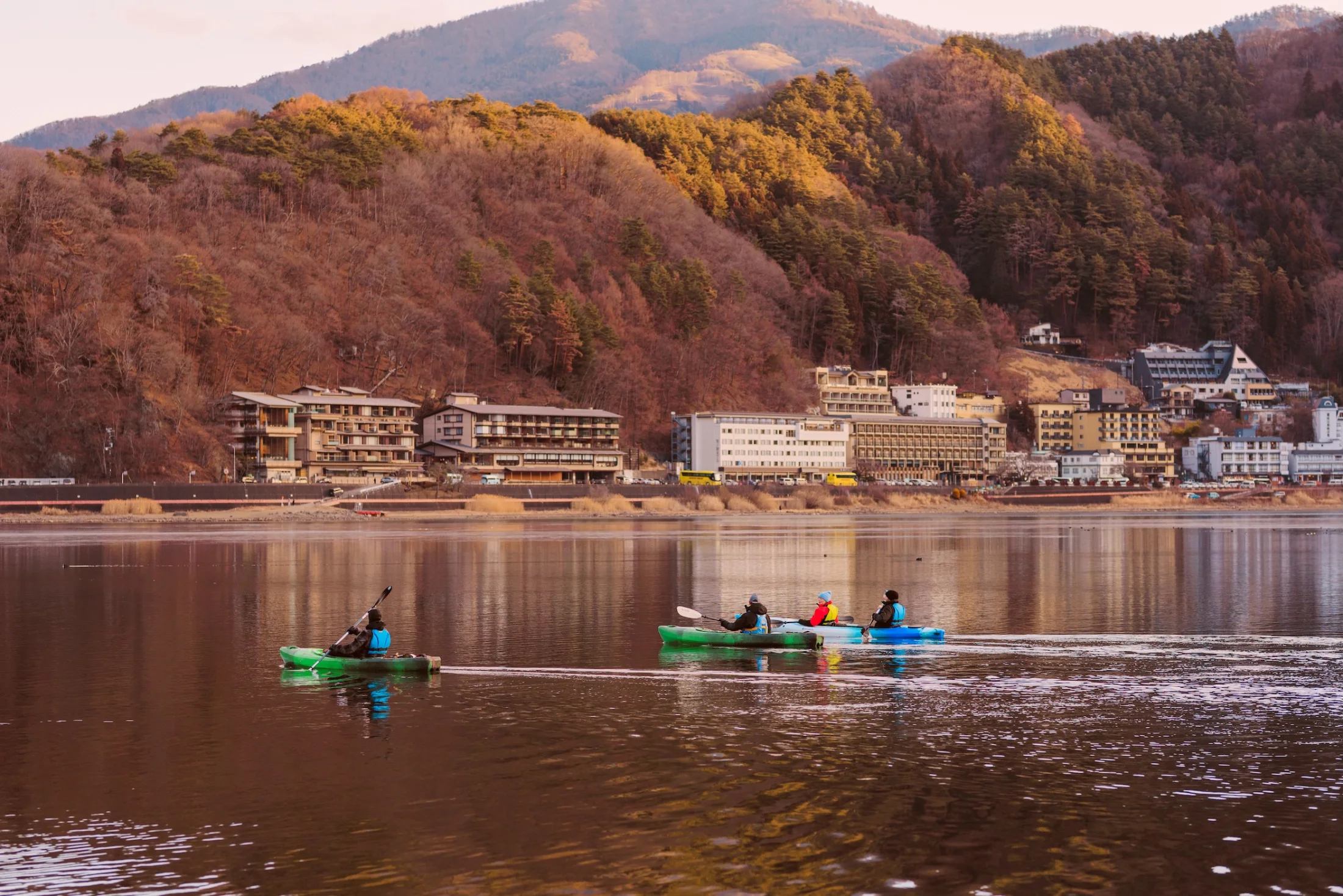
Many participants arrive without previous kayaking experience. The introductory briefing, practice period and guided route are designed to make the activity approachable for first-time paddlers. Kayaks, paddles and personal flotation devices are provided, and the route can be adapted to the conditions and the needs of the group.
The aim is not speed or athletic performance. You should still be comfortable spending time outdoors and sitting in a kayak, and you should read the current age, weight, pregnancy and medical restrictions before booking. Those requirements should be displayed in the live activity information rather than reproduced permanently in this article, as they may change.
What if Mount Fuji is hidden by clouds?
No one can guarantee a clear view of Mount Fuji. Clouds can arrive quickly, even on mornings that begin with a promising forecast.
That does not necessarily make the experience unsuccessful. One recent traveller encountered a completely hidden Fuji and still described the morning as one of the most peaceful experiences of the trip. Other guests describe the mountain as an additional reward rather than the only reason to go: the calm lake, surrounding scenery and time spent with the guide remain part of the experience regardless of visibility.
This is an important part of approaching the region honestly. Mount Fuji is not a stage set. The mountain, the clouds, the wind and the water determine what each morning will look like.
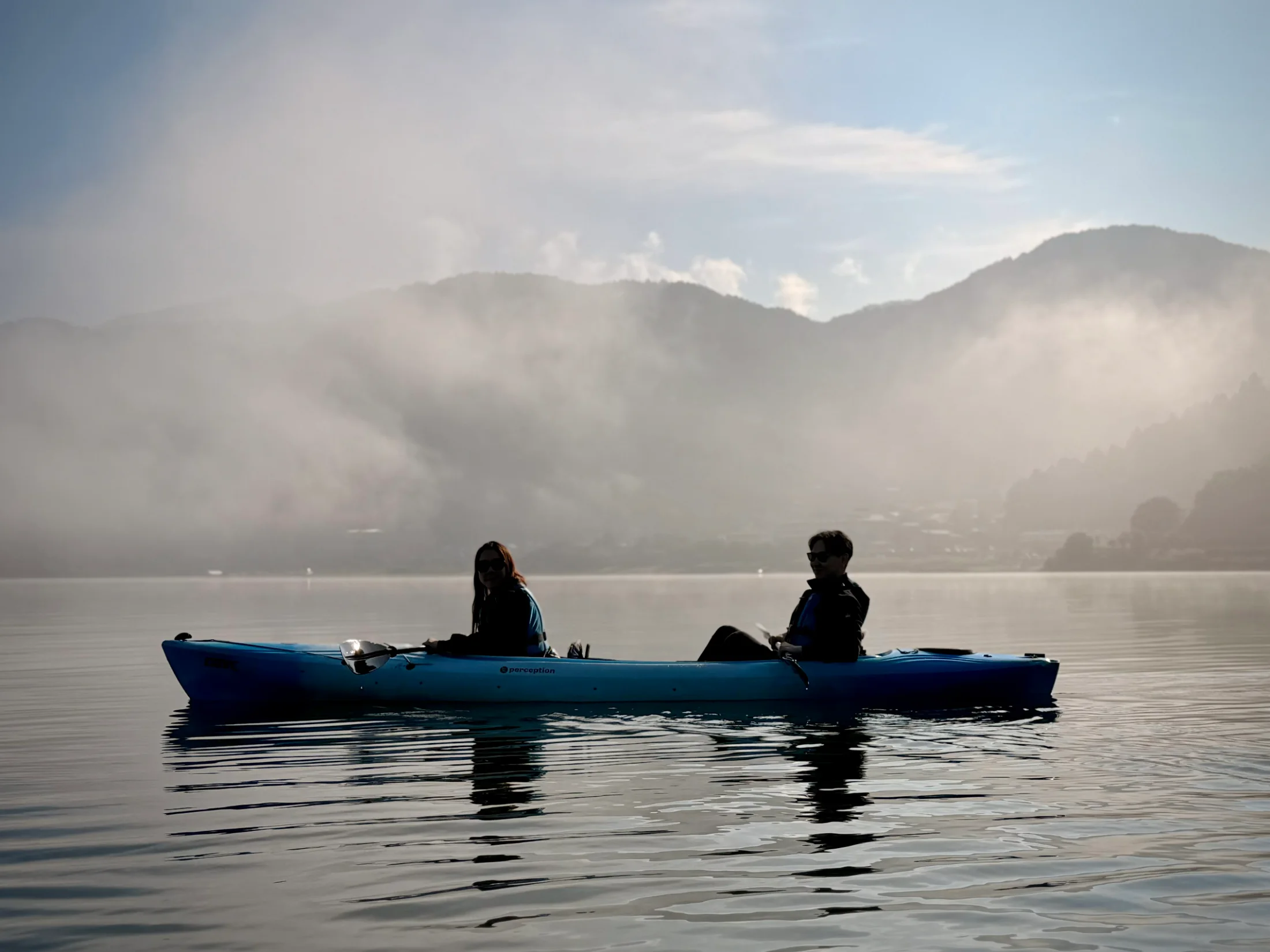
One lake, four different seasons
The setting changes throughout the year. In spring, sections of the shoreline are framed by cherry blossoms. Summer mornings bring cooler air before the heat of the day. Autumn can produce particularly clear reflections after rain, while the dry winter air often provides stronger visibility towards Mount Fuji.
Cold mornings should not be underestimated. Current activity listings indicate that additional jackets, trousers, boots and gloves may be provided during the cooler months, but guests should check the latest equipment information and dress for the forecast.
The season changes the colour, temperature and texture of the experience, but not its basic rhythm: prepare on shore, learn the paddle strokes, move onto the lake and let the morning unfold at its own pace.
Planning your morning
NaturaBase is located at 4010 Funatsu, opposite Fuji Lake Hotel and approximately a 15-minute walk from Kawaguchiko Station. Guests are currently asked to arrive 15 to 20 minutes before departure, so it is worth checking the route from your accommodation the evening before.
With a 7am departure, the experience normally finishes at around 8:30. This leaves time for breakfast and a full day around the Fuji Five Lakes.