
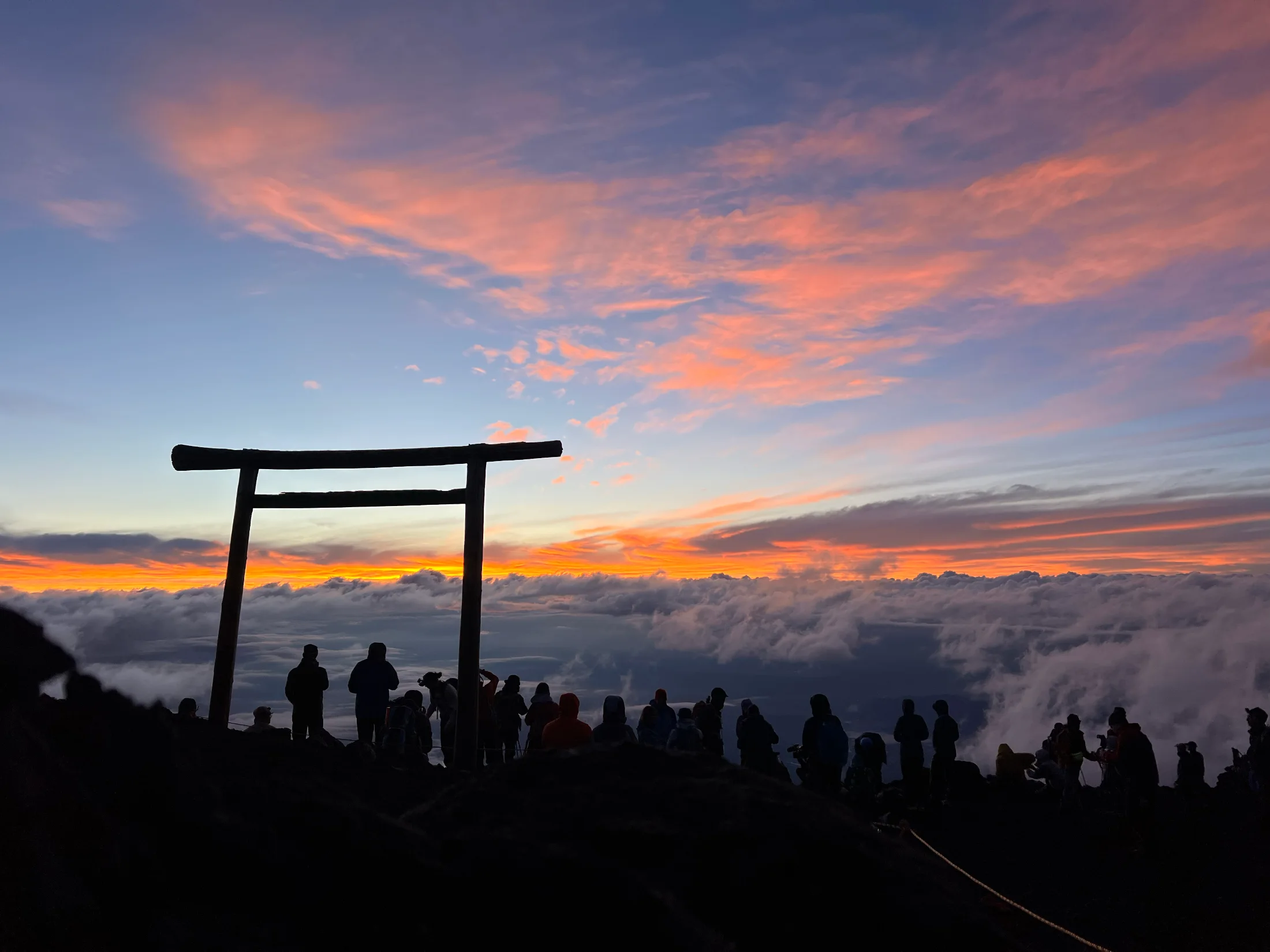
A Private Tour of the Mount Fuji Region
A day shaped by the landscape, the weather and your pace
A private tour should not simply be a bus tour with fewer passengers.
Around Mount Fuji, the conditions can change the character of a day within minutes. The mountain may appear early and disappear behind clouds before lunch. Wind can alter the best time to kayak. A quiet viewpoint can become busy, while a road towards another lake may open onto an unexpectedly clear view.
For that reason, this experience does not begin with a promise to complete a rigid checklist.
It begins with a conversation.
What would you most like to experience? Time on the water? A walk through the volcanic landscape? Local history? A quieter day away from the best-known viewpoints? A route that works for children, teenagers or family members who prefer to walk less?
From there, the guide builds a coherent day around your interests, the available time and what the region is offering that morning. NaturaBase describes its five-hour private tours as adaptable to the weather, guests’ interests and their preferred pace.
The objective is not to see the greatest possible number of places. It is to spend the available time well.
For wider regional context, see What “Fuji Five Lakes” Actually Means and JNTO’s Fuji Five Lakes itinerary.
FTC BOOKING PORTALCheck availability herePrivate Guided Tour of the Mount Fuji Region
Approximately 5 hours · Private group · English or French guidance · Local pickup available
The places shown in this article are examples. The final route is agreed according to your interests, the weather, seasonal access and local conditions.
No fixed route, and that is the point
Many Mount Fuji itineraries are designed months before the traveller arrives.
They assume that the mountain will be visible at a particular hour, that every visitor wants the same photographs and that moving quickly between famous locations is the best use of a day.
A local private tour can work differently.
The guide can adjust the route when the weather changes, spend longer somewhere that genuinely interests the group or leave a place when it no longer feels rewarding. If a family needs a slower pace, the day can slow down. If the group wants to walk, kayak or explore the volcanic landscape more actively, more time can be given to that part of the experience.
This flexibility is one of the most consistent themes in the published reviews. Guests mention guides adapting the day to the weather, allowing them to explore without feeling rushed and helping them escape the busiest attractions around the main lake.
Flexibility does not mean trying to combine every possible destination. The group chooses one coherent direction and travels together. The currently published conditions also specify that participants cannot separate and follow different activities during the same private departure.
A day we often recommend: begin on the water
Although every tour can take a different direction, one combination works particularly well for guests who want to experience both the landscape and the culture of the Fuji Five Lakes.
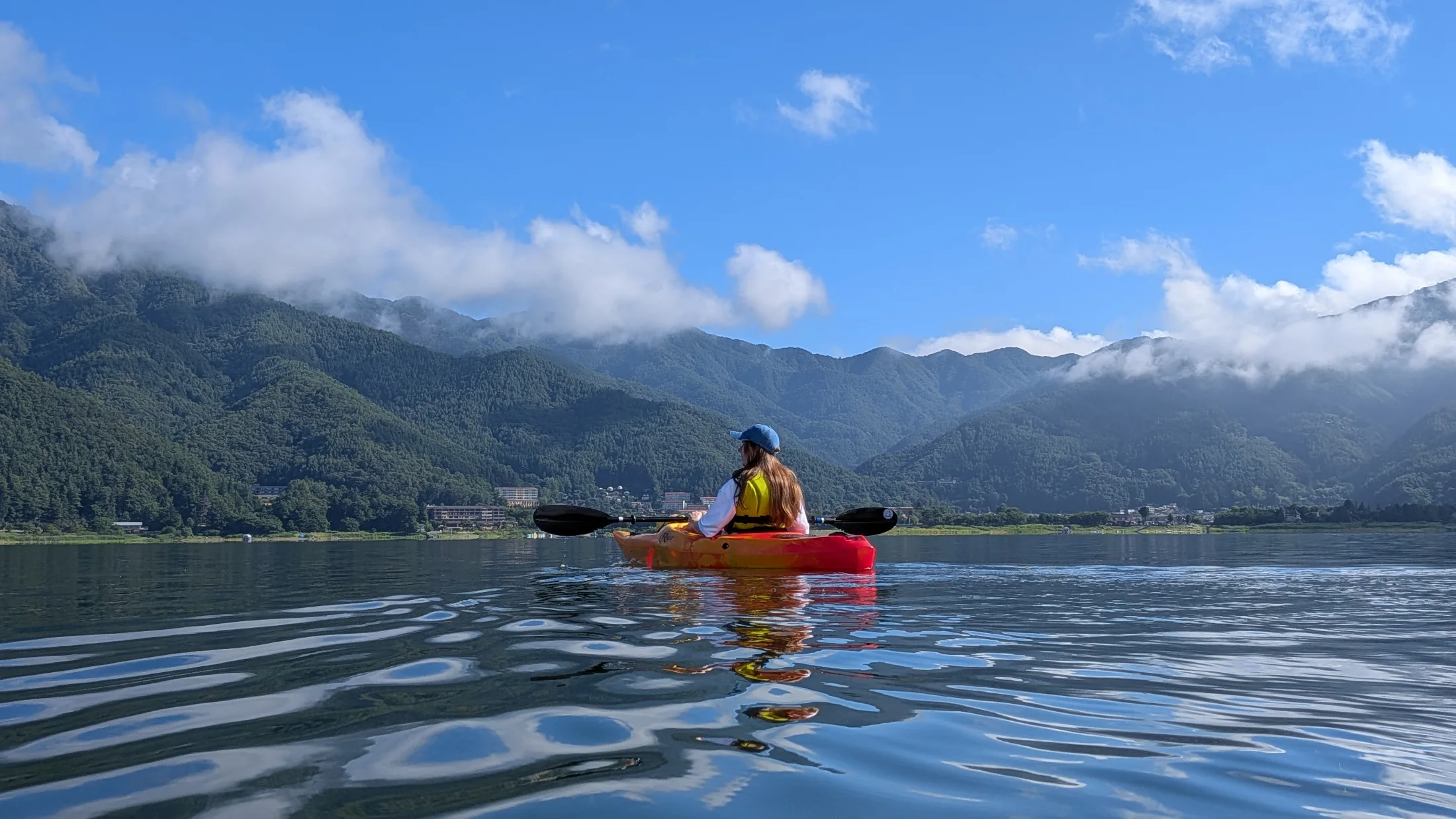
The day often begins with kayaking.
Instead of seeing Mount Fuji only through the window of a vehicle or from a crowded viewing platform, guests first encounter the region from the surface of Lake Kawaguchiko. After a safety introduction, the group paddles with the guide and gains a sense of the scale of the lake, the surrounding hills and the mountain beyond them.
The published tour currently includes the kayaking fee, and the standard listing allocates approximately two hours to the Lake Kawaguchiko portion of the day.
A clear view of Mount Fuji is never guaranteed. On some days, the mountain dominates the horizon. On others, clouds gather around the upper slopes or hide it completely.
The value of beginning on the water does not depend entirely on that view. The movement of the kayak, the distance from the road and the changing perspective across the lake already provide a very different introduction to the region.
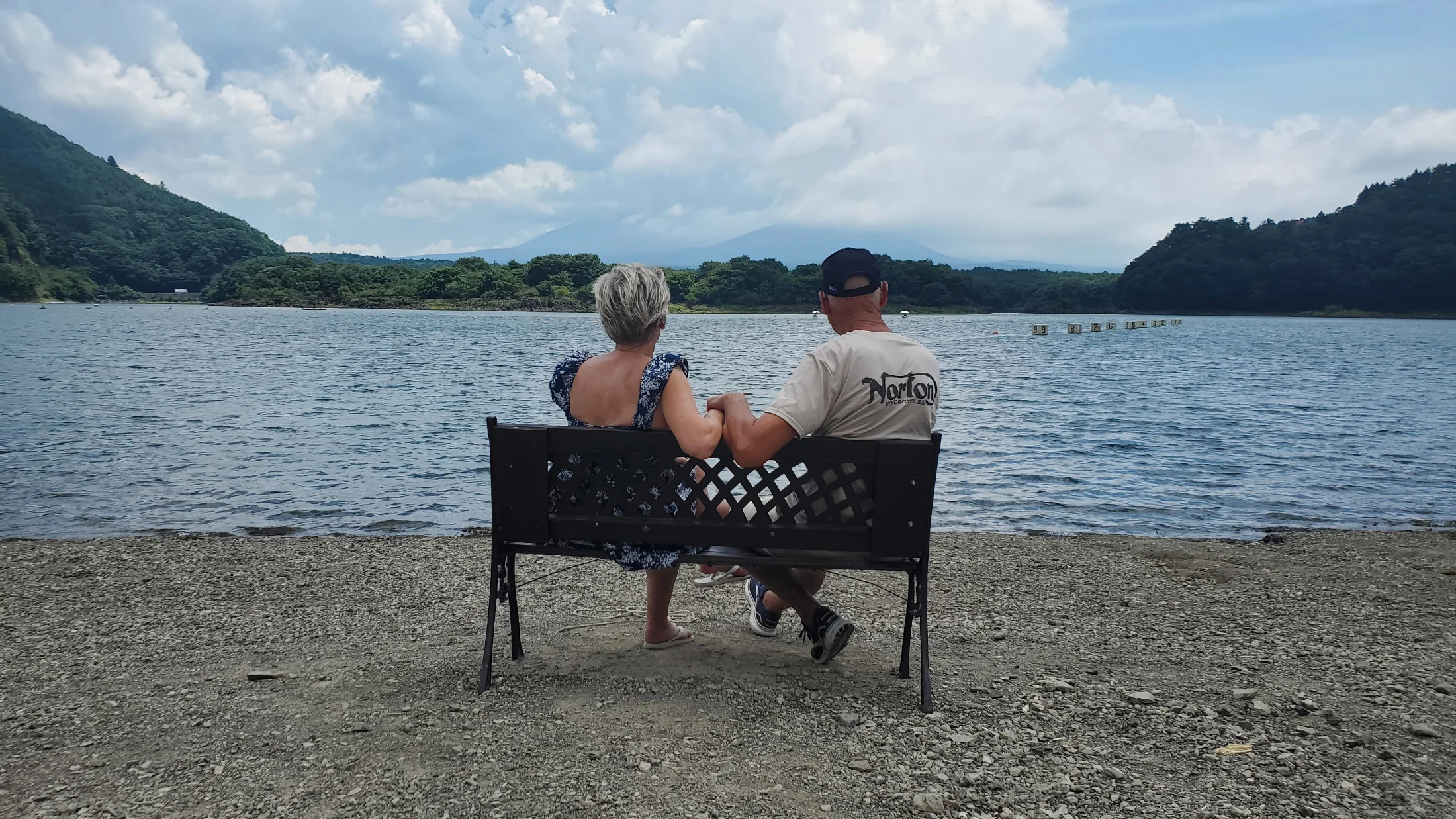
West towards Lake Saiko
After kayaking, the route usually leaves the busiest part of Kawaguchiko and continues west towards Lake Saiko.
The visual transition happens gradually. Buildings become less continuous, the forest moves closer to the road, and the landscape begins to feel more enclosed by mountains.
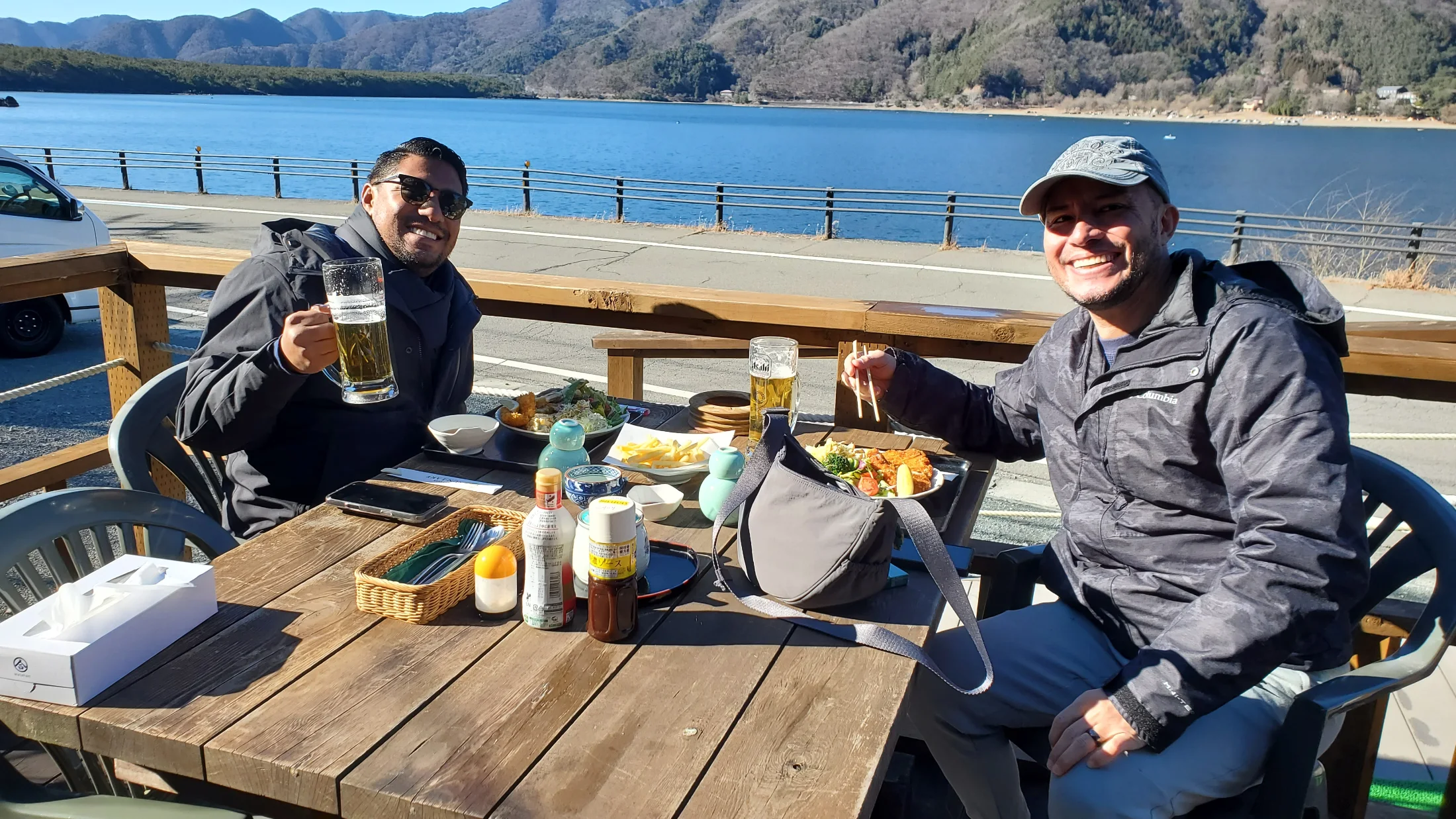
Lunch is generally taken around Saiko. Sun Lake is one of the places regularly used when its opening hours, availability and the group’s preferences are suitable. It is not a compulsory stop, and lunch is not currently included in the published tour price.
This flexibility is useful. Some guests want a substantial local meal; others prefer to keep lunch short and devote more time to walking or visiting another lake. Dietary requirements, restaurant opening days and the rhythm of the group can all affect the choice.
The lunch stop should therefore be understood as part of the day rather than a named restaurant guaranteed with every booking.
Ryugu Cave: Mount Fuji beneath the surface
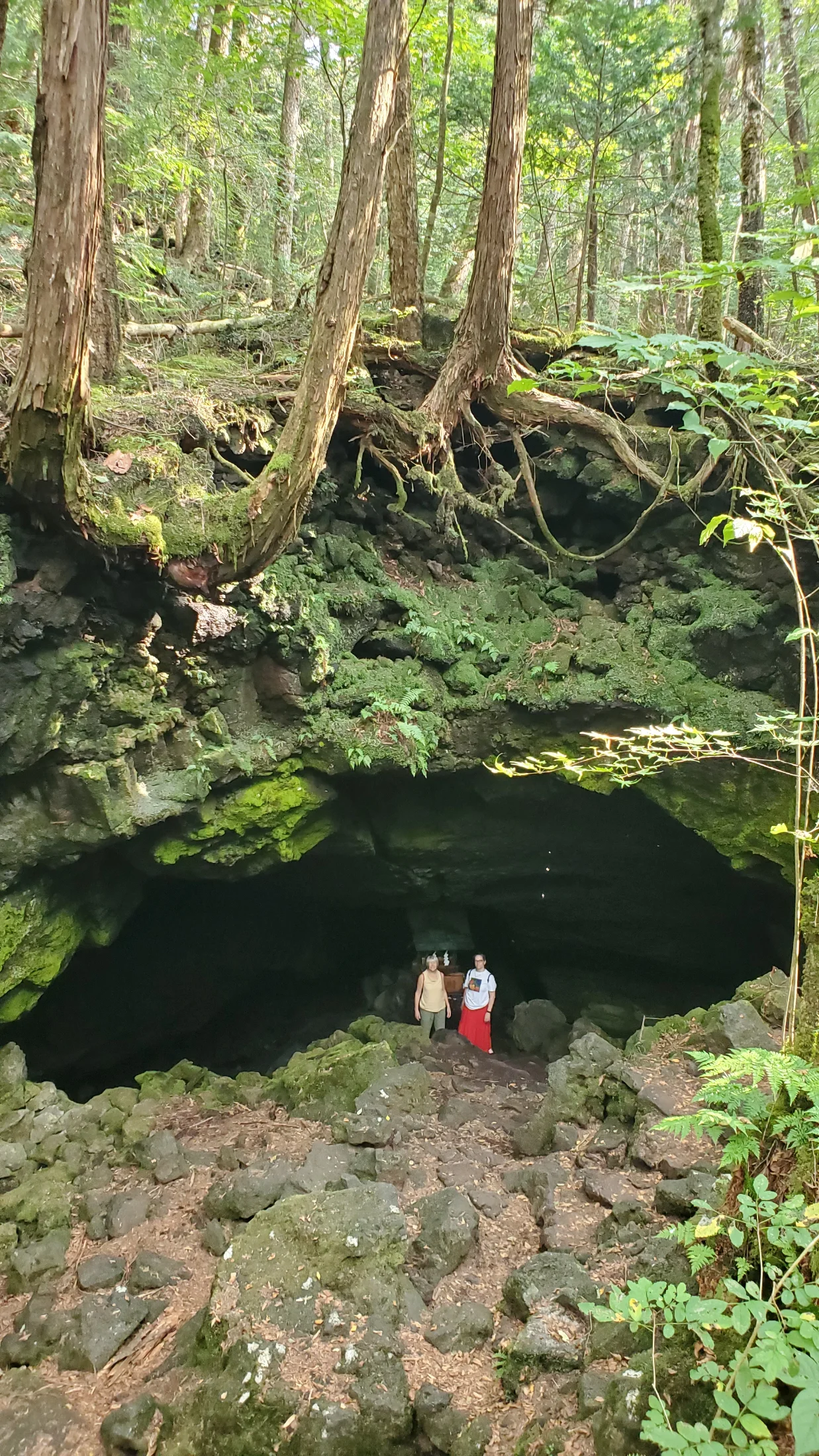
A short journey from the lakeshore leads towards Ryugu Cave, also known as the Dragon Cave.
This is not a polished underground attraction with ticket gates, lighting and a prescribed circuit. The interest lies in the relationship between the cave, the forest and the volcanic ground around it.
Ryugu Cave is a lava cave on the southern side of Lake Saiko. Historically, local people associated it with a water deity and visited it to pray for rain. It was later incorporated into the sacred geography used by followers of Mount Fuji worship. A festival connected with the cave continues to be held locally.
The visit is therefore not presented as a technical caving expedition.
It is an opportunity to leave the road, walk briefly beneath the trees and understand how volcanic history and local belief occupy the same physical landscape. The cave entrance, the colder air and the shrine provide a quieter counterpoint to the open water experienced earlier in the day.
Access and the precise extent of the visit depend on the state of the path, the weather and current safety restrictions.
A village rebuilt to remember
The route often continues to Saiko Iyashi-no-Sato Nenba.
At first glance, the thatched roofs may appear to form an old village preserved without interruption. Its history is more complex.
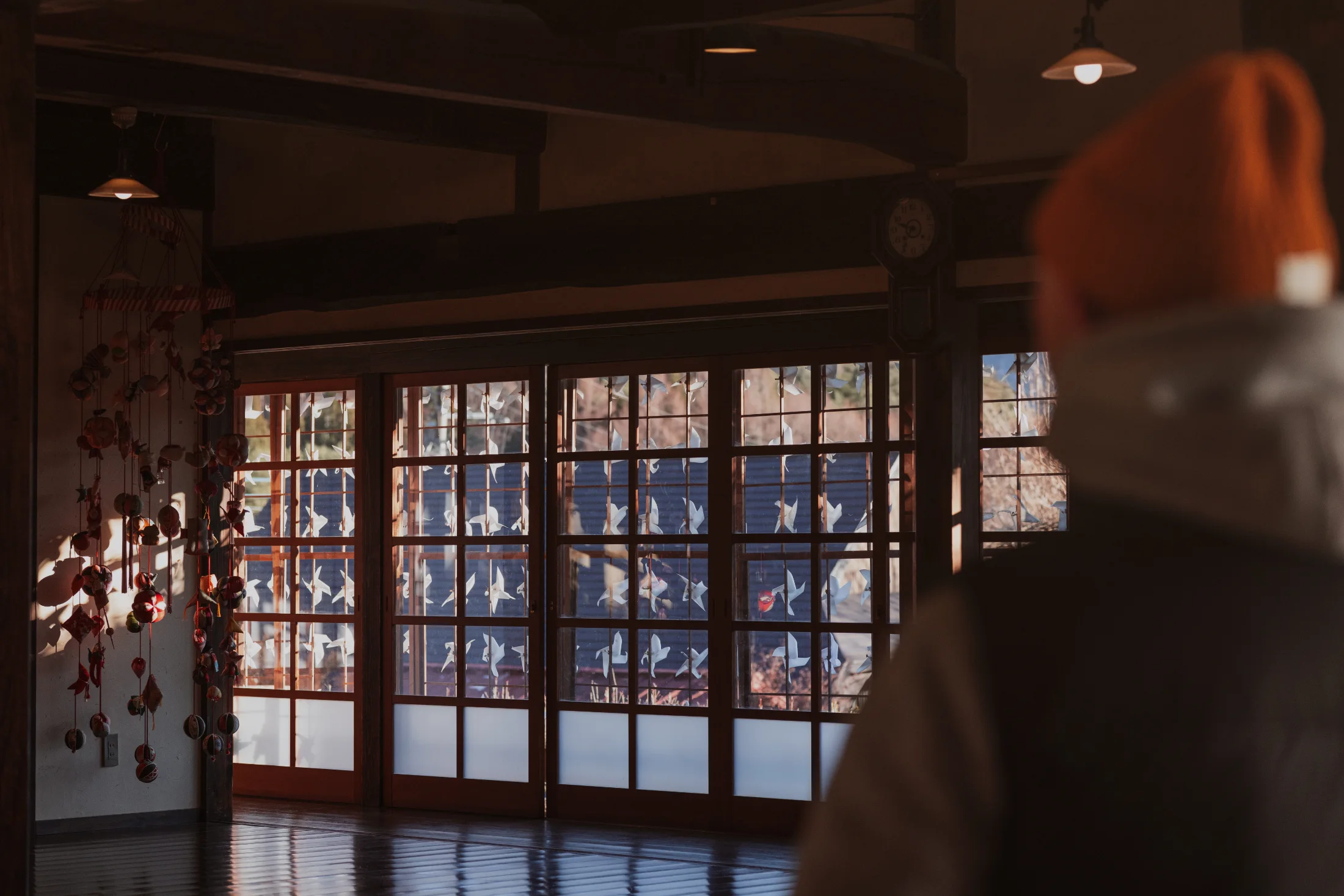
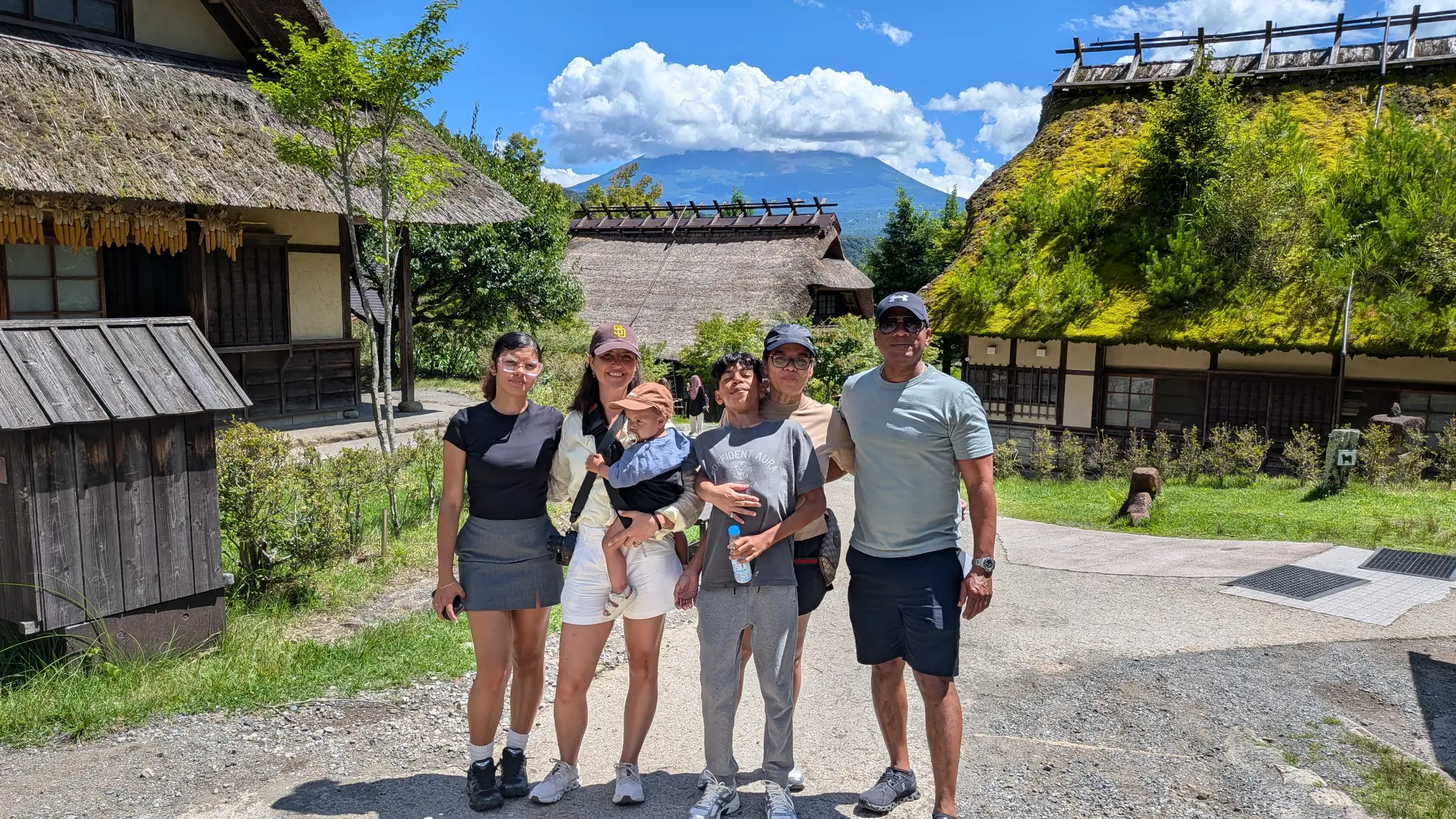
The former settlement of Nenba was devastated by a landslide and debris disaster in 1966. Four decades later, Saiko Iyashi-no-Sato Nenba opened with 20 reconstructed thatched-roof houses. The project was created to revive the scenery of the former village and provide a place where visitors could encounter the area’s history, culture, crafts and natural environment.
Understanding that history changes the visit.
The site is not simply a collection of picturesque roofs arranged in front of Mount Fuji. It represents an attempt to preserve the memory and visual identity of a community whose original landscape was lost.
Depending on the group, time can be spent walking through the houses, meeting craftspeople, looking at local work or simply moving slowly through the village. When Mount Fuji is visible, it rises behind the roofs. When it is hidden, the materials, architecture and surrounding mountains remain worth observing.
The return journey is still part of the tour
After Iyashi no Sato, the route can return along the northern shores of Lake Saiko and Lake Kawaguchiko.
This is not merely transport back to the hotel.
The road offers a changing relationship with Mount Fuji. The mountain may appear between trees, above the water or beyond the buildings of the lakeside communities. On clear days, the view from the vehicle can become one of the memorable parts of the tour precisely because it is not approached as a formal observation stop.
When a location looks particularly good and stopping is safe and appropriate, the guide may pause. When the mountain is hidden, the drive still provides a broader understanding of how the different lakes, villages and forests fit together.
The itinerary remains responsive until the end of the day.
Some days take a different direction
The kayak–Saiko–Ryugu Cave–Iyashi no Sato route is an example, not the definition of the tour.
A different group may be more interested in walking, panoramic viewpoints, the other lakes or the cultural history of Fujiyoshida.
These alternatives are not small additions to be squeezed into the standard programme. They are different ways of shaping the entire day.
Koyodai: the view above the forest
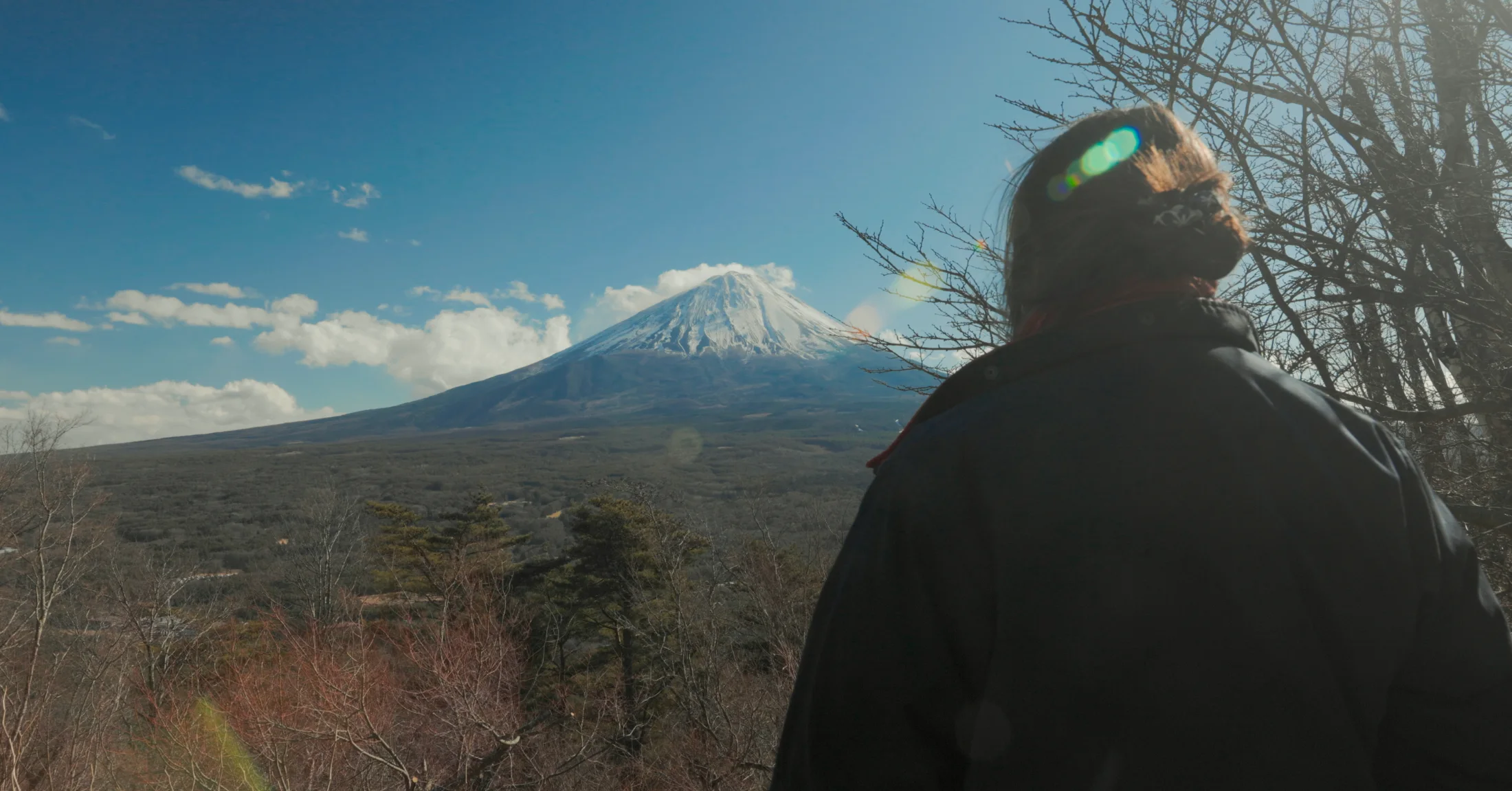
For guests who want a higher viewpoint, the tour can include Koyodai.
The simplest version reaches the observation area and allows time to see Mount Fuji in relation to the broad Aokigahara forest below. The official Yamanashi tourism guide highlights precisely this combination: the mountain, the surrounding ranges and the extensive forest spreading across its base.
Guests who want a more active day can instead devote additional time to walking on the Koyodai or Mount Ashiwada trails. The observation area can be reached by a shorter walk, while a longer hike changes the physical demands and the amount of time available for other stops.
This option should therefore be agreed before or at the beginning of the tour rather than treated as a quick detour.
A journey through the other Fuji lakes
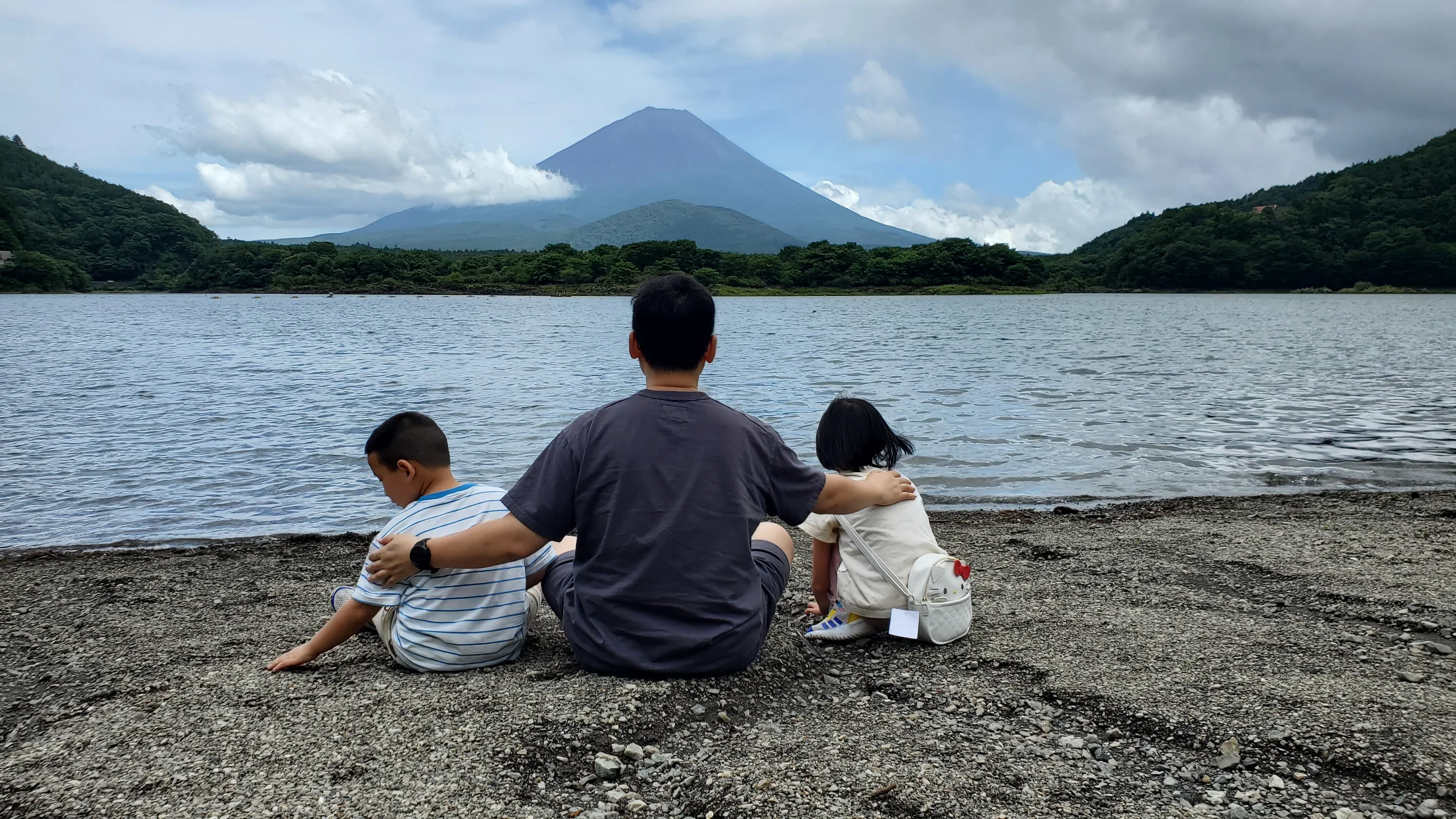
The day can also move farther west towards Lake Shojiko or Lake Motosuko.
This version suits travellers who are less interested in individual attractions and more interested in understanding the region as a series of connected volcanic lakes. Stops can be chosen according to visibility, season, road conditions and the amount of time the group wants to spend outside the vehicle.
A tour of the other lakes should remain selective. Trying to visit all five lakes, kayak, eat lunch, walk through the forest and explore a village within five hours would turn a private experience back into the rushed checklist it is intended to avoid.
The guide’s role is partly to explain what is realistically possible and help the group choose the strongest route.
Fujiyoshida: Mount Fuji as a lived and sacred place
Other guests prefer to focus on Fujiyoshida.
This produces a more urban and cultural day, replacing part or all of the lakes-and-forest route with places that explain how people have lived beneath, photographed and worshipped Mount Fuji.
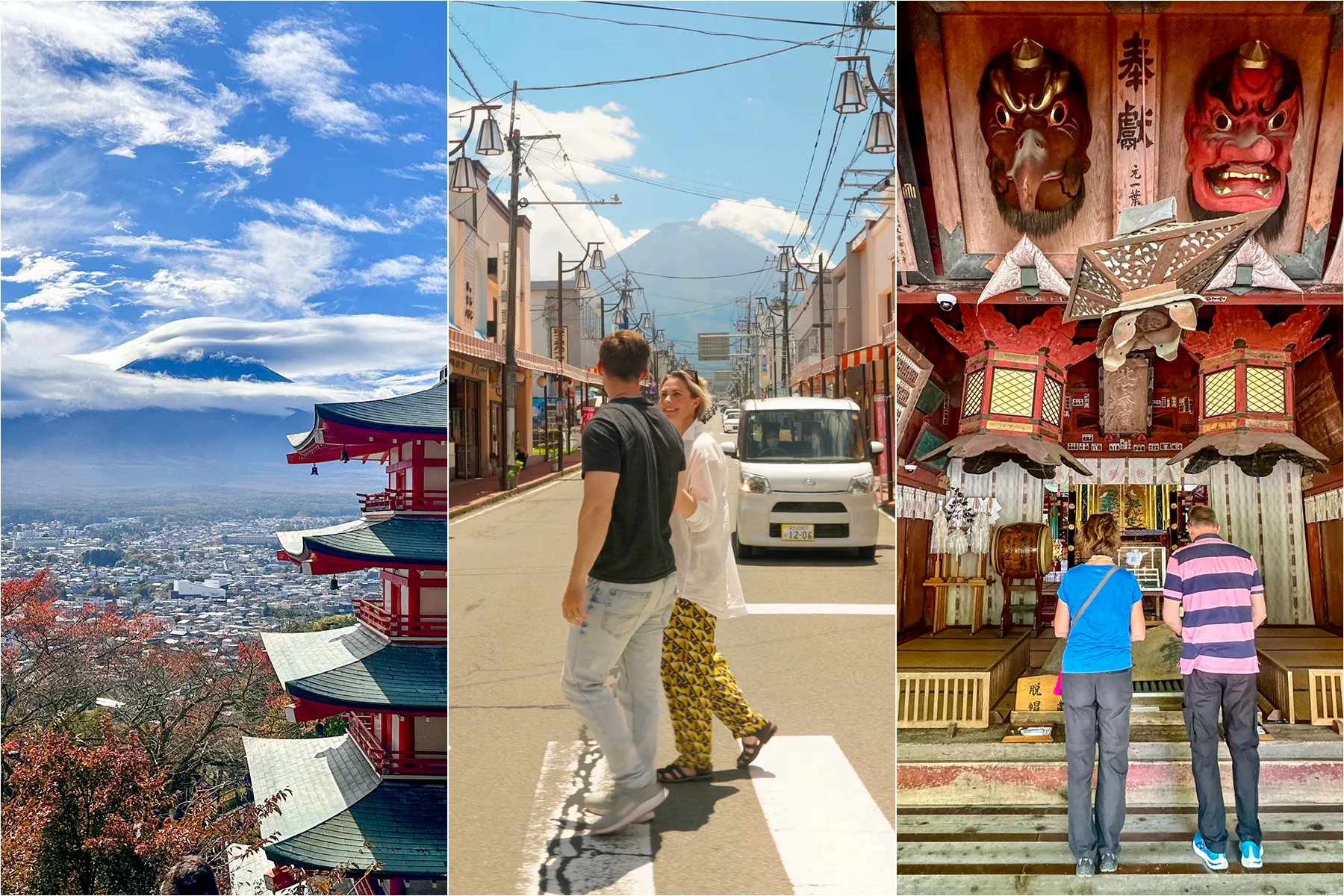
Possible stops include Arakurayama Sengen Park and Chureito Pagoda, Honcho Street and Kitaguchi Hongu Fuji Sengen Shrine.
Chureito Pagoda and Arakurayama
The well-known viewpoint above Fujiyoshida combines the five-storey pagoda, the city and Mount Fuji. Reaching the principal observation area involves climbing approximately 398 steps, so the stop requires more time and effort than a roadside photograph. It can also become extremely busy during peak seasons.
A private guide cannot remove those crowds, but can help determine whether the stop is worthwhile that day and place it within a route that offers more context than the photograph alone.
Honcho Street
Honcho Street, officially part of Fuji Michi, runs through the centre of Fujiyoshida and visually connects the city with the mountain. It is a real commercial street used by residents, not a closed photographic set.
A guided visit can introduce the older shopfronts, local businesses and relationship between the street and Mount Fuji while ensuring that photography remains respectful of traffic, private property and the people who live and work there.
Kitaguchi Hongu Fuji Sengen Shrine
Kitaguchi Hongu Fuji Sengen Shrine provides the historical and spiritual foundation of this route.
The official city guide describes it as the spiritual centre of Fujiyoshida, with origins traditionally traced back more than 1,900 years. The shrine later became an important base for religious practitioners and pilgrims climbing Mount Fuji and is included among the component sites of the mountain’s World Heritage designation.
Together, these places reveal a side of Mount Fuji that is not limited to scenery: the mountain as a presence within streets, livelihoods, pilgrimage and community life.
What travellers remember
The current review record is unusually consistent.
At the time of writing, the product has 38 combined Viator and Tripadvisor reviews, all rated five stars, with 100% of reviewers recommending the experience.
More useful than the rating alone are the repeated themes.
Guests mention:
- knowledgeable and personable guides;
- clear communication before and during the tour;
- a route adjusted to the group and the weather;
- enough time to explore without being rushed;
- a comfortable atmosphere for families and small groups;
- experiences away from the most heavily visited parts of Kawaguchiko;
- the feeling of understanding the region rather than simply photographing it.
One family described the guide adapting the route when the weather changed and allowing them to explore at their own pace. Another guest highlighted the tour as an intimate escape from the heavily touristed attractions around the main lake. Reviews also describe active variations involving cycling, hiking and a shrine, demonstrating that the experience has already taken forms beyond the standard published itinerary.
100% of reviewers recommending the experience
WHAT GUESTS VALUE
A guide who knows when to change the plan.
Time to explore without being hurried.
A balance between activity, landscape and local context.
A day that feels private in more than name.
Private does not mean isolated from the region
The guide is not there only to drive the vehicle or repeat information attached to each stop.
The value of a locally guided day appears in the transitions:
why the western lakes feel different from central Kawaguchiko;
how the lava beneath Aokigahara shaped the forest and caves;
why a reconstructed village matters to local memory;
how Fujiyoshida developed in relation to Mount Fuji pilgrimage;
and how weather, seasons and tourism affect everyday life around the lakes.
NaturaBase presents its guides as people who live locally and bring the region’s culture and natural environment into the experience.
That knowledge also helps the guide decide when not to add another stop.
Sometimes the best use of the remaining time is to stay beside a lake, continue a conversation or wait briefly to see whether the clouds will move—not to return immediately to the van and chase the next item on a list.
Who is this tour for?
The private format is particularly suitable for:
couples and small groups who prefer a slower day;
families who need flexibility around children or teenagers;
visitors interested in both nature and local culture;
travellers who have already seen the main Kawaguchiko viewpoints;
guests who want to kayak or walk without joining a large group;
people who would like guidance in English or French;
repeat visitors looking beyond the standard Mount Fuji circuit.
The precise physical requirements depend on the chosen route.
Kayaking, uneven forest ground and the steps at Arakurayama require different levels of mobility. A less active route may be discussed, but accessibility and health requirements should be confirmed before booking. The standard product currently carries mobility, pregnancy, back and serious medical restrictions and is not listed as wheelchair accessible.
A private tour offers flexibility, but it does not automatically make every location or activity accessible.
Planning your private tour
The activity currently lasts approximately five hours and is offered as a private departure for one group. The published booking page lists a capacity of up to eight guests.
Local hotel pickup can be requested in the Kawaguchiko area. Guests staying nearby may also meet the guide at NaturaBase in Funatsu. At the end of the tour, drop-off is currently available at a local Kawaguchiko hotel or Kawaguchiko Station.
The published inclusions currently contain:
private guiding and transportation during the tour;
the kayaking fee for the standard route;
bottled water.
Lunch is not included. Entrance fees and activity inclusions may vary if an alternative route is chosen, so the live booking information and direct confirmation should remain authoritative.
Before the day, tell the team about:
the places or subjects that interest you most;
whether kayaking is important to you;
how much walking your group is comfortable with;
children’s ages;
mobility or health considerations;
dietary requirements;
any place you have already visited;
where you are staying locally.
This information does not lock the tour into a fixed itinerary. It helps the guide prepare the most appropriate options.
Example routes are not guaranteed itineraries. The final programme depends on your interests, weather, seasonal access and local conditions.
Is the itinerary fixed?
No. The routes described in the article are examples. The guide adapts the day according to the group’s interests, pace, the weather and local conditions. A coherent route is agreed rather than attempting to combine every available stop.
Can we choose the places we visit?
You can explain your priorities before the tour. The guide will then recommend a realistic combination within the available time. Some destinations are too far apart or require too much walking to be combined comfortably in a five-hour tour.
Is kayaking compulsory?
Not necessarily. Kayaking is an important part of the route most frequently recommended and is included in the currently published standard programme. A different route, including a Fujiyoshida-focused day or a walking-oriented programme, may be discussed in advance. Any change to inclusions or pricing should be confirmed when booking.
Can we visit Chureito Pagoda?
Yes, it can form part of a Fujiyoshida-focused route. The main viewpoint involves approximately 398 steps and can be busy, so the guide will consider your mobility, timing and priorities before recommending it.
Can we visit all five Fuji lakes?
The tour can focus on several of the lakes, but visiting all five alongside kayaking, lunch and cultural stops would normally create a rushed day. It is usually better to select a smaller number and spend meaningful time in each area.
Is Mount Fuji guaranteed to be visible?
No. The mountain can be obscured by clouds at any time. The route may be adjusted to make the best use of the conditions, but no guide can guarantee a clear view.
Does the tour start in Tokyo?
No. The currently published tour begins in the Kawaguchiko area. Local hotel pickup can be requested, or guests can meet at NaturaBase in Funatsu.
Is hotel pickup included?
Pickup is currently offered from accommodation in the local Kawaguchiko area. The hotel name and address should be provided after booking. Drop-off can be arranged at a local hotel or Kawaguchiko Station.
Is lunch included?
No. The current product includes bottled water and the kayaking fee for the standard route, but lunch is paid separately. The restaurant is chosen according to the route, opening hours and the group’s preferences.
Is the tour suitable for children?
Families and teenagers have participated successfully, and reviews mention guides keeping younger guests engaged. However, suitability depends on age, the selected activities, weather and mobility. Current age and participation requirements should be checked before booking.
Is the tour suitable for guests with limited mobility?
It depends on the route, but the standard published activity is not listed as wheelchair accessible and carries several medical and mobility restrictions. Contact the operator before booking so that realistic alternatives can be discussed.
What languages are available?
English and French are currently offered. Language availability for a particular date should be confirmed through the live booking system.
What happens if the weather changes?
Minor changes may lead the guide to alter the order or content of the route. Conditions that make an outdoor activity unsafe may require a larger programme change or cancellation. The current cancellation and weather terms shown during booking remain authoritative.
FTC BOOKING PORTALCheck availability here