
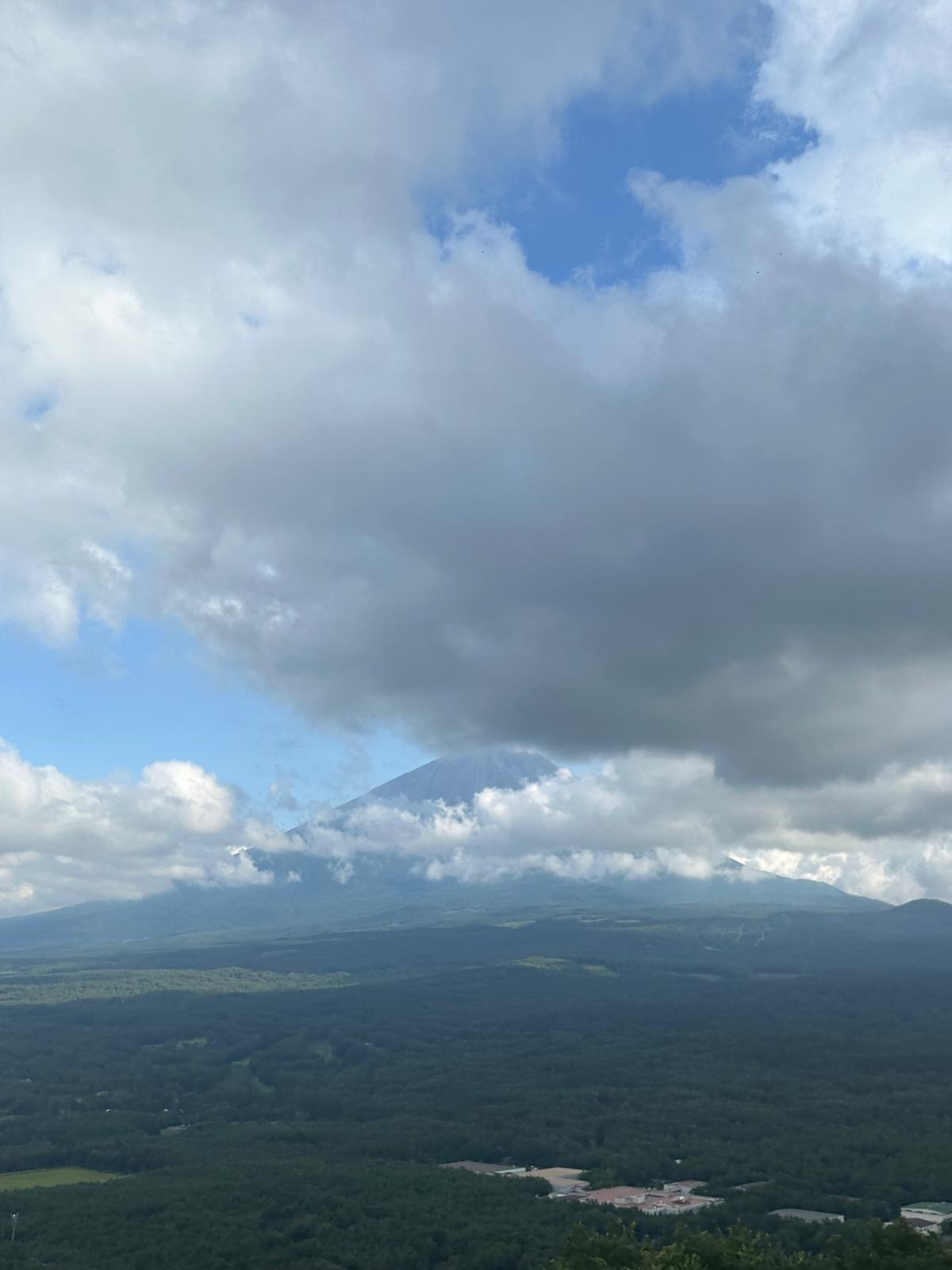
Mount Fuji is enormous. At 3,776 metres, it rises far above the towns, forests and lakes around its base.
It can therefore be surprising to arrive in the Fuji Five Lakes and discover that the mountain is nowhere to be seen.
The sky may look blue. The sun may be shining beside the lake. The weather forecast may even describe the day as clear.
Yet Mount Fuji can remain completely hidden behind a narrow layer of cloud.
This is not unusual. The mountain is not a permanent backdrop, and visibility depends on much more than whether it is raining at ground level.
A Sunny Day Does Not Guarantee a Fuji View
Most weather forecasts describe conditions across a relatively wide area.
A “sunny” forecast usually means that sunshine is expected to dominate at the observation location. It does not mean that every nearby mountain will remain free of cloud.
Mount Fuji reaches into air that is very different from the air around Kawaguchiko, Yamanakako or Fujiyoshida. The official Mount Fuji climbing information notes that conditions can differ greatly between the foothills, the fifth stations and the summit, and can change rapidly. The official Mount Fuji climbing website explains these differences in mountain weather.
As a result, several conditions can exist at the same time:
- Blue sky above the lake
- Sunshine in the town
- Clouds around Fuji’s middle slopes
- Dense cloud covering the summit
- Clear conditions on a different side of the mountain
A visitor looking upward may see nothing but cloud, while someone several kilometres away sees part of the mountain from another direction.
Mount Fuji Helps Create Its Own Clouds
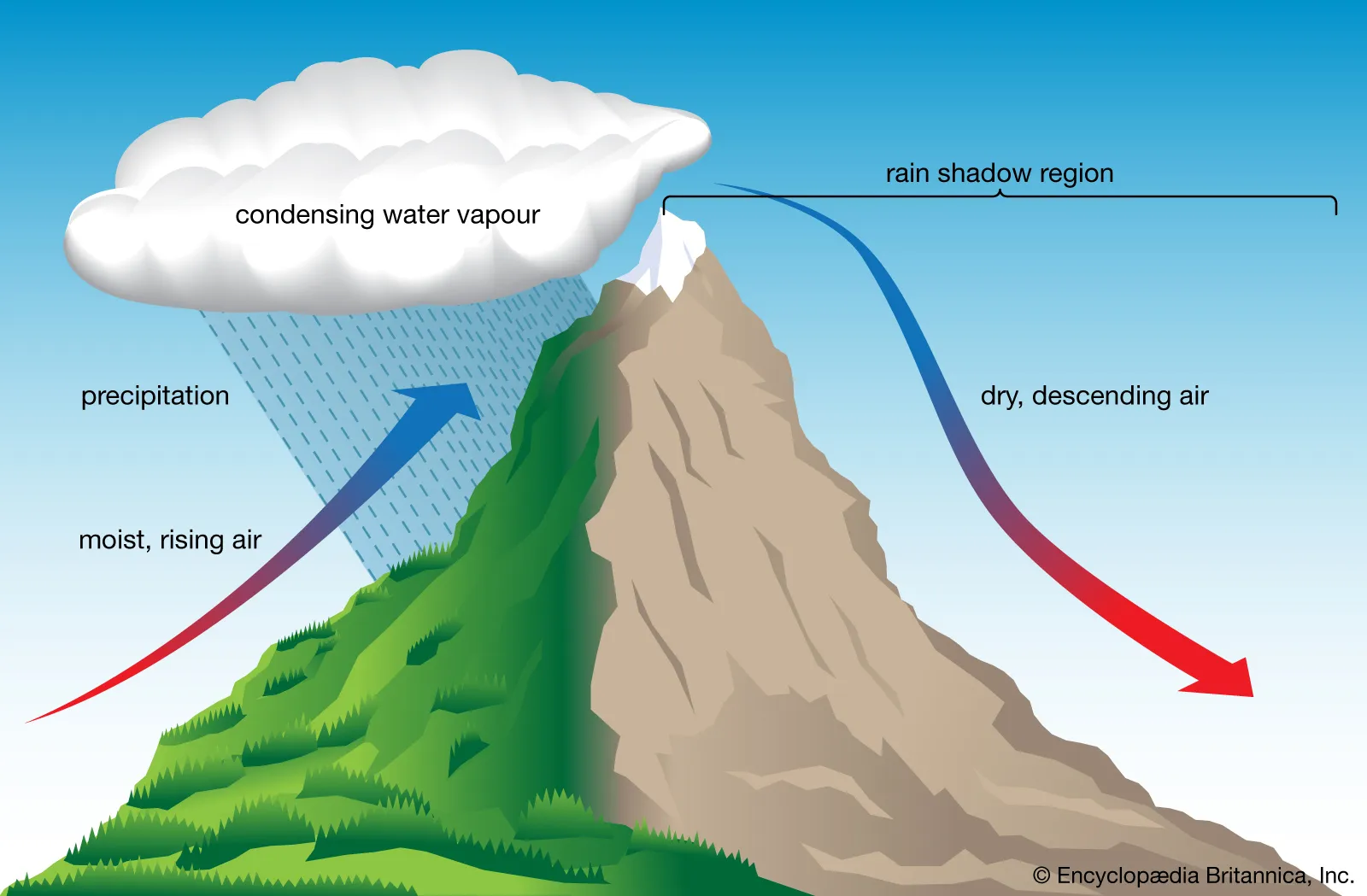
Mount Fuji is a large, isolated peak standing directly in the path of moving air.
When wind reaches the mountain, it cannot pass through it. The air is forced upward along the slopes.
As the air rises, it cools. If it contains enough moisture, some of that moisture condenses and forms cloud. This process is known as orographic uplift.
Clouds formed in this way can remain concentrated around the mountain even when the surrounding sky appears relatively clear. The Met Office provides a concise explanation of how air rising over high ground creates orographic clouds.
This is why Mount Fuji may appear to be producing clouds from its slopes. On some days, small clouds develop, expand and disappear repeatedly around the summit.
The Mountain and the Lakes Experience Different Weather
The Fuji Five Lakes sit roughly 900 metres above sea level, depending on the lake. Mount Fuji rises almost another 2,900 metres above them.
That vertical distance matters.
Conditions around the summit can be colder, windier and cloudier than conditions at lake level. Different layers of air can also move in different directions.
From the lakes, visitors sometimes see:
- Only the lower slopes
- The mountain without its summit
- The summit floating above a lower layer of cloud
- One side of Fuji while the other side remains hidden
- No visible mountain at all
The mountain can also disappear very quickly. A clear outline at breakfast may be partly covered an hour later.
The opposite can happen as well. Fuji sometimes emerges briefly when wind opens a gap in the clouds.
Why Early Morning Is Often Better
Early morning generally provides the best opportunity to see Mount Fuji, particularly during warmer months.
Before the ground has been heated by the sun, the lower atmosphere is often cooler and more stable. As the day progresses, sunlight warms the land and slopes. Warm air rises, encouraging the development of cloud.
This daytime cloud growth is especially common in spring and summer.
A typical pattern can look like this:
1. Mount Fuji is clear shortly after sunrise.
2. Small clouds begin forming near the slopes.
3. The clouds grow and gather around the summit.
4. By late morning or afternoon, much of the mountain is hidden.
This is a tendency, not a fixed daily schedule. Fuji can remain visible all afternoon, disappear before sunrise or emerge late in the day after being hidden for hours.
PRACTICAL NOTE
- If seeing Mount Fuji is important to you, schedule your most view-dependent activity early in the day.
- Do not postpone a clear morning view because you assume the mountain will still be visible after lunch.
Visibility Changes With the Seasons
Mount Fuji can appear during every season, but some periods usually offer better conditions than others.
Winter
Winter generally brings the clearest and most consistent views.
The air is often colder and drier, with less atmospheric haze. On suitable days, the mountain can remain sharply visible for much of the day.
Winter also produces the familiar snow-covered appearance many visitors expect.
However, visibility is never guaranteed. Snowfall, approaching weather systems, strong wind and summit clouds can still hide the mountain.
Spring
Spring is more changeable.
Clear days remain possible, but warmer air and increasing moisture can encourage cloud formation. Conditions may shift rapidly as weather systems move across central Japan.
The mountain’s snow cover also begins changing. A clear Fuji in late spring may look considerably darker than the heavily snow-covered mountain shown in winter advertising.
The Rainy Season
The rainy season, known as tsuyu or baiu, usually brings more cloudy and wet days to the region in early summer.
According to the Japan Meteorological Agency’s 1991–2020 climate averages, the rainy-season transition in the Kanto–Koshin region typically begins around 7 June and ends around 19 July. The actual dates vary each year. See the Japan Meteorological Agency’s climatological rainy-season dates.
Mount Fuji is not necessarily invisible throughout this period. Clear openings do occur, sometimes immediately after rain or between weather systems.
Visitors should nevertheless expect a higher possibility of extensive cloud cover.
Summer
Summer is one of the most difficult seasons for prolonged daytime visibility.
Warm, humid air and strong daytime heating frequently produce cloud around the mountain. Fuji may be visible early in the morning and disappear surprisingly quickly.
This does not mean that summer visits are pointless. It means that timing matters more, and the mountain should not be expected to remain visible throughout the day.
Autumn
Early autumn can still be humid and unsettled, particularly while typhoons and warm weather continue to affect Japan.
Conditions often become clearer as the season advances and cooler, drier air arrives. Late autumn can provide some of the year’s sharpest views, although the amount of snow on the mountain varies considerably from year to year.
The Seasonal Difference Is Significant
Fuji City, located on the southern side of the mountain, has recorded Mount Fuji’s visibility from the same location several times each day since 1990.
Its observations are not a direct forecast for the Fuji Five Lakes, which are on the opposite side of the mountain. However, they demonstrate how dramatically visibility can change with the season.
At 8:00 a.m. in 2025, observers in Fuji City recorded the entire mountain as visible on:
- 22 days in February
- 19 days in November
- 19 days in December
- 2 days in June
- 5 days in July
- 3 days in August
These figures represent one year, one observation point and one side of the mountain. They should not be interpreted as the probability of seeing Fuji from Kawaguchiko or Yamanakako.
They do, however, illustrate why winter and summer visits can produce very different expectations. Fuji City publishes its Mount Fuji observation records and methodology online.
Can Fuji Be Hidden by Just One Cloud?
Yes.
Mount Fuji does not need to be surrounded by a large storm system to disappear. A relatively narrow band of cloud at the right altitude can cover the summit and upper slopes.
From some locations, nearby hills may also block the lower part of the mountain. Once cloud covers the remaining visible section, Fuji seems to vanish completely.
This effect can be deceptive. A visitor may assume that the mountain is behind a distant wall of cloud when it is actually immediately behind a small, concentrated cloud formation.
What About the Famous Cap Clouds?
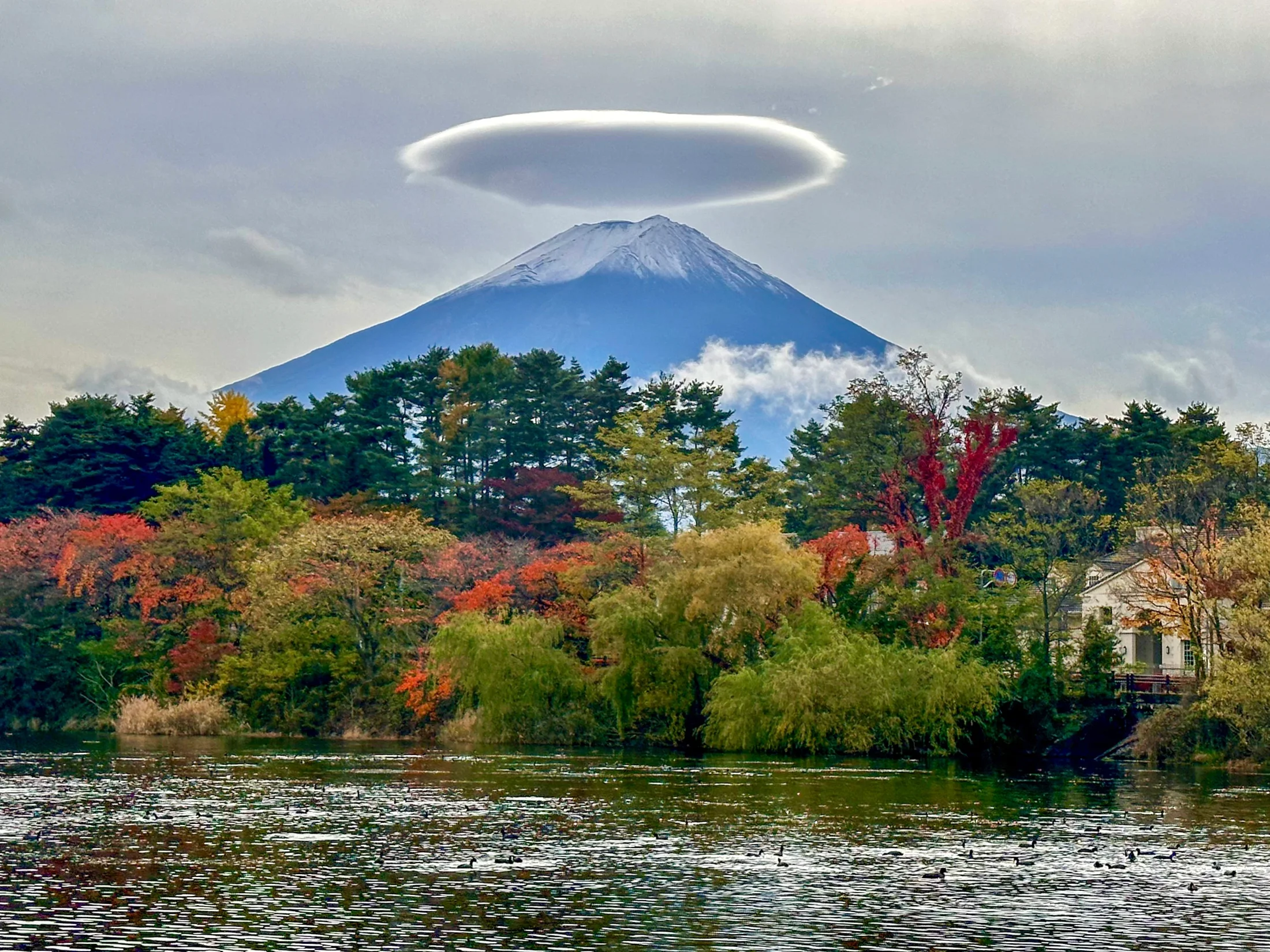
Mount Fuji is known for distinctive clouds that form around or near its summit.
The best known is kasagumo, often translated as a “cap cloud” or “umbrella cloud.” These smooth clouds can appear to sit directly on top of the mountain.
Other formations may develop downwind from the peak.
Traditionally, people living around Fuji observed the shape and position of these clouds as signs of changing weather. Some local cloud names are still associated with particular wind or pressure patterns.
These observations are part of local weather knowledge, but they should not replace a modern forecast. Fuji City’s own presentation of traditional cloud types notes that their relationship with future weather is not guaranteed. Examples of traditional Mount Fuji cloud classifications can be seen on the Fuji City website.
Does Moving to Another Lake Help?
Sometimes but not always.
Mount Fuji can be clearer from one side than another because clouds may concentrate along a particular slope or move with the wind.
However, traveling across the entire region does not guarantee that the view will improve.
Before making a long journey, consider:
- Is the whole mountain covered or only one side?
- Are the clouds moving?
- Do live cameras show better conditions elsewhere?
- How much time will the journey take?
- Is there something else worth doing at the destination if Fuji remains hidden?
If every live camera shows dense cloud around the mountain, changing lakes is unlikely to solve the problem.
Local terrain also affects the view. Kawaguchiko and Yamanakako have broad areas facing Mount Fuji, while Saiko has fewer locations from which the mountain is visible even in clear weather.
How to Improve Your Chances
Nothing can guarantee a clear view, but a few decisions can improve your chances.
Stay Overnight
A day trip gives you one limited window.
Staying for at least one night allows you to check conditions in the evening and again the following morning. It also makes it easier to reach the lakes before daytime cloud begins to develop.
Look Early
If Fuji is visible when you wake up, use the opportunity.
Take your walk, photograph or lakeside visit before committing to an indoor attraction or a long breakfast.
Check Live Cameras
A forecast describes expected conditions. A live camera shows what is happening now.
Check cameras facing Mount Fuji from the same side of the mountain you intend to visit. A camera in Shizuoka may show different cloud conditions from one at Kawaguchiko or Yamanakako.
Keep Your Schedule Flexible
When possible, avoid assigning your only Fuji-dependent activity to a fixed afternoon slot.
Move viewpoints, cycling or lakeside walks to the clearest part of the day. Museums, cafés and indoor attractions can usually wait until cloud develops.
Do Not Build the Entire Visit Around One Photograph
Even careful planning cannot control mountain weather.
Choose an area that remains interesting without a clear Fuji view. Forest walks, villages, museums, shrines, caves, lakeside activities and local food do not stop existing when the mountain disappears.
Should You Wait for the Clouds to Move?
It depends on the conditions.
If the cloud is thin and moving quickly, Fuji may emerge within minutes. Waiting nearby can make sense, especially if you are already in a pleasant lakeside area.
If a thick, continuous layer covers the whole mountain and extends across the sky, waiting at the same viewpoint for several hours may achieve very little.
Look at the broader weather rather than staring at one section of cloud.
A better approach is often to continue exploring the area while occasionally checking the mountain. Fuji may appear later—but your day will not have been spent standing in a car park.
A Hidden Fuji Is Not a Failed Visit
Travel photography and tourism advertising create the impression that Mount Fuji stands perfectly visible behind the lakes every day.
It does not.
Many promotional photographs were taken during carefully selected conditions, sometimes after repeated visits. They show what is possible, not what every visitor will experience.
Mount Fuji’s changing visibility is part of the landscape itself. The mountain can dominate the entire horizon, dissolve into haze, appear between clouds or remain invisible for a full day.
Plan intelligently, begin early and pay attention to the conditions, but leave room for uncertainty.
Mount Fuji is a mountain, not a scheduled performance.
Continue Planning
For seasonal context, see What to Expect During the Rainy Season.