
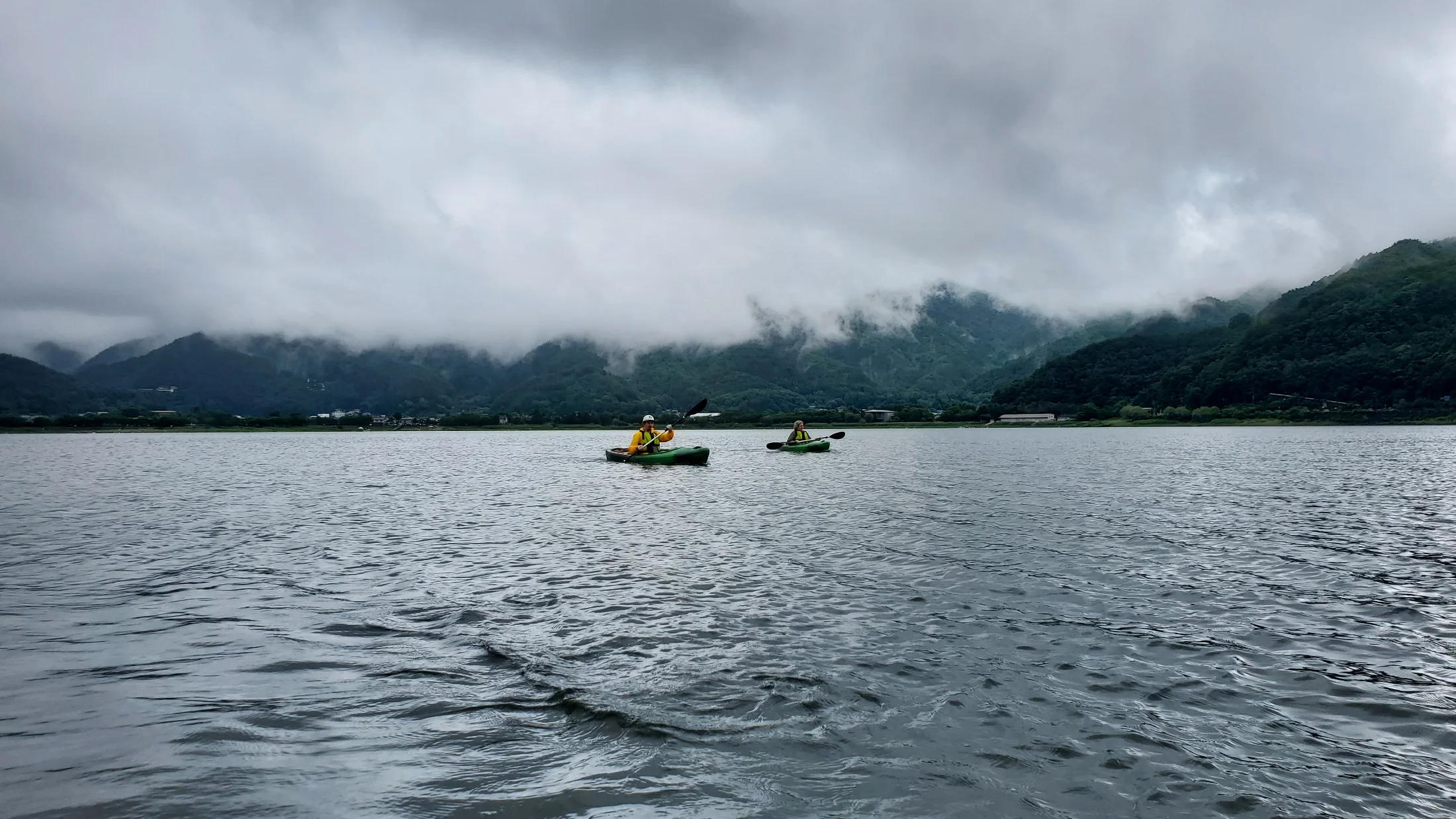
Japan’s rainy season is often misunderstood.
It does not usually rain continuously for six weeks. There can be dry mornings, bright afternoons and occasionally several pleasant days in a row.
However, the season does bring more cloud, humidity and uncertainty. Around the Fuji Five Lakes, it also reduces the likelihood of seeing Mount Fuji and makes some outdoor routes considerably less comfortable.
A successful rainy-season visit depends less on avoiding every drop of rain than on keeping the day flexible.
When Is the Rainy Season?
The rainy season is known in Japanese as tsuyu or baiu.
The Fuji Five Lakes belong to the Kanto–Koshin weather region. Based on the Japan Meteorological Agency’s 1991–2020 averages, the rainy-season transition usually begins around 7 June and ends around 19 July. The Japan Meteorological Agency publishes the climatological dates for each region.
These are averages, not fixed annual dates.
In some years, the season begins earlier or ends later. There may also be long dry intervals within it. The official start and end dates describe a gradual regional weather transition rather than a sudden change occurring on one particular day.
AT A GLANCE
- Typical period: Early June to around the second half of July
- Usual conditions: Cloud, humidity, drizzle, intermittent rain and occasional heavier rainfall
- Mount Fuji visibility: Less reliable
- Best approach: Combine short outdoor periods with flexible indoor options
- Essential equipment: Waterproof outer layer and suitable shoes
It Does Not Rain All Day, Every Day
Some rainy-season days bring steady rain from morning until evening.
Others consist of light drizzle, low cloud or short showers separated by long dry periods. There are also occasional days that feel almost like summer.
The main difficulty is uncertainty.
A forecast showing rain does not necessarily mean that outdoor activity will be impossible all day. Conversely, a cloudy forecast with a modest chance of precipitation can still produce several hours of rain.
Conditions can also vary within the region. Kawaguchiko may experience light drizzle while Yamanakako remains dry, or the western lakes may sit beneath dense cloud while Fujiyoshida is brighter.
This makes hourly forecasts and rainfall radar more useful than relying only on a single daily weather symbol.
What Does June Feel Like Around Kawaguchiko?
The Fuji Five Lakes are at a substantially higher elevation than Tokyo. The weather can therefore feel cooler than visitors expect, particularly when rain, cloud and wind combine.
At the Japan Meteorological Agency’s Kawaguchiko observation station, the 1991–2020 June averages are:
- Average daytime high: 23°C
- Average temperature: 17.8°C
- Average nighttime low: 13.7°C
- Average relative humidity: 80%
- Monthly precipitation: 157.1 millimetres
These figures are long-term averages rather than a prediction for any particular visit. The full Kawaguchiko climate normals are available through the Japan Meteorological Agency.
A bright, dry afternoon can feel warm. A rainy morning beside the lake can feel surprisingly cool.
Do not assume that the clothing you used in Tokyo will be sufficient around the lakes.
Mount Fuji May Remain Hidden
Mount Fuji visibility is generally less reliable during the rainy season.
The mountain can be covered by:
- Widespread regional cloud
- Low cloud along the slopes
- Cloud concentrated around the summit
- Mist and atmospheric haze
- Rain falling between the viewpoint and the mountain
It is possible to have good visibility during a break in the weather, especially early in the morning. Fuji may also appear briefly when cloud shifts or after a weather system passes.
However, visitors should be prepared for the possibility that the mountain will remain hidden for an entire day or longer.
Moving from Kawaguchiko to another lake does not guarantee a clearer view. Before traveling across the region solely to look for Fuji, check live cameras from several locations.
For a fuller explanation, see [Why Mount Fuji Is Not Always Visible].
Rain Changes the Forest
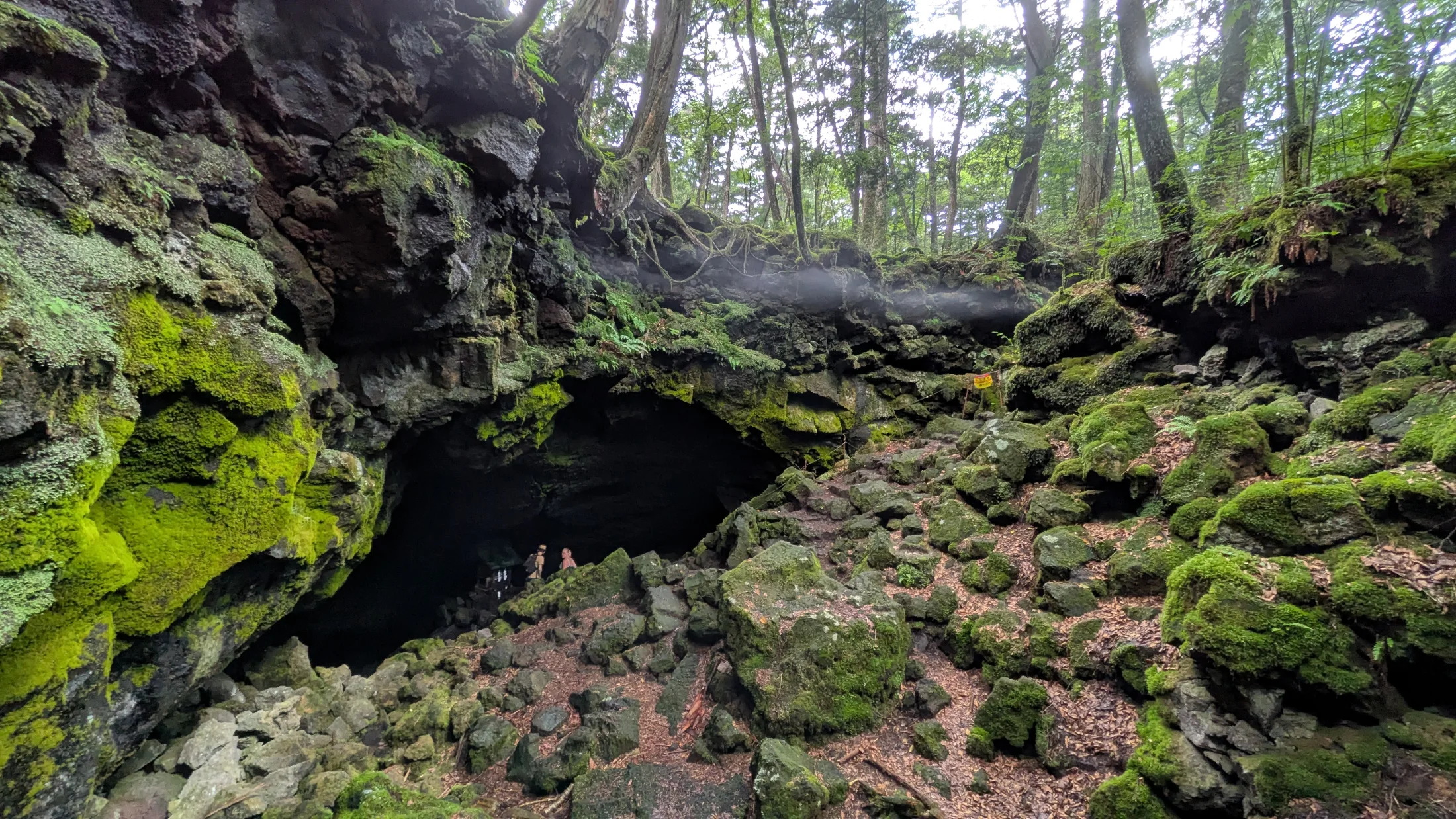
Rain can make the forests around Saiko and Aokigahara especially atmospheric.
Moss becomes brighter, the volcanic rock darkens and low mist can settle between the trees. The sound of water on the canopy also creates a quieter experience than on a dry day.
But the same conditions introduce practical difficulties.
Roots, stones, wooden steps and exposed lava can become slippery. Water may gather in depressions, while dense vegetation can leave narrow paths wet long after the rain has stopped.
Inside Aokigahara, rain also reduces light beneath the already dense canopy.
Stay on recognized paths, avoid unofficial forest entrances and reconsider longer routes during heavy rain. A short walk on an established trail is very different from entering a remote section of forest in poor visibility.
Walking Is Still Possible—With the Right Route
Light rain does not necessarily prevent walking.
Short lakeside sections, town walks and well-maintained paths can still be enjoyable with suitable clothing. Rain may also make some popular outdoor areas quieter.
The key is to choose a route from which you can exit easily.
During uncertain weather, avoid committing to:
- A complete circuit of a lake
- A remote forest route
- A long walk without nearby shelter
- A route dependent on an infrequent return bus
- Steep paths with exposed roots or loose surfaces
A short walk near a museum, café or frequent bus stop gives you more control if conditions deteriorate.
Cycling Becomes Less Attractive
Cycling can be practical in very light rain, but it becomes considerably less pleasant when the rain is steady.
Wet roads increase braking distance, while painted surfaces, metal covers and fallen leaves can become slippery. Spray from passing vehicles also reduces comfort and visibility.
A full circuit of Kawaguchiko or Yamanakako should not be treated as a default rainy-day activity.
If you still plan to rent a bike:
- Choose a short route
- Confirm the rental company’s wet-weather policy
- Avoid cycling during heavy rain or thunderstorms
- Use lights if visibility is poor
- Return before conditions worsen
- Keep bags and electronics waterproof
Do not let the cost of an existing rental push you into continuing when conditions have become unsafe.
Lake Activities Depend on More Than Rain
Light rain alone does not always cause kayaking, boating or other lake activities to be cancelled.
Wind, lightning, water conditions and visibility are often more important than rainfall itself. An operator may therefore continue an activity during drizzle but cancel it on a dry-looking day with strong wind or an approaching thunderstorm.
Cancellation decisions belong to the operator responsible for the activity.
Check directly before departure and make sure you understand the cancellation and rescheduling policy. Do not assume that rain automatically produces a refund.
Buses Are Useful, but Wet Days Need More Time
Public buses become particularly useful when walking and cycling are less comfortable.
However, rainy weather can make the transport experience slower and less convenient:
- More passengers may choose the bus
- Boarding takes longer when people carry wet umbrellas and luggage
- Road traffic can cause delays
- Some stops have little or no shelter
- Mist and heavy rain may slow traffic
Avoid planning connections with very small margins. Carry a compact umbrella even if you intend to use buses, as the final section between the stop and your destination may still be exposed.
For regional transport planning, see [Getting Around the Fuji Five Lakes Without a Car].
What to Wear
The most useful rainy-season clothing is practical rather than heavy.
Bring:
- A lightweight waterproof jacket with a hood
- Water-resistant walking shoes
- Quick-drying trousers
- A light warm layer
- Spare socks
- A small towel
- A waterproof pouch or dry bag for electronics
- A compact umbrella for towns and short transfers
An umbrella is convenient around Kawaguchiko Station, shops and museums. It is less useful on forest paths, in strong wind or while cycling.
Avoid relying on a thick cotton sweatshirt or jeans as your only warm clothing. Once wet, both can remain uncomfortable for a long time.
PACKING NOTE
- The most common mistake is preparing for warm rain but not for cool rain.
- Around the lakes, a wet day in June can feel much colder than the temperature suggests.
Light Rain and Heavy Rain Require Different Decisions
Rainy weather is not automatically dangerous.
Heavy rain, thunderstorms and official weather warnings are different. They should change the day’s plan.
Light Rain or Drizzle
Short walks and normal sightseeing may remain possible. Wear suitable clothing and keep an indoor alternative nearby.
Steady Rain
Reduce the distance of outdoor routes. Concentrate on museums, workshops, cafés and locations connected by reliable transport.
Heavy Rain or Thunderstorms
Avoid remote forest trails, exposed lakeshores, cycling and unnecessary travel. Follow instructions from activity operators and local authorities.
Official Warning or Advisory
Check the exact affected area and follow official guidance. The Japan Meteorological Agency provides multilingual weather, heavy-rain and disaster information. Its multilingual information portal is available here.
Do not continue an outdoor plan simply because a reservation has already been made.
The Rainy Season Is Not the Same as Typhoon Season
The rainy season is associated with the seasonal rain front that affects much of Japan in early summer.
Typhoons are separate weather systems. They are more commonly associated with later summer and autumn, although tropical systems and periods of intense rainfall can occur outside those expectations.
A normal rainy day and an approaching typhoon should never be treated in the same way.
If severe weather is forecast, check transportation, attraction and activity updates directly. Services may be reduced or suspended even if conditions beside your accommodation still appear calm.
What Can You Do on a Rainy Day?
A rainy day does not have to become a day spent entirely inside the hotel.
A balanced plan might include:
- A short lakeside walk during a dry interval
- A museum or gallery
- A local craft workshop
- A long lunch or café stop
- A short drive or bus journey rather than a regional circuit
- A brief forest walk if conditions remain light and stable
- Another outdoor stop if the weather improves later
The mistake is not going outside. The mistake is committing the whole day to one long outdoor route with no practical alternative.
A Flexible Rainy-Day Structure
Instead of fixing every activity in advance, organize the day in three parts.
Morning
Check the forecast, rainfall radar and local live cameras.
If conditions are relatively dry, use the morning for your main outdoor activity. Mount Fuji visibility is also more likely to improve early than after daytime cloud has developed.
Middle of the Day
Plan an indoor visit, workshop or relaxed meal. This gives you a reliable part of the day even if the rain becomes heavier.
Afternoon
Reassess the conditions.
If the weather improves, take a short walk or return to the lake. If it deteriorates, remain close to transport and indoor facilities.
SIMPLE RULE
- Light rain: shorten the outdoor plan.
- Heavy rain: change the plan.
- Official warning: follow local guidance.
Is the Rainy Season a Bad Time to Visit?
Not necessarily.
The rainy season is less suitable for visitors whose only priority is an unobstructed photograph of Mount Fuji. Visibility is unpredictable, and long outdoor itineraries carry a greater risk of disruption.
But the season also reveals a different side of the region.
The forests are deeply green. Mist moves across the foothills. Wet volcanic rock and moss become more visible, and familiar landscapes feel quieter and more enclosed.
The important thing is to arrive with the right expectations.
Do not plan six weeks of rain in your imagination—but do not plan six weeks of uninterrupted sightseeing weather either.
Bring suitable clothing, check conditions locally and allow the day to change.
Continue Planning
- [Why Mount Fuji Is Not Always Visible]
- [What to Do Around Kawaguchiko on a Rainy Day]
- [What to Wear for Forest and Lakeside Walks]
- [Getting Around the Fuji Five Lakes Without a Car]
For a fuller explanation of why views can change so quickly, see Why Mount Fuji Is Not Always Visible.