
Walking into Aokigahara Jukai
The living forest beneath Mount Fuji
From the road, Aokigahara appears almost impenetrable: an unbroken wall of trunks, leaves and deep green shadow.
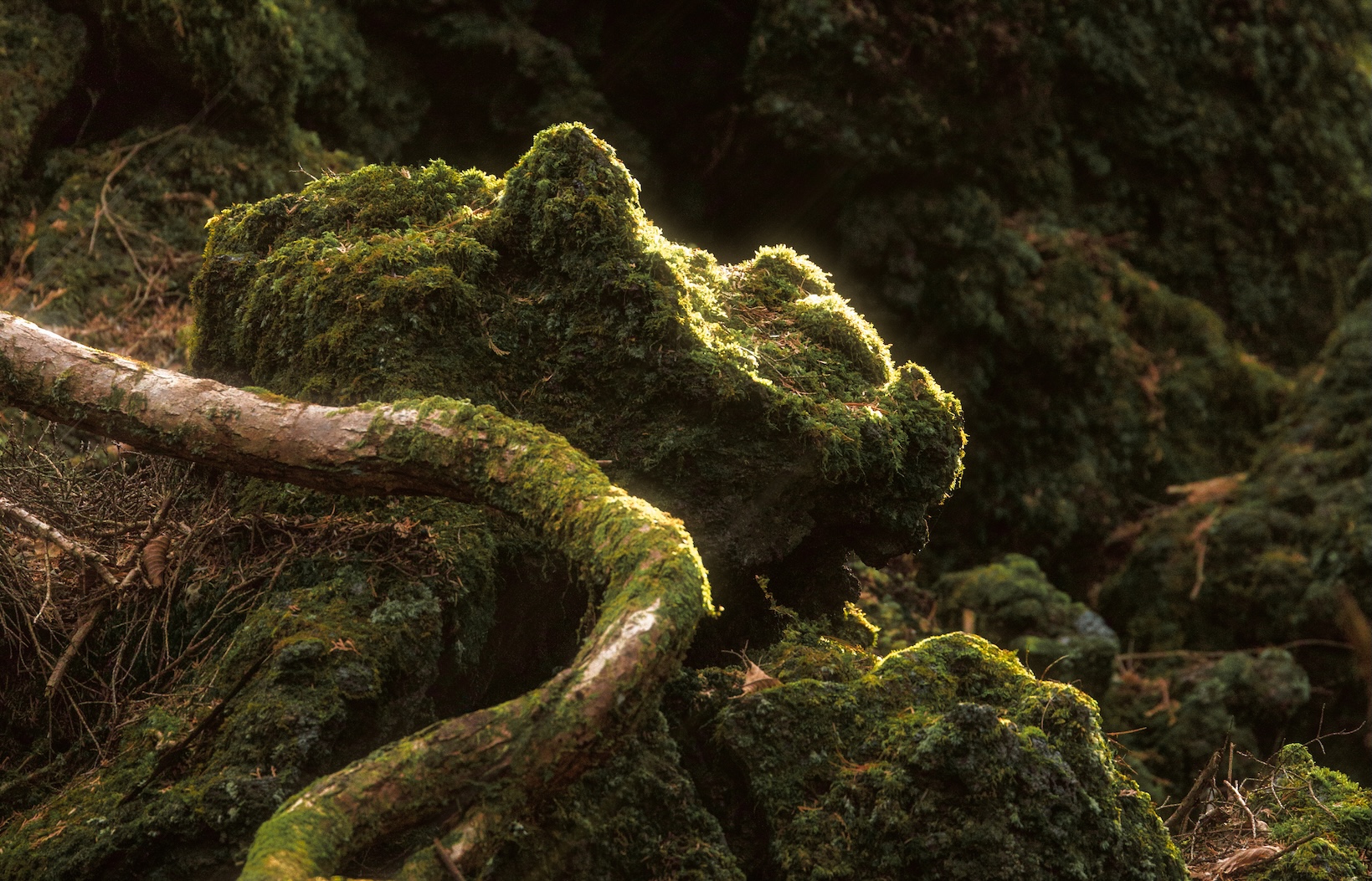
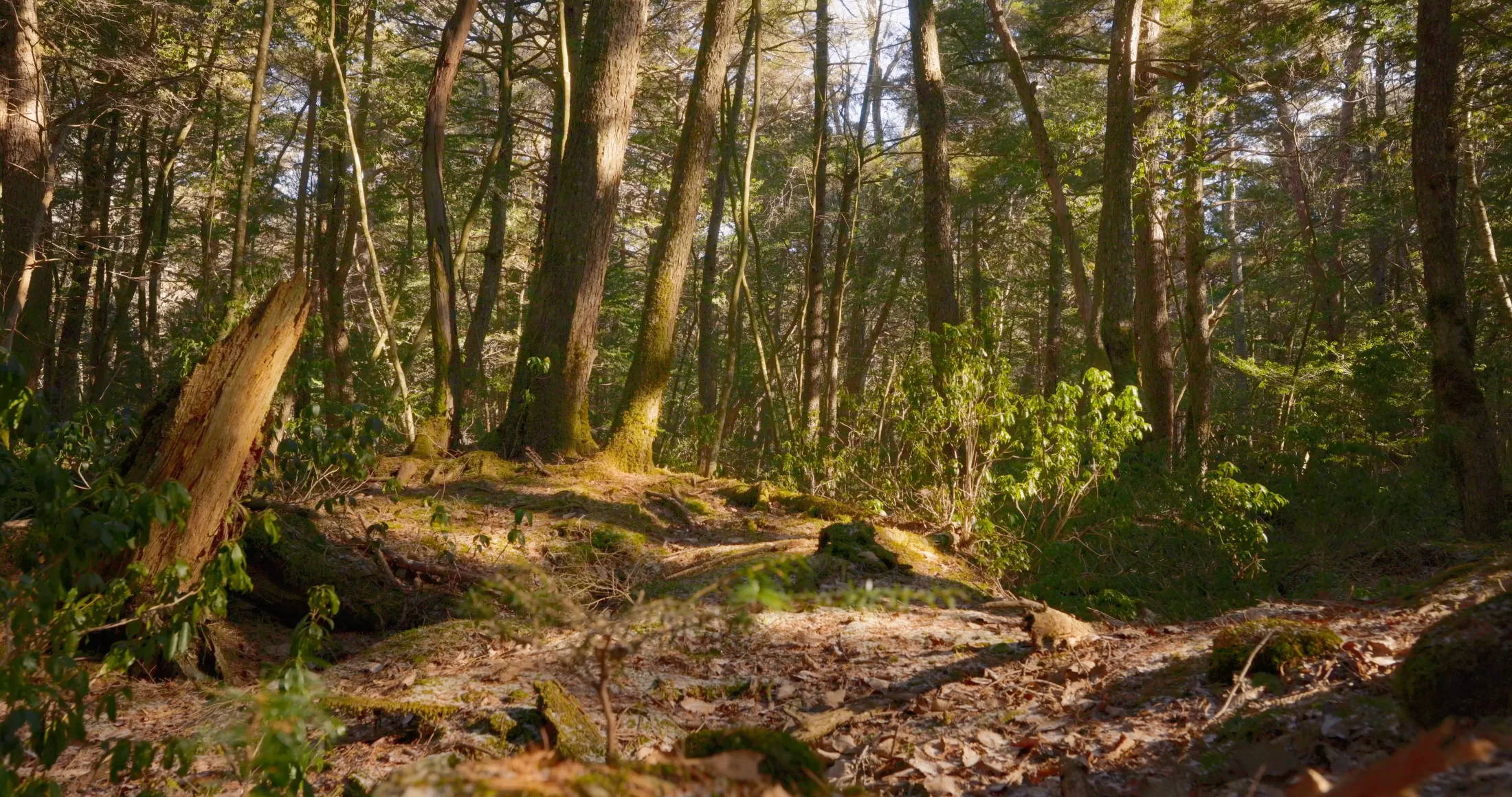
A few steps beneath the canopy, however, the forest begins to reveal how it was made. Tree roots do not disappear into deep earth. They travel sideways across black volcanic rock, curve around fractures in the lava and hold onto the thin layer of soil that has accumulated over centuries. Moss covers the ground, fallen branches settle between the rocks, and the sounds of the road gradually disappear.
This is Aokigahara Jukai, often translated as the Sea of Trees, a forest created not simply beside Mount Fuji, but directly upon one of its lava flows.
A guided walk here is less about reaching a destination than learning how to read the landscape beneath your feet.
For safety and visitor context, see What You Should Know Before Entering Jukai and Yamanashi’s official Aokigahara Forest guide.
FTC BOOKING PORTALCheck availability hereAokigahara Forest Guided Nature Walk
Aokigahara · Approximately 3 hr 30 min · English-speaking guide · Small group
The route, departure time, restrictions and access to the cave may vary according to current conditions.
A forest born from an eruption
Aokigahara feels ancient, but the forest is younger than many visitors imagine.
It grew over lava released during Mount Fuji’s major eruption of 864. Today, the forest extends across approximately 30 square kilometres on the mountain’s northwestern side. The hardened lava beneath it also helped create the wider landscape of the Fuji Five Lakes, along with lava tunnels, caves and tree moulds found around the base of the mountain.
The ground explains many of the forest’s most recognisable features. Because the soil above the lava is shallow, roots spread visibly across rocks instead of descending far beneath them. Trees bend, divide and adjust themselves around the uneven surface. In some places, the lava has cracked or collapsed, leaving openings and hollows beneath the forest floor.
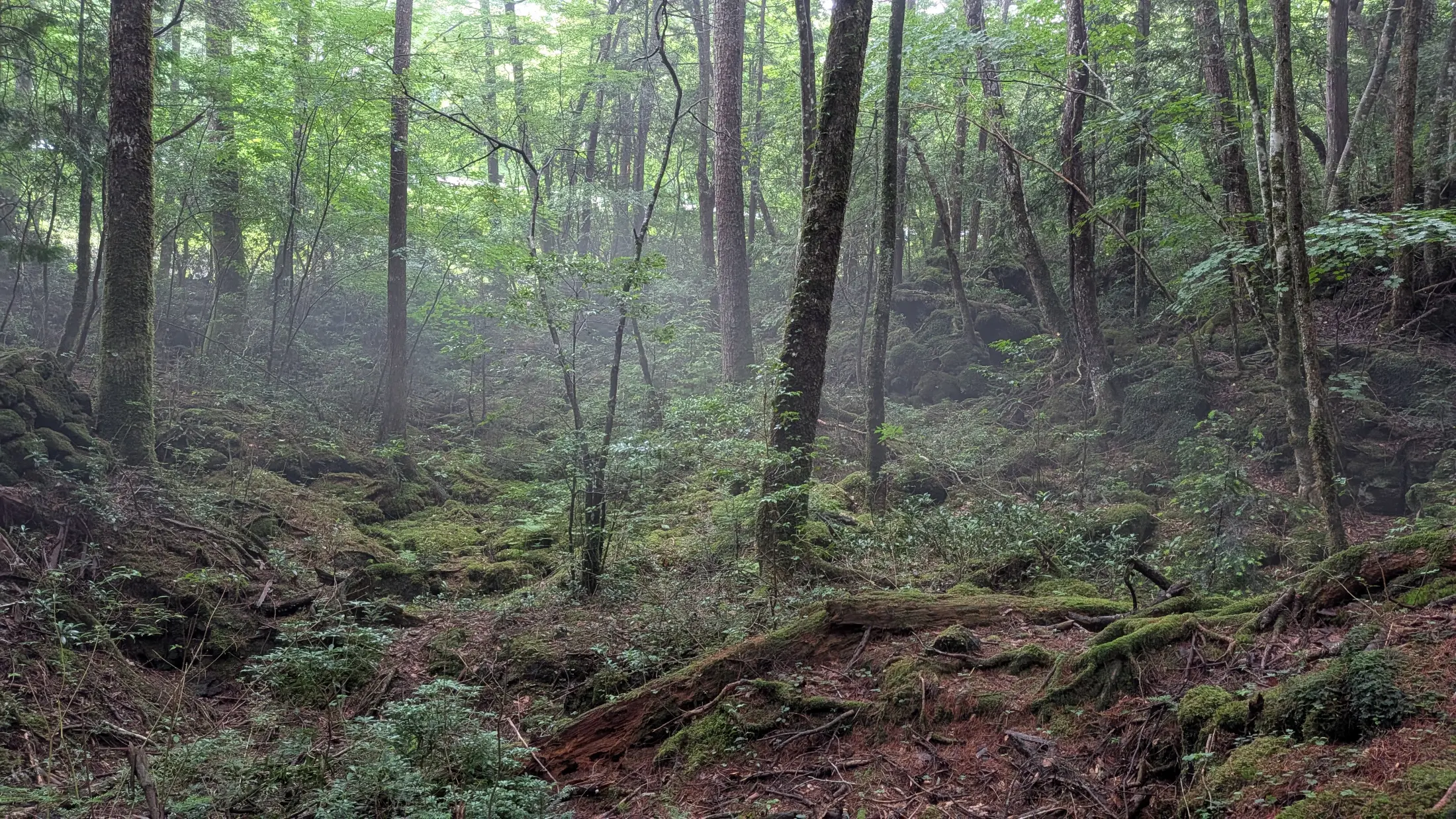
The porous volcanic rock also absorbs sound. This contributes to the unusual quiet that visitors often notice after entering the forest. It is not an artificial silence, nor something that needs to be exaggerated. It is a physical quality of the landscape.
First understand the forest, then listen to it
The experience has an unusual rhythm.
During the first part of the walk, the guide introduces the geology, natural environment, history and stories associated with Aokigahara. Features that might otherwise appear to be ordinary rocks, roots or depressions begin to form part of a much larger volcanic landscape.
The second part of the walk becomes quieter. Rather than filling every moment with commentary, the guide allows the group to move at a relaxed pace and experience the forest with fewer interruptions. This transition, from explanation to observation, is an explicit part of the current tour concept.
That silence should not be confused with emptiness. The closer you look, the more detail appears: the different textures of moss, the shape of roots responding to the lava, small openings in the rock and subtle changes in light beneath the canopy.
A good guide does not simply lead the way. The guide provides enough context for visitors to understand what they are seeing, then gives the forest space to make its own impression.
Beyond the version of Aokigahara found online
Internationally, Aokigahara has often been reduced to its darkest associations. That history should not be erased, but neither should it become the only lens through which a living landscape is seen.
The forest is also an ecosystem, a record of volcanic activity, part of the everyday geography of the Fuji Five Lakes and a place that local people continue to study, guide and protect.
Recent guests repeatedly mention how the guided walk helped them separate the physical reality of Aokigahara from the rumours and mythology encountered online. They describe the forest itself as beautiful, peaceful and surprisingly calming. Several reviews particularly value the guide’s willingness to answer questions carefully, explain misconceptions and admit honestly when something cannot be known with certainty.
The tour therefore does not need to manufacture mystery. The real forest is already complex enough.
This was truly an unforgettable experience. Our guide, Grahame, was incredibly knowledgeable of the forest, so immensely welcoming, and just a great lad. I would recommend this trip and guide to anyone!
Joshua M
A FOREST, NOT A SPECTACLE
Aokigahara is frequently approached through stories told about it.
This walk begins instead with the ground, the trees, the lava and the people who know the area.
The hidden landscape beneath the trees
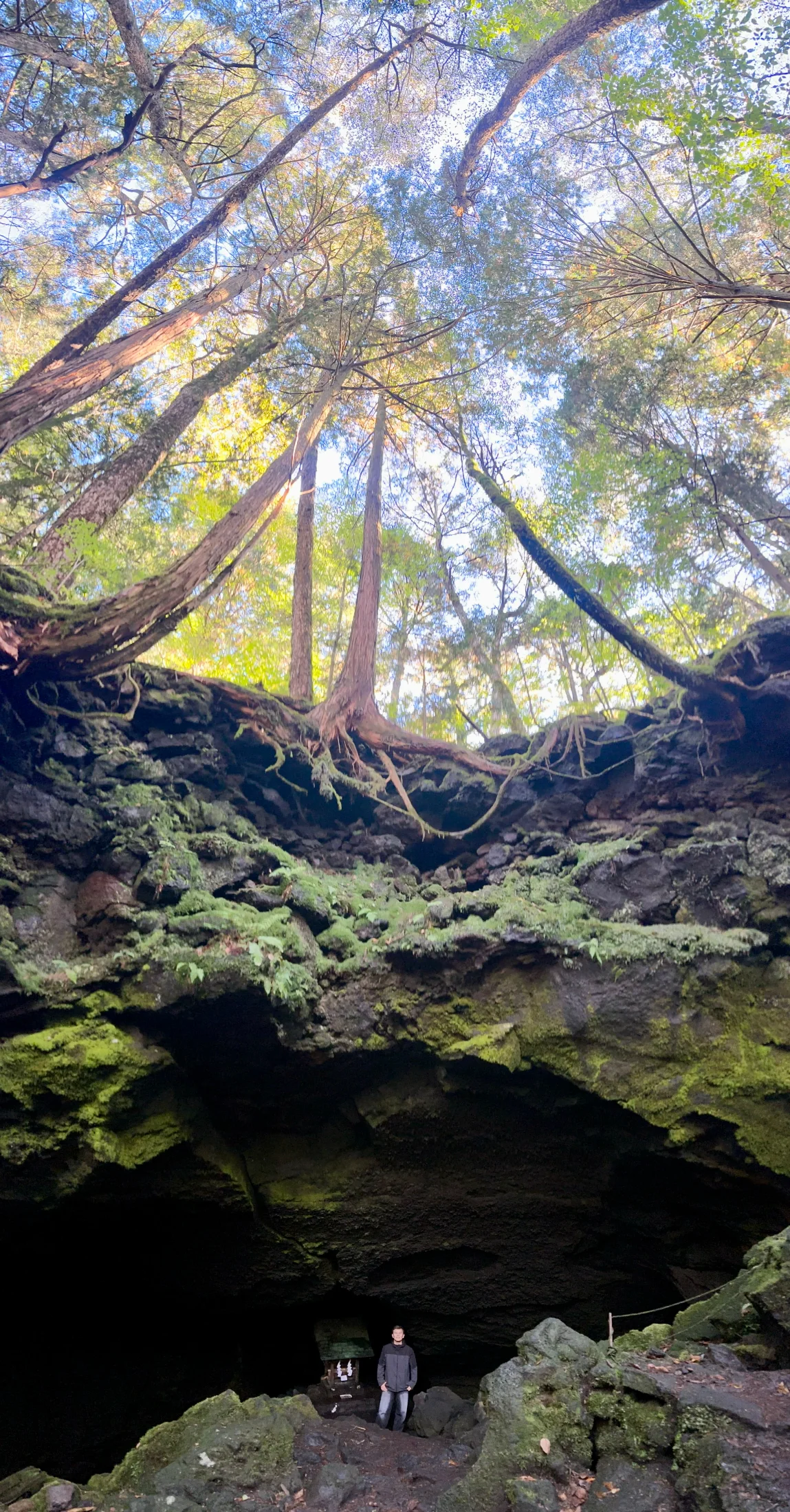
The published itinerary includes a visit to a hidden cave deeper inside the forest.
Caves and hollows are a natural part of the Aokigahara landscape. When lava flowed from Mount Fuji, its surface sometimes hardened while molten rock continued moving beneath it. Once the lava drained away, tunnels and cavities remained. Other sections later fractured or collapsed, creating openings now surrounded by trees and moss. The wider national park contains numerous lava tunnels, wind caves, ice caves and lava tree moulds created through these volcanic processes.
This activity should not, however, be presented as an ice-cave spelunking expedition. The principal experience is the guided forest walk. The cave is one chapter within the landscape rather than a separate commercial attraction.
The published example itinerary currently places the cave visit around the middle of the experience, after approximately an hour of walking and interpretation in the forest. The precise route and degree of access should remain subject to the guide’s decision and conditions on the day.
A walk that is approachable, but not completely effortless
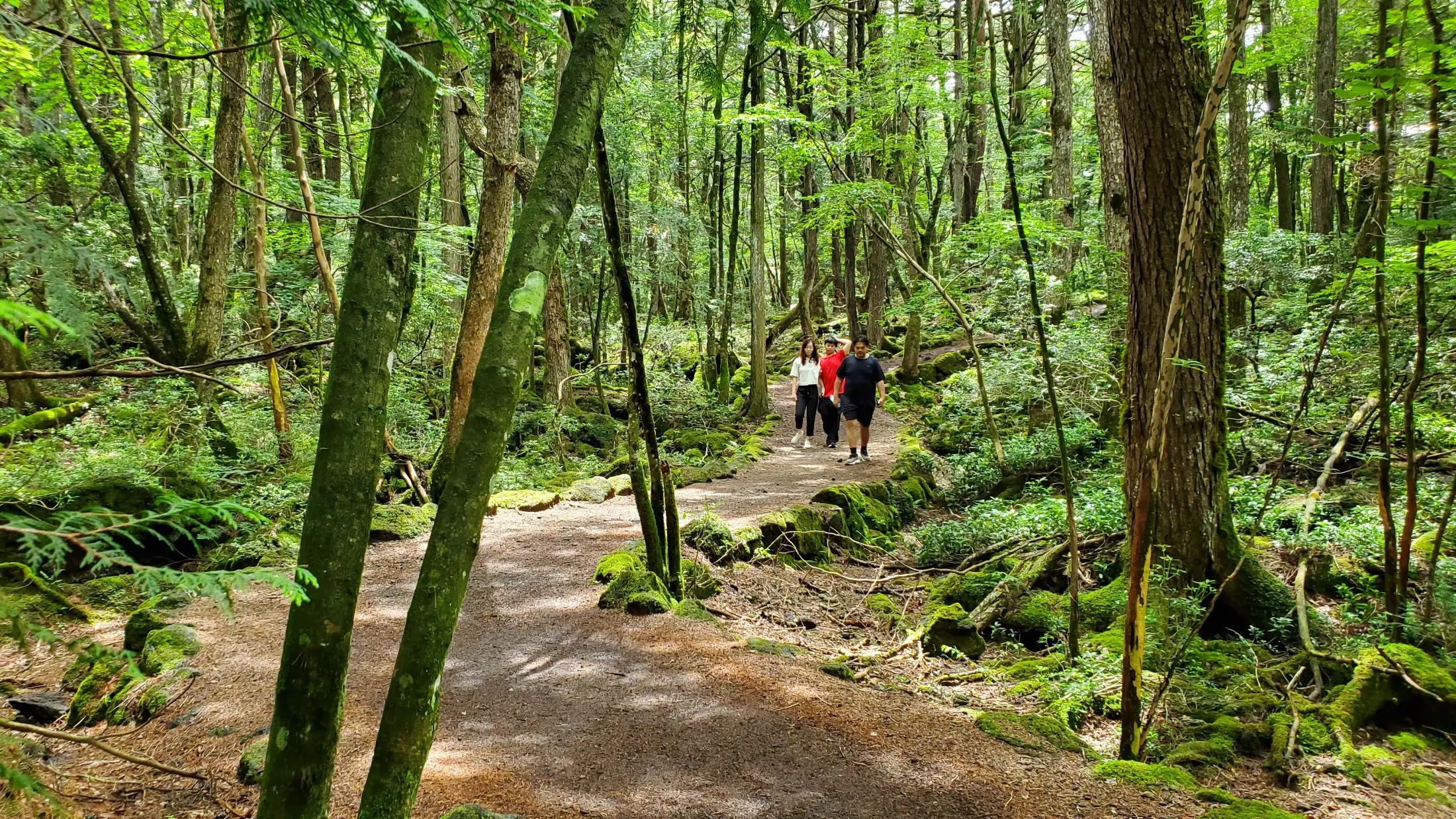
This is not a climb towards a summit. There are no long, steep ascents in the published programme, and one recent guest described the path as manageable rather than difficult.
It is also not a paved garden walk.
Roots cross the route, volcanic rocks create irregular footing and sections of the forest floor can be narrow or unstable. Walking shoes are therefore important, even when the weather is dry. The current listings advise weather-appropriate clothing and comfortable walking footwear. They also state that the activity is not suitable for wheelchair users or people with certain mobility, visual, spinal, pregnancy, cardiac or serious medical considerations.
Guests should be comfortable walking for several hours and able to follow the guide’s instructions. The live booking information should always remain the authoritative source for age limits and medical restrictions.
What travellers remember
The activity is still relatively new, so the number of published reviews remains limited. Their themes are nevertheless remarkably consistent.
Guests describe:
- a peaceful forest rather than a frightening one;
- a knowledgeable and welcoming guide;
- explanations of geology, local history and common misconceptions;
- a pace that does not feel rushed;
- access to places they would not have noticed or understood alone;
- time to experience the atmosphere without constant commentary.
One guest travelling alone described feeling fortunate to have experienced Jukai in this way. A family traveller emphasised the guide’s knowledge and welcoming personality. Another couple remembered both the calm forest and an additional view over the surrounding landscape. The latter should be treated as an individual tour moment rather than a guaranteed element of every departure.
The GetYourGuide reviews similarly focus on the depth of explanation, honest answers, relaxed rhythm and the way the walk corrected assumptions formed before the visit.
First of all, we highly recommend this tour! We started this experience with a neutral mindset, but we were genuinely amazed by the forest. The explanations were incredibly detailed, and we learned so much,not only about the nature and history of the forest, but also about the many rumors and myths that can be found online. We were given the opportunity to take a relaxing break during the tour, which also led to a great conversation where we shared our experiences and opinions. The walk lasted a little longer than expected, which was definitely a positive! Grahame took the time to explain everything thoroughly and never made us feel rushed. He also gave us time to simply enjoy the peaceful atmosphere of the forest. Every question we asked was answered with great enthusiasm and in detail. If there was something he wasn’t completely sure about, he was honest about it. He never made things up, and that made us trust him even more. A huge thank you to our tour guide, Grahame!
Lauren
WHAT GUESTS NOTICE
The quiet.
The volcanic ground beneath the trees.
The guide’s knowledge and honesty.
The feeling of seeing the forest beyond its reputation.
Mount Fuji, even when you cannot see it
This is not primarily a Mount Fuji viewpoint tour.
Inside the forest, the dense canopy may hide the mountain entirely. Visibility also depends on clouds and the precise route chosen that day. A panoramic view should therefore never be guaranteed in the article or represented as the central purpose of the experience.
Yet Mount Fuji is present throughout the walk.
It is present in the lava beneath the path, in the caves hidden below the trees, in the unusual way the roots grow and in the wider geography of the lakes surrounding the forest. Aokigahara is one of the clearest examples of Mount Fuji as a region rather than simply a distant shape to photograph.
For visitors who have already seen the mountain from a lake, a pagoda or an observation deck, the forest offers a different way to understand it: from the ground up.
Planning the experience from Kawaguchiko
The current example programme begins at NaturaBase in Funatsu, opposite Fuji Lake Hotel.
After meeting the guide, the group travels to the forest entrance before beginning the walk. The published schedule currently provides the following outline:
09:00 — Meet at NaturaBase
09:20 — Arrive at the forest entrance
10:40 — Visit a hidden cave and continue through the lava landscape
12:30 — Return from the forest and finish at NaturaBase
The activity lasts approximately three and a half hours, is currently conducted in English and is limited to a maximum of eight guests. One bottle of water per guest is included; lunch is not. Times and inclusions should be connected to the live activity record because the itinerary may evolve.
Finishing around midday leaves time to continue towards Lake Saiko, visit Saiko Iyashi-no-Sato Nenba, return to Kawaguchiko for lunch or explore another part of the Fuji Five Lakes.
What does “Jukai” mean?
Jukai means “Sea of Trees.” The name reflects the way Aokigahara appears as an extensive, almost continuous canopy spreading across the lava landscape northwest of Mount Fuji.
How was Aokigahara Forest formed?
Aokigahara developed on lava released during Mount Fuji’s major eruption in 864. The forest now covers approximately 30 square kilometres, with trees growing over shallow soil and volcanic rock.
Is this a difficult hike?
It is not a steep mountain climb, but the ground is naturally uneven. Expect exposed roots, rocks and volcanic terrain. Guests should be comfortable walking for several hours and should wear appropriate walking shoes.
Is the tour suitable for beginners?
Previous hiking experience is not generally required. The walk is guided and conducted at a relatively relaxed pace, but participants must be able to move safely over uneven natural ground. Current health, mobility and age requirements should be checked before booking.
Does the tour visit an ice cave?
The published itinerary includes a visit to a hidden cave within the forest. It is not described as a visit to the commercial Narusawa Ice Cave or Fugaku Wind Cave, and this activity should not be presented as a technical ice-cave expedition.
Is Mount Fuji visible during the walk?
A clear view of Mount Fuji is not guaranteed and is not the main focus of the experience. Much of the walk takes place beneath a dense canopy. The connection to Mount Fuji is instead experienced through the lava, caves and forest ecosystem created by its volcanic activity.
Is it safe to visit Aokigahara?
Visitors should remain on appropriate routes and follow their guide’s instructions. The forest is dense and the volcanic ground can make navigation difficult away from established paths. A guided walk provides both route knowledge and an explanation of the landscape. The official visitor guidance also advises independent visitors to remain on designated trails.
What should I wear?
Wear closed walking shoes with a reliable sole and clothing suited to the day’s weather. Long trousers are preferable for moving through natural forest terrain. A light waterproof layer is useful when rain is possible.
Where does the experience begin?
The meeting point is NaturaBase, 4010 Funatsu, Fujikawaguchiko, opposite Fuji Lake Hotel. The activity returns to the same location at the end of the programme.
Is food included?
The current listing includes one bottle of water per guest. Lunch is not included.
FTC BOOKING PORTALCheck availability here