
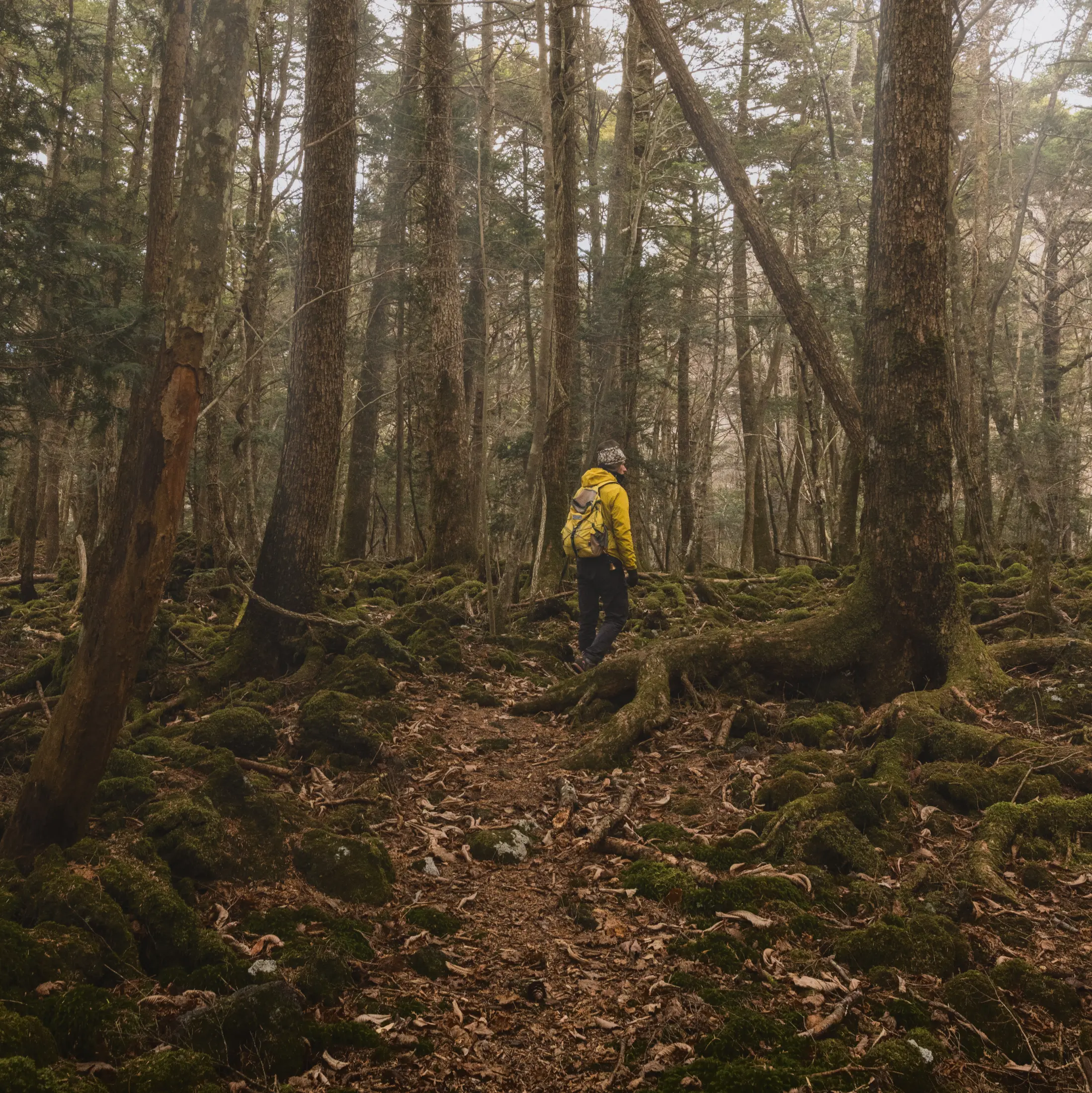
Jukai does not require specialist hiking experience, but it should not be entered casually.
The official walking trails around Lake Saiko make parts of the forest accessible to ordinary visitors. However, the volcanic ground, closely spaced trees and multiple junctions mean that a little preparation is essential.
Before entering, decide where you are starting, which destination you are following and how you will return. Do not simply stop beside a road and follow an opening between the trees.
For most first-time visitors, Saiko Nature Center and Saiko Bat Cave provide one of the clearest and most practical starting points.
BEFORE YOU ENTER
- Choose a recognised trail entrance.
- Check the weather and available daylight.
- Photograph the trail map at the entrance.
- Check the time of your return bus.
- Use the toilet before beginning.
- Wear closed shoes with good grip.
- Carry water, an additional layer and a bear bell.
- Tell someone where you intend to walk.
- Do not rely on your phone as your only means of navigation.
Jukai is not a single walking route
Aokigahara Jukai covers a large area, with several official trails, entrances, caves and nearby visitor facilities.
Around Lake Saiko, marked paths connect areas including Saiko Bat Cave, Wild Bird Forest, Ryugu Cave and Fugaku Wind Cave. These destinations may appear close together on a map, but the experience and walking conditions differ from one path to another.
Before starting, choose a specific destination rather than planning to “walk around Jukai” without a defined route. At every junction, stop and confirm the direction shown on the sign.
If you are unsure which path you have taken, return to the last junction you clearly recognised. Do not continue simply because another trail appears to lead in approximately the right direction.
The ground is more difficult than it looks
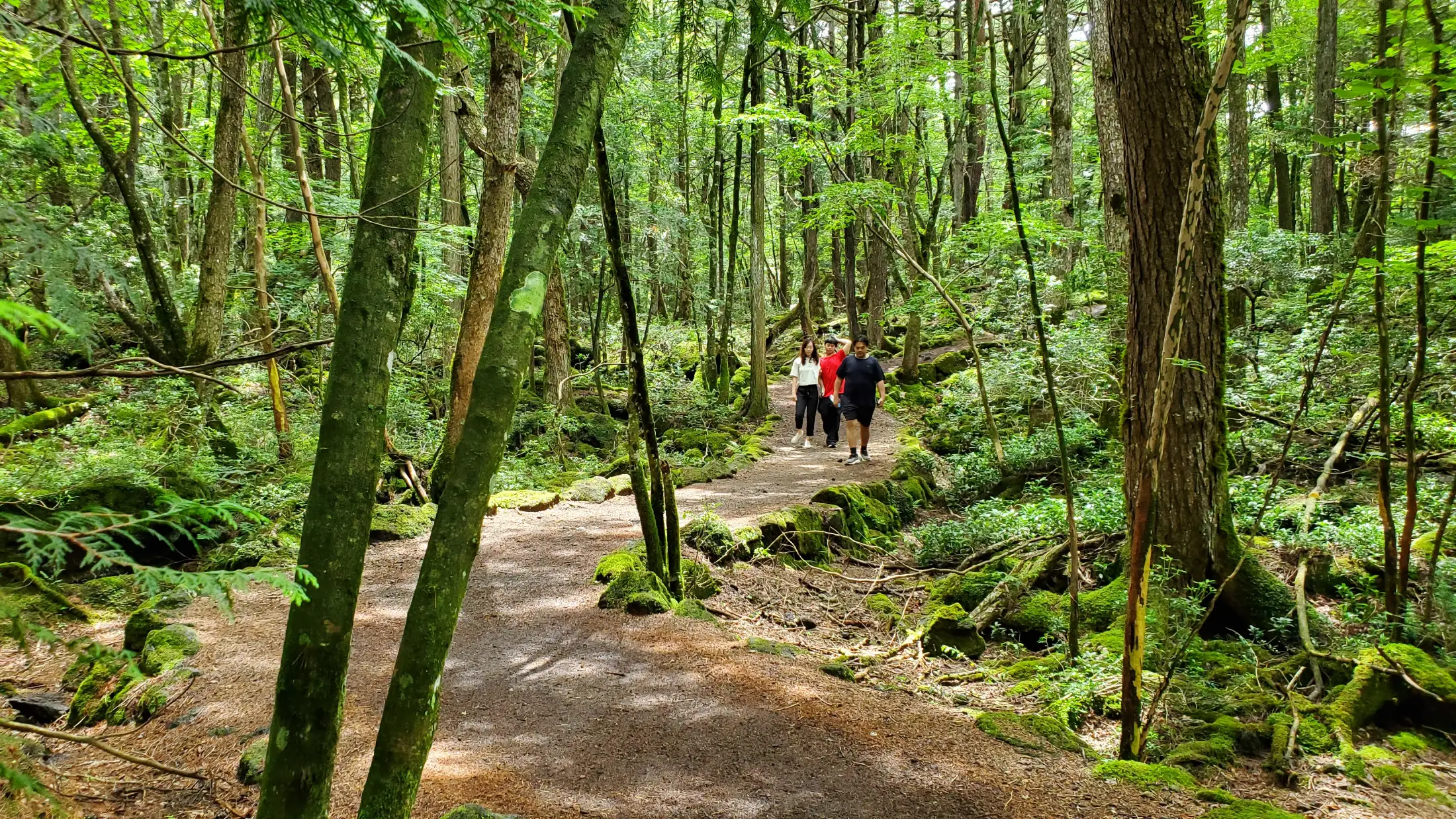
Many official trails are relatively flat, but flat does not mean smooth.
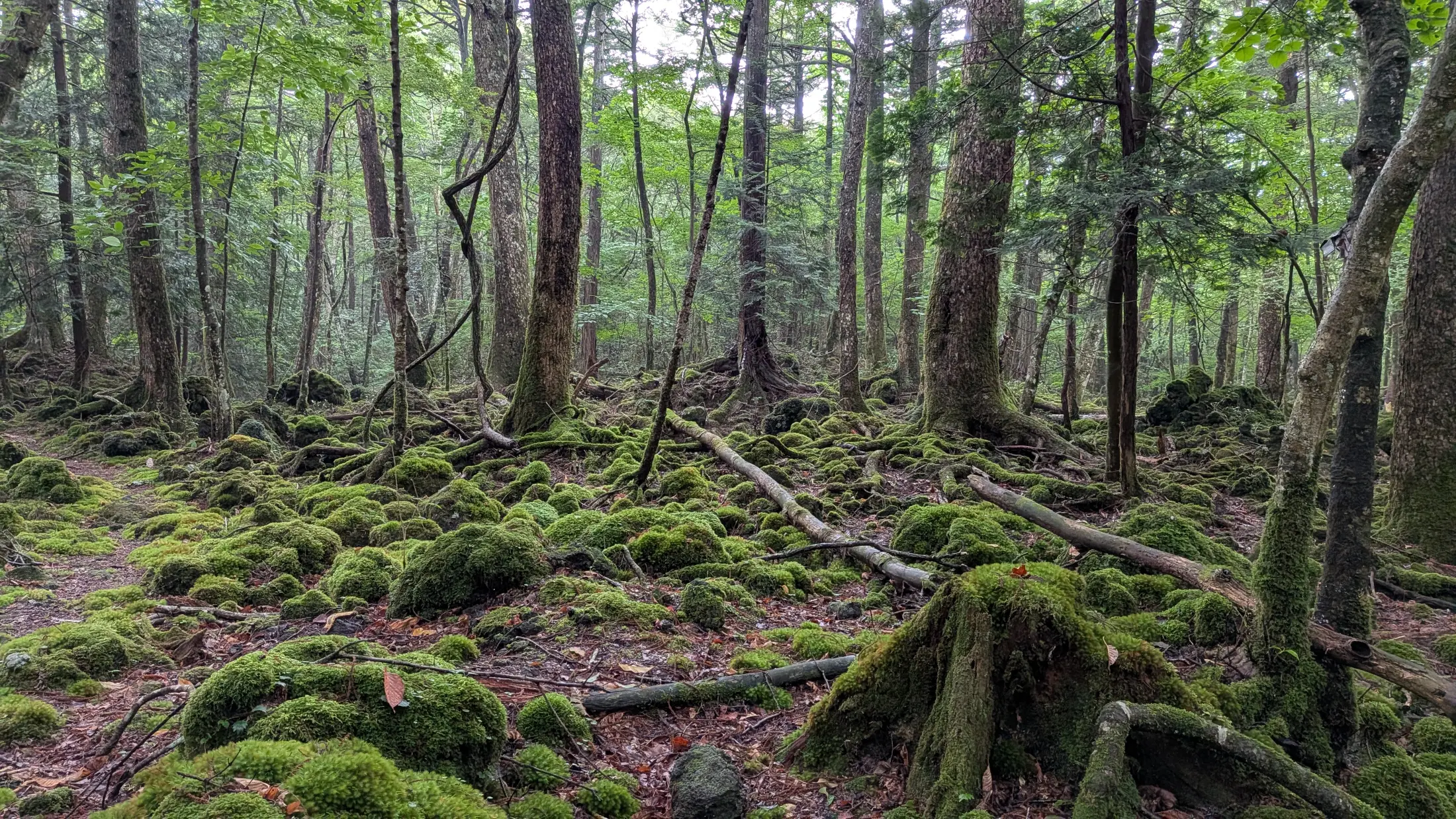
Jukai developed over hardened lava produced by Mount Fuji’s eruption of 864–866. The ground can include exposed roots, loose volcanic stones, cavities and areas of wet moss. Fallen leaves may also hide uneven sections of trail.
Closed walking shoes with good grip are strongly recommended. Sandals, smooth-soled fashion shoes and high heels are unsuitable, even for a short walk.
Move more slowly after rain and during autumn, when roots and holes may be harder to see. Snow and ice can change an otherwise straightforward path completely.
Carry a bear bell
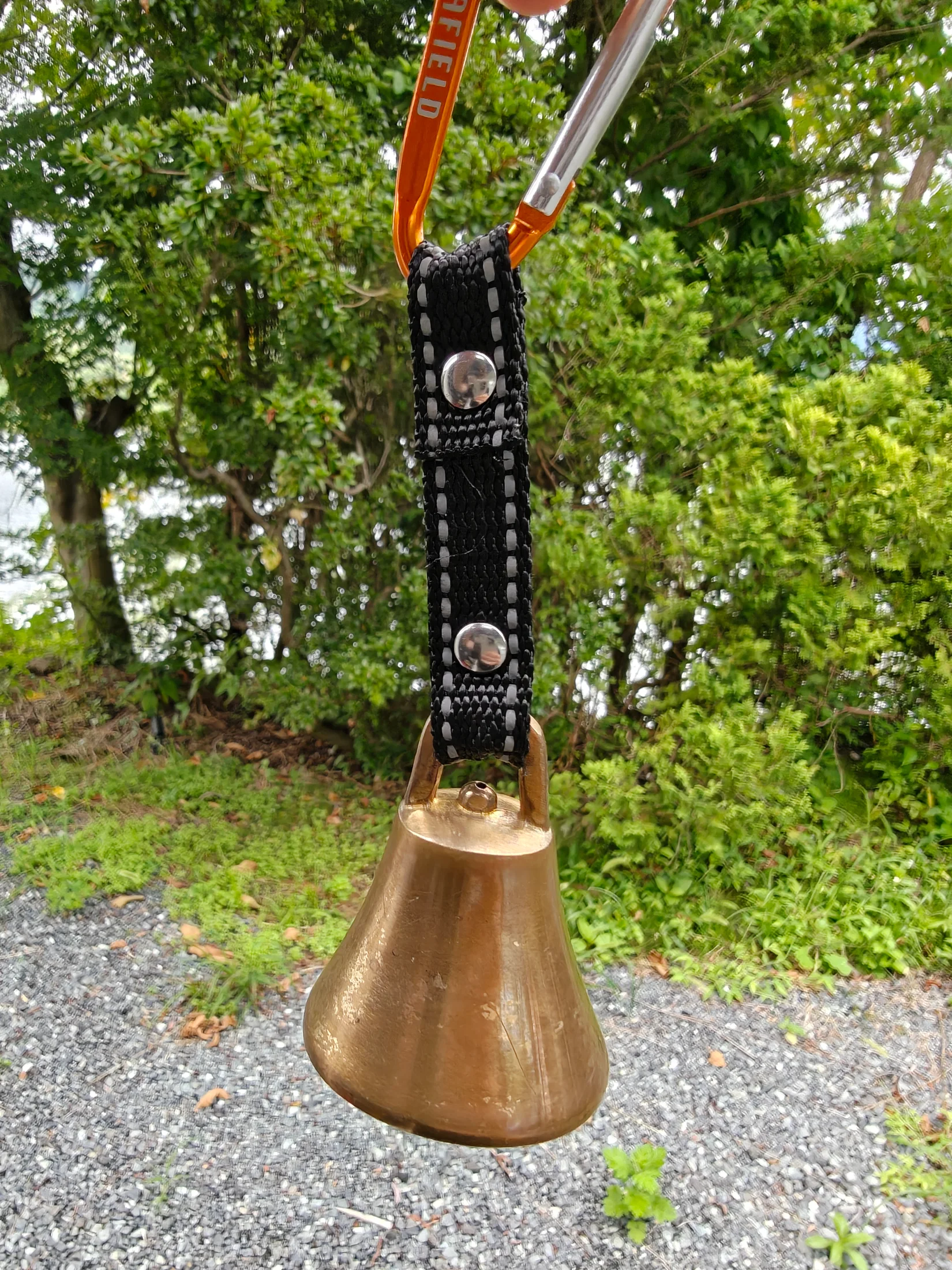
Japanese black bears live in the wider Fuji area and may occasionally pass through Jukai. The forest is not generally known for frequent encounters, but their presence should not be ignored. We have previously seen bear tracks during walks in the area.
A bear bell helps animals notice your presence before you get too close. It is particularly useful when walking alone, when the trails are quiet or when vegetation limits your view ahead.
The bell does not need to prevent you from experiencing the forest’s silence. Let it sound while you are moving, then stop occasionally and remain still if you want to listen for birds or other wildlife.
If you see a bear:
- Remain calm.
- Do not run or shout.
- Do not approach it or try to take photographs.
- Keep your distance.
- Move away slowly without turning your back.
Japanese environmental authorities also recommend using a bell, radio or human voices to reduce the risk of a sudden close encounter. Their current advice can be found through the Ministry of the Environment.
Do not depend entirely on your phone
Mobile reception should not be assumed throughout the forest. A phone can be useful for checking a downloaded map or photographing the information board at the entrance, but it should not replace attention to the signs on the trail.
Before entering:
- Save any useful map or information offline.
- Photograph the route map displayed at the entrance.
- Note the name of your starting point.
- Keep enough battery for the return journey.
- Tell someone where you are going if walking independently.
Do not follow unofficial markers, pieces of tape or apparent shortcuts into the forest. Remain on maintained paths and follow permanent directional signs.
Check the weather, not only the temperature
Conditions in Jukai can feel different from those beside Lake Kawaguchiko.
The tree cover reduces direct sunlight, while shaded and damp areas can remain cool. Carrying a light additional layer is useful even when the lakeside feels warm.
Rain makes roots, leaves and volcanic rock more slippery. Strong winds can also create a risk from falling branches. Avoid entering during severe weather, and leave enough daylight to finish your walk comfortably.
Winter requires additional care. Snow, ice and shorter days can make navigation and footing more difficult. Saiko Bat Cave is currently listed as closed from December 1 to March 19, although current opening information should always be checked on the official visitor page before travelling.
Use the facilities before starting
There are no toilets along the forest trails described in this guide.
Saiko Nature Center and the Bat Cave area provide the most useful facilities before entering. Use the toilet, prepare your water and check the local information before beginning your walk.
If arriving by bus, check your return journey in advance. The Saiko Sightseeing Bus, commonly identified as the Green Line, connects Kawaguchiko Station with Saiko Bat Cave, Wild Bird Forest and other locations around Lake Saiko.
Services are less frequent than those around central Kawaguchiko. Missing a return bus can leave you waiting for a considerable time, so note the timetable before entering the forest.
Kawaguchiko Station → Green Line → Saiko Bat Cave
Check the current bus route and timetable
The caves are not all visitor attractions
Several lava caves lie within or around Jukai, but they should not all be treated in the same way.
Saiko Bat Cave is a managed visitor site with an entrance, opening hours and safety equipment. Ryugu Cave, by contrast, is connected with a small shrine and local religious traditions. Visitors should respect barriers and observe it only from the designated area.
Never enter an unmaintained hole or cave simply because it appears accessible. Lava formations can be unstable, slippery and much deeper than they initially appear.
Leave the forest as you found it
Jukai is more fragile than its dense vegetation suggests.
Because many trees grow over shallow soil and lava, their roots remain exposed close to the surface. Leaving the trail can damage roots and crush moss that recovers very slowly.
While visiting:
- Stay on the official trail.
- Do not step onto moss for photographs.
- Do not collect lava, stones, plants or branches.
- Do not carve or peel bark from trees.
- Take all rubbish and food waste with you.
- Keep your distance from wildlife.
- Respect shrines, barriers and restricted areas.
- Avoid shouting, amplified music and disruptive behaviour.
Responsible behaviour is not only about protecting the forest. It also allows the next visitor to experience the same quiet atmosphere.
Do you need a guide?
A guide is not essential for every short walk on an official trail. Visitors who prepare properly and follow the signs can explore several sections independently.
A guided walk is useful if you want to understand how the lava shaped the landscape, how trees survive with so little soil, what the cave sites represent and which details are easily overlooked.
It also allows you to pay more attention to the forest instead of repeatedly checking your direction.
Discover Jukai with a local guide
FTC BOOKING PORTALCheck availability hereJukai is not a place that needs to be feared. It is a natural environment that deserves the same preparation and respect as any other forest.
Choose an official entrance, know where you are going, carry the right equipment and remain on the trail.
For more on walking in this landscape, see Walking in the Jukai Forest.