The region is much larger than its name suggests. Kawaguchiko, Saiko, Shojiko, Motosuko and Yamanakako are spread across two sides of Mount Fuji, connected by rural roads rather than a single railway or continuous sightseeing loop.
Trains provide easy access to Fujiyoshida and Kawaguchiko. From there, most journeys continue by sightseeing bus, local bus, bicycle, taxi or on foot.
The key is not to reproduce a driving itinerary using public transport. Choose one part of the region for each day, begin early and decide how you will return before setting out.
THE SHORT VERSION
- Easiest lake without a car: Kawaguchiko
- Best base for Kawaguchiko, Saiko, Shojiko and Motosuko: Kawaguchiko Station
- Best access for Yamanakako and Oshino: Fujisan Station, Kawaguchiko Station or a direct highway bus
- Most important planning rule: Check the return journey before the outward journey
- Most useful combination: Bus for the long distance, then walking or cycling within one area
- Least realistic plan: Trying to visit all five lakes in one day
Understand the region before choosing a route
The Fuji Five Lakes do not form one compact resort.
Kawaguchiko and Saiko lie relatively close together on the western side of Fujiyoshida. Shojiko and Motosuko continue farther west, beyond the Aokigahara forest. Yamanakako lies separately to the east.
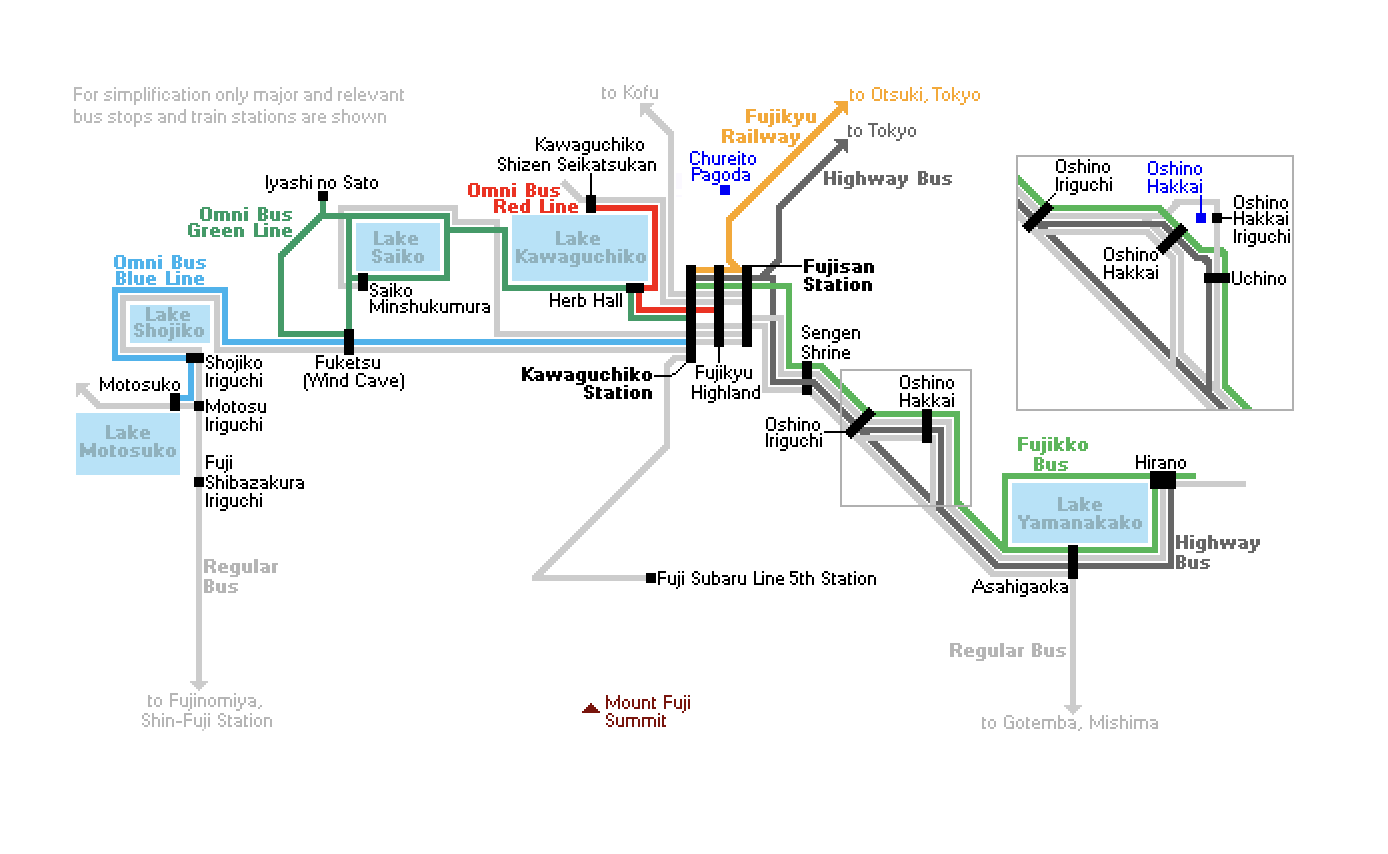
There is no train running from one lake to another. The Fujikyu Railway connects Otsuki with Fujisan Station, Fujikyu-Highland and Kawaguchiko Station, but Kawaguchiko is the end of the line.
There is also no single bus that circles all five lakes. Instead, the area is divided between several networks:
The Red Line serves the main sightseeing area around Kawaguchiko.
The Green Line connects Kawaguchiko with Saiko and the forest area.
The Blue Line continues west through Narusawa towards Shojiko and Motosuko.
Fujikko-Go serves Fujiyoshida, Oshino and Yamanakako.
Additional local routes connect the region with places including Shin-Fuji, Fujinomiya and Kofu.
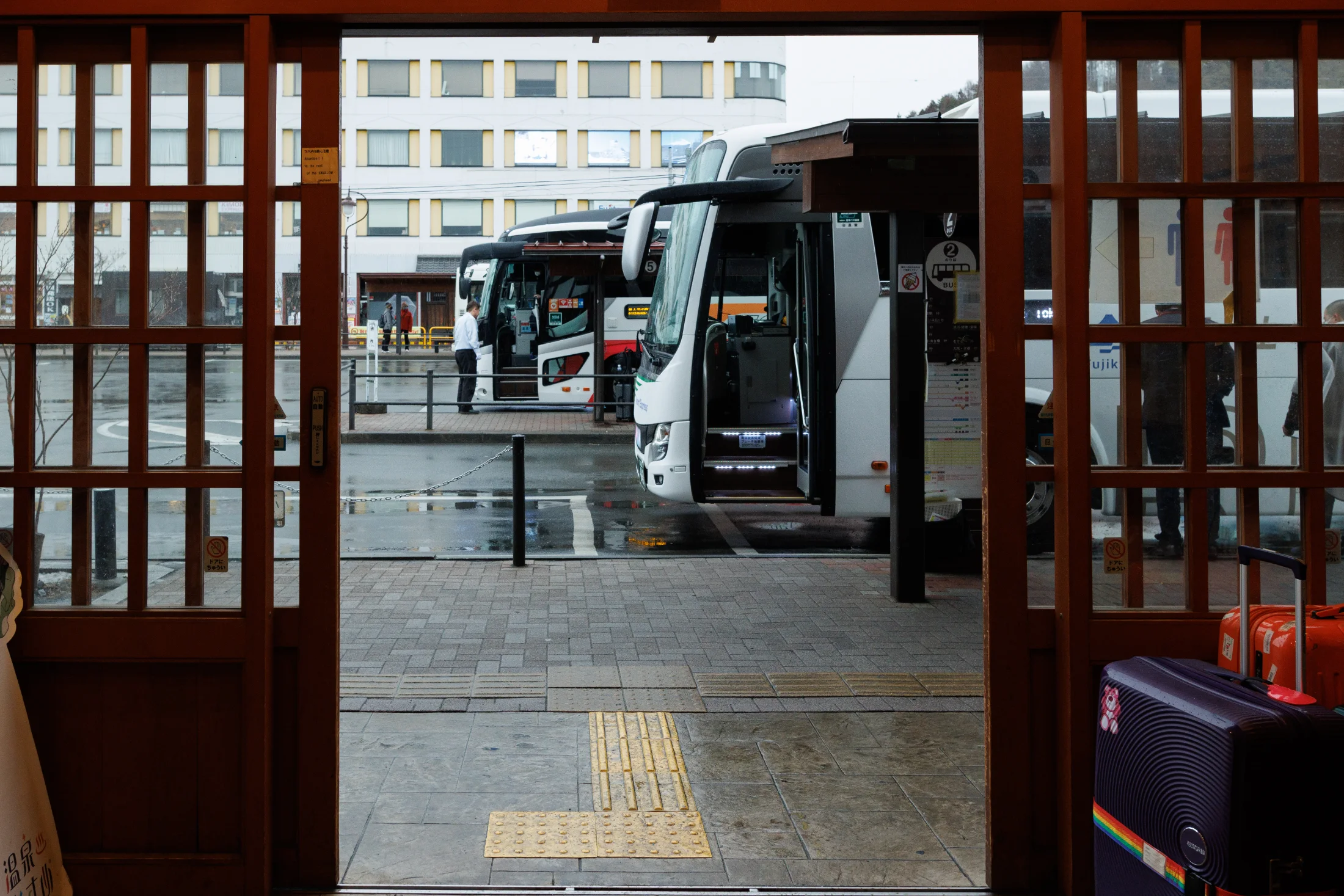
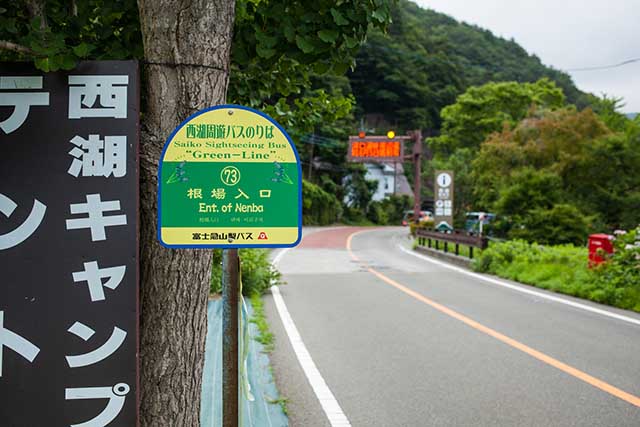
The colour of a bus is helpful, but it should never be your only reference. Always confirm the route name, destination and stop number before boarding.
Reaching the Fuji Five Lakes
By train from Tokyo
The railway is usually the most predictable way to reach the region when road traffic is heavy.
Regular JR Chuo Line services connect Tokyo with Otsuki, where passengers transfer to the Fujikyu Railway for Fujisan or Kawaguchiko.
The limited express Fuji Excursion provides direct services from Shinjuku to the Fujikyu line without a transfer at Otsuki. Seats on the limited express should be reserved, and popular departures can sell out. If the direct train is unavailable, travelling through Otsuki remains a practical alternative.
Check current services on the official Fujikyu Railway website.
By highway bus
Highway buses connect Tokyo with Kawaguchiko, Fujisan Station and parts of Yamanakako. They can be direct and convenient, particularly when your accommodation is near the bus terminal.
However, journey times depend on road traffic. Delays are possible on weekends, public holidays and during major seasonal events. Avoid planning a tight connection immediately after your scheduled arrival.
Reservations and current routes are available through the official highway bus website.
From western Japan
Visitors arriving from Kyoto, Osaka or Nagoya may find Shin-Fuji Station more convenient than travelling through Tokyo.
A scheduled bus connects Shin-Fuji and Fujinomiya with the western side of the region, including Motosuko, before continuing towards Kawaguchiko and Fujisan Station. The service is limited, so the complete journey should be planned before choosing this approach.
Consult the official Mt. Fuji West Side transport guide for the current route and timetable.
Kawaguchiko: the easiest lake without a car
Kawaguchiko has the region’s largest concentration of accommodation, restaurants, museums and transport services. It is the simplest base for a first car-free visit.
The lakeshore begins within walking distance of Kawaguchiko Station, while the Red Line provides access to destinations including the sightseeing boat and ropeway area, the eastern hotel district, lakeside museums and Oishi Park.
This does not mean every attraction is close together. The northern shore is several kilometres long, and walking from one end of the sightseeing area to another can take much longer than expected.
A practical approach is to take the bus to the farthest place you intend to visit, then walk part of the way back along the lakeshore before boarding another bus.
A SIMPLE KAWAGUCHIKO DAY
- 1. Begin at Kawaguchiko Station.
- 2. Take the Red Line to one destination on the north shore.
- 3. Explore one or two nearby places on foot.
- 4. Return before the busiest late-afternoon period.
Avoid selecting five or six attractions simply because they appear on the same bus map.
The Red Line is the most frequent of the western sightseeing routes, but buses can still become crowded during busy periods. Allow time for queues and traffic rather than treating every listed arrival as a guaranteed connection.
Saiko: accessible, but choose your stops
The Green Line connects Kawaguchiko Station with Lake Saiko and the forest area.
Useful stops include Saiko Bat Cave, Saiko Iyashi-no-Sato Nenba, Wild Bird Forest and Fugaku Wind Cave. The route also serves parts of southern and western Kawaguchiko before reaching Saiko.
Saiko is quieter and more dispersed than Kawaguchiko. Its attractions may share the same bus route without being comfortably walkable from one another.
Choose one principal area and, at most, one or two compatible stops. For example, a visit focused on the official Jukai trails should leave enough time for walking rather than adding several caves, the village and a complete lakeside tour.
The Green Line also follows a route through several junctions around Saiko. Check the direction of travel instead of assuming the next bus will return directly to Kawaguchiko.
Current Red, Green and Blue Line information is available through the official Fujikyu sightseeing bus page.
Shojiko and Motosuko: plan around the return bus
The Blue Line travels west from Kawaguchiko through Narusawa, past the Ice Cave and Wind Cave, and onwards towards Shojiko and Motosuko.
This makes the two western lakes reachable without a car, but the service is substantially more limited than transport around central Kawaguchiko.
Start by identifying the final bus you can realistically use to return. Then decide which outward departure gives you enough time at your destination. Missing a bus here may create a long wait or require an expensive taxi.
Shojiko and Motosuko are also more spread out than a transport map may suggest. A stop carrying the name of a lake does not necessarily place you beside the exact viewpoint, beach or trailhead you intended to visit. Check the walking distance between the bus stop and your real destination.
For a relaxed visit, choose either Shojiko or Motosuko as the main destination. Combining both can be possible with the right timetable, but it leaves much less flexibility for walking, weather or delays.
Shojiko
Shojiko is small and quiet, but access is concentrated around particular sections of the shore. Decide whether you are visiting for a viewpoint, a walk, accommodation or the beginning of a hiking route.
Do not assume that you can comfortably circle the lake on foot or move freely between every part of the shore.
Motosuko
Motosuko is larger and has limited development around much of its shoreline. Public transport reaches the main access area, but several scenic or recreational locations remain far from the bus stops.
It is a good destination for visitors who are satisfied with exploring one specific area slowly. It is less suitable for an improvised sequence of distant stops.
Yamanakako and Oshino: a separate transport day
Yamanakako is often grouped with Kawaguchiko in travel plans, but it belongs to a different side of the local bus network.
The Fujikko-Go sightseeing bus connects Kawaguchiko and Fujisan Station with Oshino Hakkai, Hana-no-Miyako Park and multiple areas around Yamanakako. General route buses also operate within the eastern sector.
The route around Yamanakako is directional. A place may look close on the map while requiring a longer bus journey around the lake. Confirm whether your service is travelling clockwise, anticlockwise or directly towards your destination.
The official Fujikko-Go route page provides current stops and timetable information.
Visitors mainly interested in Yamanakako may also consider a direct highway bus rather than travelling first to Kawaguchiko. This can avoid an unnecessary transfer and gives more time beside the lake.
A practical eastern day usually combines:
- Fujisan Station or a direct arrival at Yamanakako;
- Oshino Hakkai or one other inland destination;
- one section of the Yamanakako shoreline;
- a pre-selected return bus.
Trying to combine Yamanakako with Saiko, Shojiko or Motosuko on the same day is rarely enjoyable without private transport.
Which base should you choose?
Stay near Kawaguchiko Station if:
- This is your first visit.
- You want the widest choice of buses.
- You plan to visit Kawaguchiko, Saiko or the western lakes.
- You need restaurants and services in the evening.
- You are making day trips to different parts of the region.
Stay near Fujisan Station if:
- Fujiyoshida is an important part of your visit.
- You want access to Oshino and Yamanakako.
- You prefer a town environment to a lakeside resort.
- You intend to use both the train and eastern bus routes.
Stay beside a quieter lake if:
- The lake itself is your main destination.
- Your accommodation provides pickup or a shuttle.
- Meals are available at or near the accommodation.
- You are comfortable spending the evening locally.
- You have already checked your arrival and departure transport.
A remote lakeside stay can be peaceful, but it should be chosen deliberately. Restaurants may close early, taxis may not be waiting nearby and evening buses can be limited.
Hotel shuttles are often intended for check-in and check-out rather than daily sightseeing. Confirm the operating times and reservation requirements directly with your accommodation.
Using bicycles
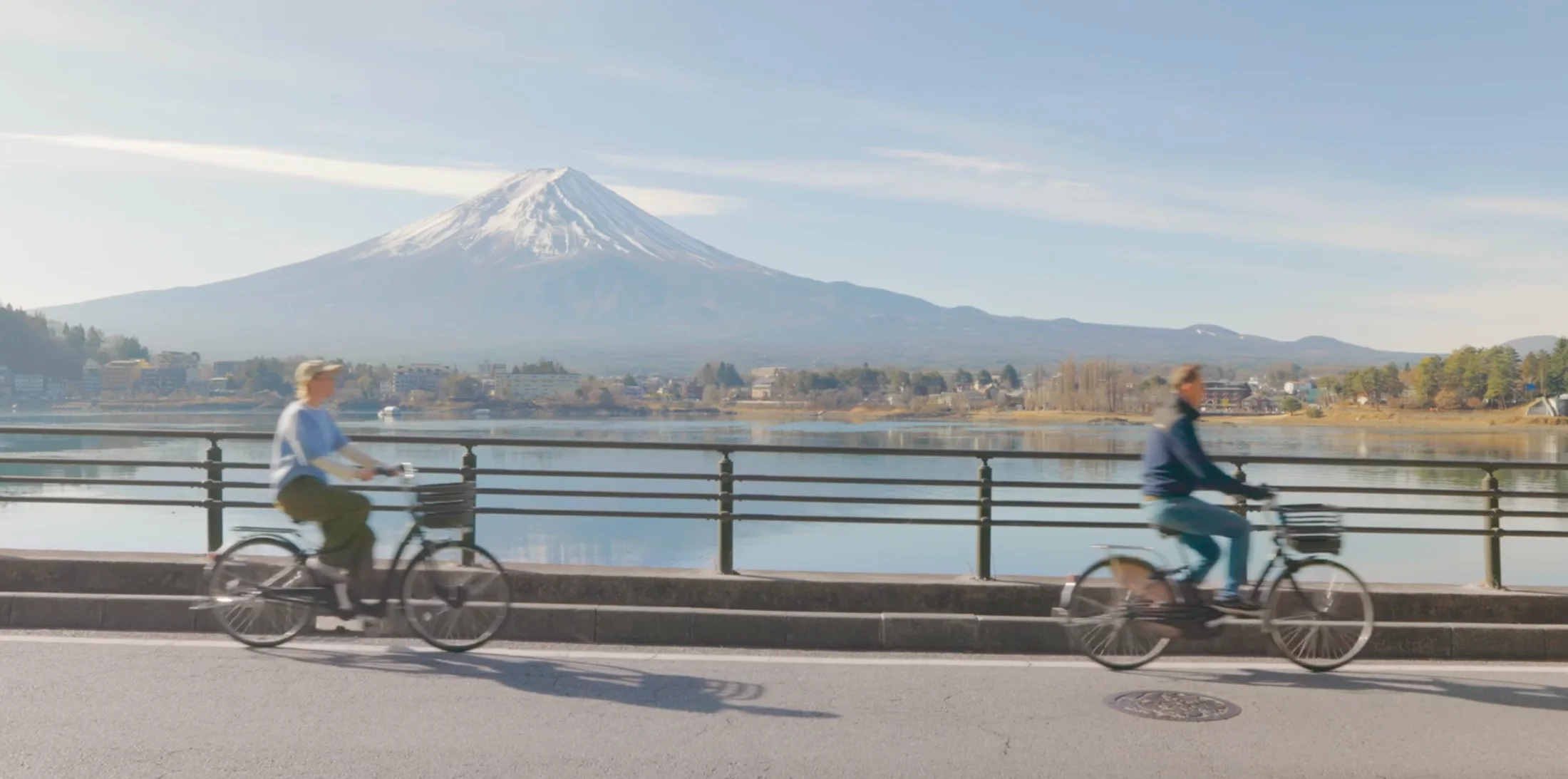
A bicycle can make a car-free visit much more flexible, particularly around Kawaguchiko and Yamanakako.
Electric assistance is useful when travelling beyond the immediate lakeshore or when you are not accustomed to cycling for several hours. However, a bicycle should be used to explore one area—not as a simple replacement for a car across the entire Fuji Five Lakes region.
Before renting, ask about:
- the return deadline;
- locks and parking;
- battery range for an electric bicycle;
- what to do in case of a puncture;
- whether the bicycle may be returned to a different location;
- restrictions during rain, snow or strong winds.
Road conditions vary. Some sections have dedicated paths, while others require sharing narrow roads with cars, buses and tour vehicles. Tunnels, hills and heavy seasonal traffic make several routes between the western lakes unsuitable for inexperienced cyclists.
Walking and combining modes
Walking is most useful when combined with public transport.
Instead of staying on a sightseeing bus all day, use it for the long journey and explore a smaller area on foot. This provides more time to notice the landscape and reduces repeated waiting at busy stops.
Good combinations include:
- Bus to the Kawaguchiko north shore, then walk between nearby museums, gardens and parks.
- Green Line to a recognised Jukai entrance, followed by an official forest trail.
- Bus to Iyashi-no-Sato, then explore the village and nearby lakeside area.
- Fujikko-Go to one part of Yamanakako, followed by a shoreline walk.
- Blue Line to one western lake, with sufficient time to explore before the planned return.
Do not assume that every lake has a continuous pedestrian path. Roads, tunnels, private property and sections without a safe pavement can interrupt what appears to be an easy route on a digital map.
Bus passes and payment
Several one-day and multi-day passes are available, but no single ticket is automatically the best choice for every itinerary.
A western-area pass covers the sightseeing buses around Kawaguchiko, Saiko and Motosuko. A separate eastern-area pass is available for Fujiyoshida, Oshino and Yamanakako. Broader Mount Fuji passes may also include trains and additional bus routes.
Before buying a pass, check:
- whether your exact route is included;
- whether the period of validity matches your stay;
- whether a return journey would cost less as individual fares;
- whether the pass requires a mobile app or internet connection;
- whether it must be displayed on a working smartphone.
Current western passes and routes are listed on the Fujikyu Travel sightseeing bus page. Eastern-area pass information is available through the official mobile ticket page.
Suica and PASMO are accepted on many local buses, and some vehicles also support contactless card payments. Check the payment symbols displayed beside the bus entrance rather than assuming every vehicle accepts the same methods.
Carrying some cash remains sensible, particularly when travelling to the quieter lakes.
How to read the timetable properly
Do not look only at the time you want to depart.
For every journey, identify:
- 1. the exact name and number of your boarding stop;
- 2. the destination displayed on the bus;
- 3. the direction of travel;
- 4. the stop on the opposite side for your return;
- 5. your preferred return bus;
- 6. one earlier return option in case of delays or crowds.
Take a screenshot of the timetable and route map before leaving your accommodation. Mobile reception is generally available around the main settlements, but it should not be your only way of finding the return journey.
At rural stops, check whether the timetable differs between weekdays, weekends, public holidays or seasonal operating periods.
Traffic can delay buses, especially around Kawaguchiko. A delayed bus does not necessarily mean it has been cancelled. However, do not build an itinerary around a short, unprotected connection between two separate routes.
Plan backwards from the final bus.
If the last suitable bus leaves at 16:45, do not plan to arrive at the stop at 16:44. Finish your activity early, locate the correct stop and keep a reasonable margin.
Travelling with luggage
Avoid carrying large suitcases around the sightseeing bus network.
Buses can be crowded, while rural stops may have no lockers, shelter or staffed facilities. Leave luggage at your accommodation, use station storage where available or arrange luggage forwarding between major destinations.
If you are changing accommodation, complete the transfer first or have your luggage sent ahead. A sightseeing day involving Motosuko, several buses and a large suitcase is rarely comfortable.
When a taxi becomes useful
Taxis are useful for:
- reaching accommodation away from a bus route;
- returning after missing a connection;
- travelling with small children or substantial luggage;
- connecting two places that are geographically close but poorly linked by bus;
- starting or finishing a walk at a less convenient trailhead.
Taxis are normally easiest to find at Kawaguchiko and Fujisan stations. Around the quieter lakes, arrange one in advance rather than expecting a vehicle to be waiting nearby.
For two or more people, a planned taxi for one difficult section can sometimes be more practical than restructuring the entire day around a limited bus.
When private transport makes sense
Public transport works well when you want to explore one zone slowly.
Private transport becomes more valuable when you want to:
- visit several different lakes in one day;
- reach quiet areas away from the principal bus stops;
- combine an early activity with distant afternoon visits;
- travel with young children or reduced mobility;
- change the plan according to weather and Mount Fuji visibility;
- return after regular sightseeing buses become limited.
Hiring a guide and vehicle does not have to mean visiting the busiest viewpoints. It can provide access to the quieter western lakes while allowing the day to be adapted to the people travelling.
Explore the region without driving
FTC offers private guided tours adapted to the interests and pace of each group. A day may include a morning activity, Lake Saiko, Jukai, local villages, Fujiyoshida or the quieter Fuji lakes rather than following a fixed sightseeing circuit.
FTC BOOKING PORTALCheck availability hereRealistic car-free itineraries
If you have one day
Choose one area:
- Kawaguchiko;
- Saiko and one part of Jukai;
- Oshino and Yamanakako;
- Shojiko or Motosuko.
Do not attempt to visit all five lakes.
If you have two days
A balanced first visit could include:
- Day one: Kawaguchiko and its north shore;
- Day two: Saiko, Jukai and one nearby site.
Alternatively:
- Day one: Fujiyoshida and Oshino;
- Day two: Yamanakako.
If you have three or more days
You can begin combining the western and eastern sectors, provided each day still has a clear geographical focus.
Shojiko and Motosuko deserve a dedicated day rather than being treated as brief stops between more famous locations.
Final checklist
Before leaving each morning:
- Check the official timetable for that day.
- Confirm the route and direction.
- Save the return journey offline.
- Carry some cash.
- Keep your phone charged.
- Allow for traffic delays.
- Check the weather.
- Avoid unnecessary luggage.
- Choose fewer destinations than you think you can fit in.
- Know what you will do if you miss the intended bus.
The Fuji Five Lakes are not difficult to visit without a car, but they reward a different style of travel.
Rather than trying to collect five lakes in a single day, choose one landscape, use transport for the necessary distance and give yourself time to explore once you arrive.
For a practical comparison of the lakes, see What “Fuji Five Lakes” Actually Means.