
Morning Zazen at the Foot of Mount Fuji
Beginning the day in stillness at Kaizo-ji
Most mornings around Lake Kawaguchiko begin with movement.
Buses leave the station, cameras appear along the lakeshore, and visitors begin searching the sky for the first clear view of Mount Fuji. At Kaizo-ji, in the village of Oishi, the morning begins differently.
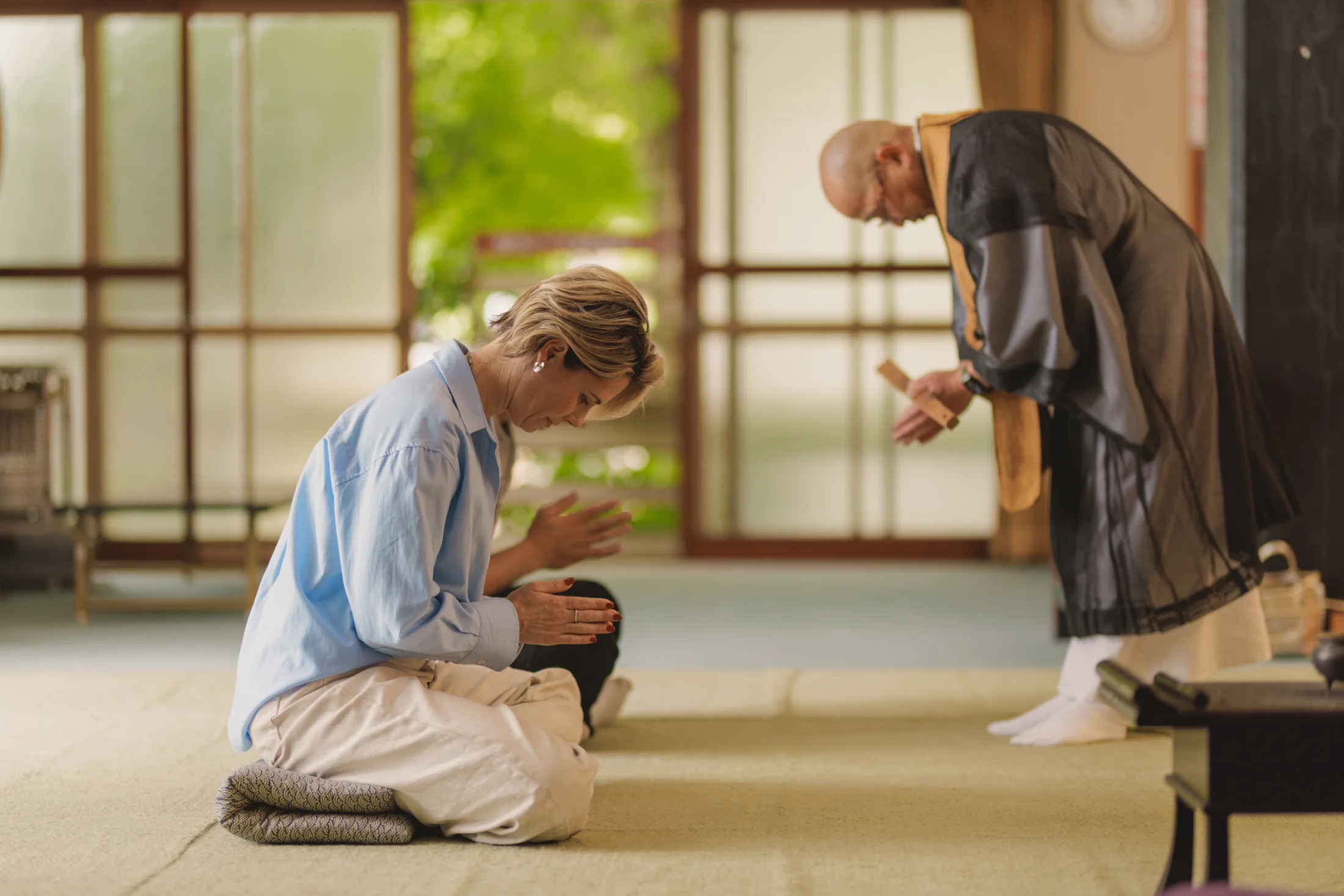
Shoes are removed. Voices become quieter. A Buddhist monk introduces the basic posture and attention of zazen, and for a while there is nowhere else to go and nothing else to collect.
After the sitting, freshly prepared matcha provides a gradual return to conversation. On a clear morning, Mount Fuji may be visible from the temple grounds. When the mountain remains behind the clouds, the experience continues without it.
This is not a sightseeing stop with meditation added as decoration. It is an opportunity to enter a working local temple, receive direct instruction and spend part of the morning participating in a practice that usually remains outside a visitor’s itinerary. The experience is currently designed for both beginners and people who have meditated before.
For broader context on the area and its changing views, see Why Mount Fuji Is Not Always Visible and JNTO’s Fuji Five Lakes itinerary.
FTC BOOKING PORTALCheck availability hereMorning Zazen & Matcha
Oishi · Approximately 1 hr 30 min · English or French guidance · Small group
Mount Fuji visibility depends on the weather. Temple access may occasionally change because of religious ceremonies or other temple obligations.
A temple before it is an attraction
The experience takes place at Ryumizuyama Kaizo-ji, a Buddhist temple in Oishi, on the northern side of Lake Kawaguchiko.
Participants do not arrive at the temple independently. The published meeting instructions ask guests to meet their guide at NaturaBase in Funatsu, from where they are transported to the location. This keeps the visit coordinated and avoids treating the temple like a conventional walk-in tourist attraction.
Kaizo-ji remains an active religious place. The current activity information warns that a departure may occasionally have to be rescheduled or cancelled when an unforeseen ceremony or temple responsibility takes priority. That possibility is not a flaw in the experience. It is evidence that the temple exists first for its community and religious life, not as a permanent stage for visitors.
Guests are therefore entering a space on its own terms. The appropriate response is not solemnity for its own sake, but attention: listening to the instructions, following the guide’s lead and allowing the rhythm of the temple to determine the visit.
What zazen asks you to do
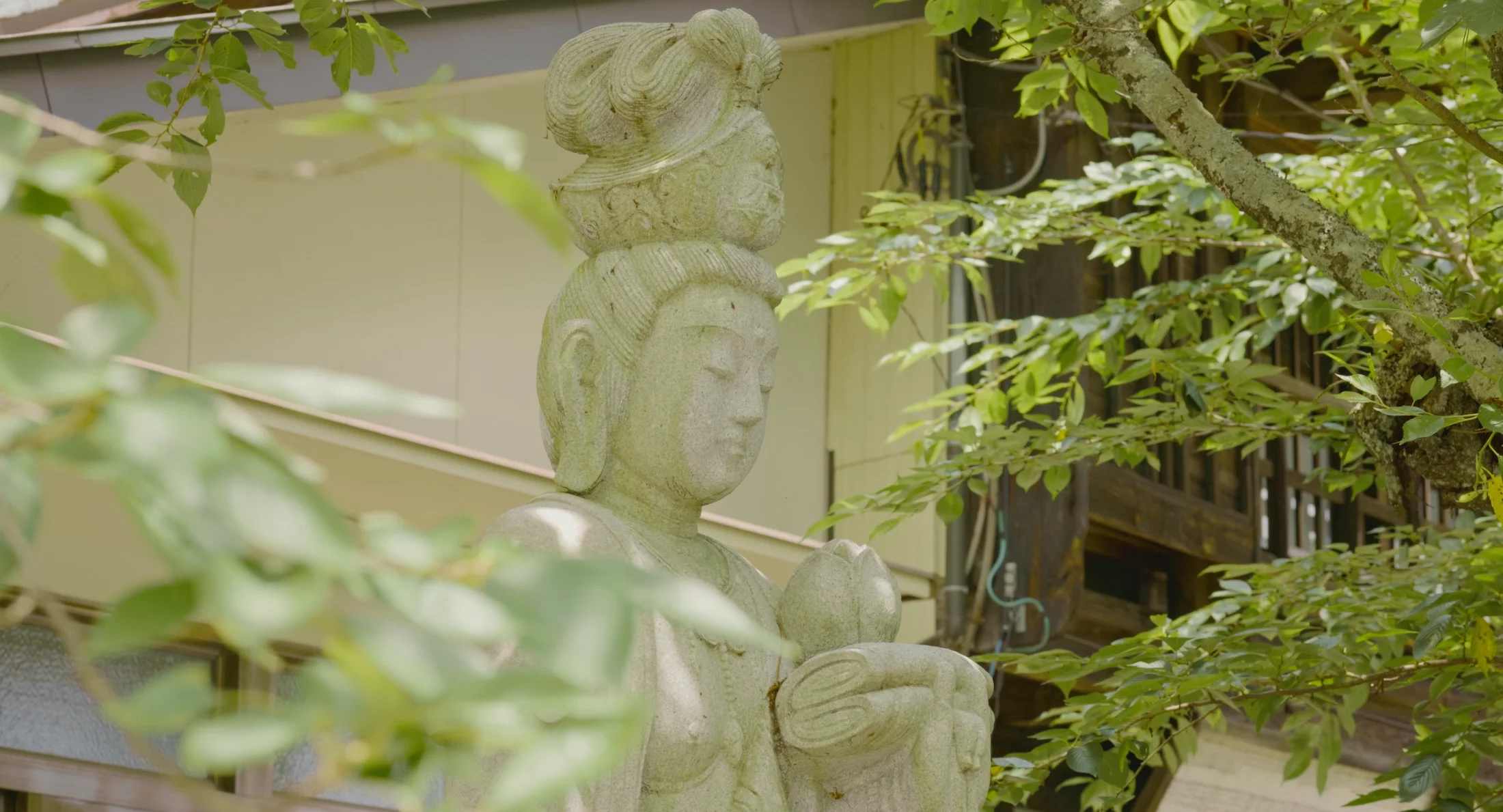
The word zazen refers to seated meditation. In its simplest visible form, the practice begins with the body: finding a stable position, sitting upright, allowing unnecessary tension to ease and bringing attention to the breath.
Official Japanese Zen guidance places particular importance on the relationship between posture, breathing and attention. The exact instructions and emphasis can vary according to the teacher and tradition, which is why receiving guidance from the monk is an essential part of the session rather than a formality before it begins.
You are not expected to arrive knowing how to sit correctly. The monk explains the fundamentals before the quiet period begins, giving participants a practical point of entry into zazen.
Nor is the objective to perform perfect calm.
Thoughts may continue. The body may need time to settle. A few minutes can feel unexpectedly long when there is no screen, conversation or next task to occupy them. The experience is not a competition to empty the mind, and no particular revelation is promised.
The practice begins simply by noticing what happens when movement stops.
You do not need to sit perfectly
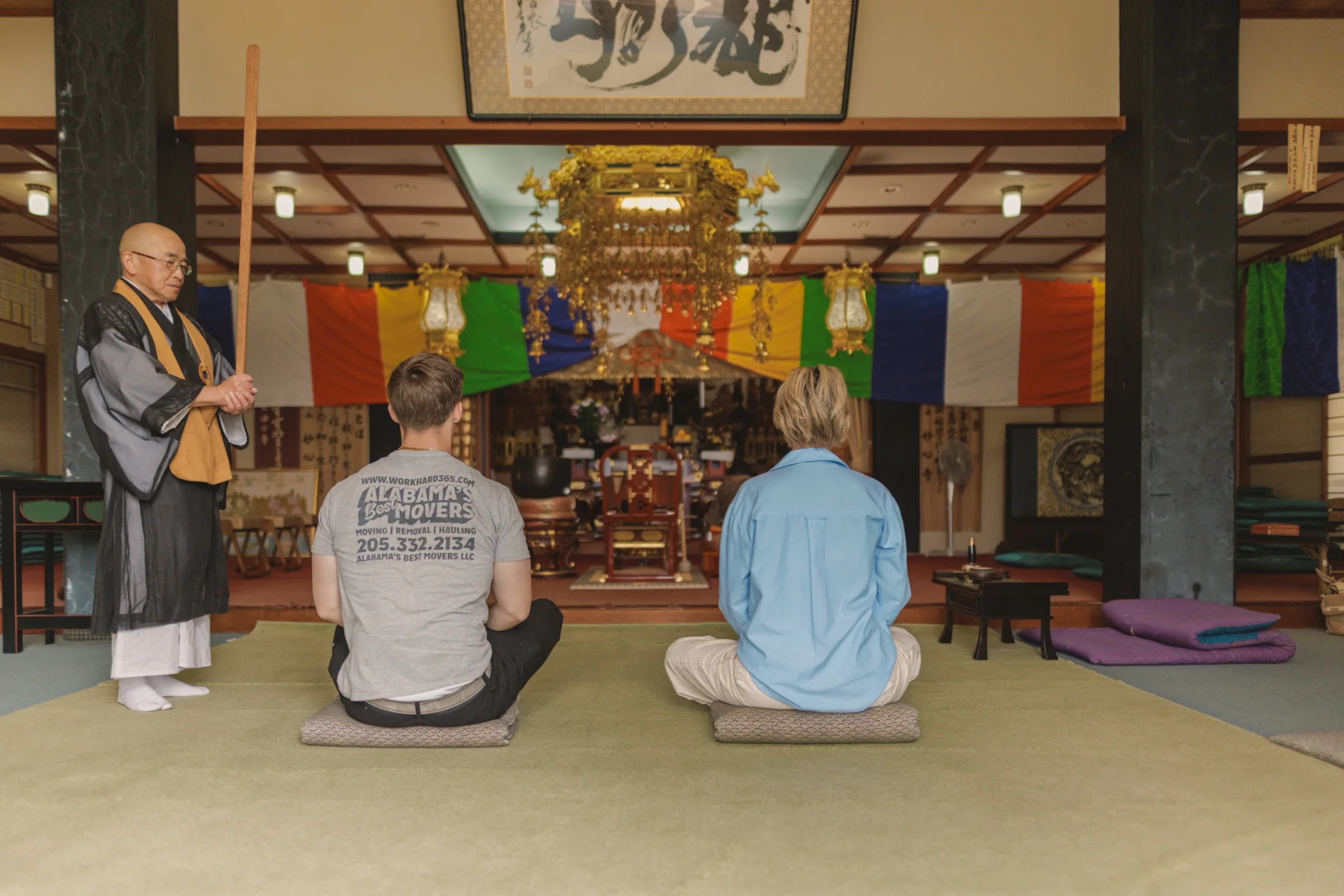
For many first-time participants, the most immediate question is physical rather than philosophical: How am I supposed to sit?
The current guidance recommends comfortable clothing that allows the legs and hips to move freely. Restrictive denim is specifically discouraged. Guests who cannot sit comfortably cross-legged may use a chair, although anyone with an existing back or spinal condition should examine the current participation restrictions before booking.
This flexibility matters. Zazen has a formal physical structure, but the experience should not become an endurance test or require visitors to conceal discomfort.
The monk can help each participant find an appropriate position before the sitting begins. Once the body is stable enough, attention can move away from the question of how the posture looks and towards the experience of remaining there.
The room changes when conversation stops
A temple is often visited visually.
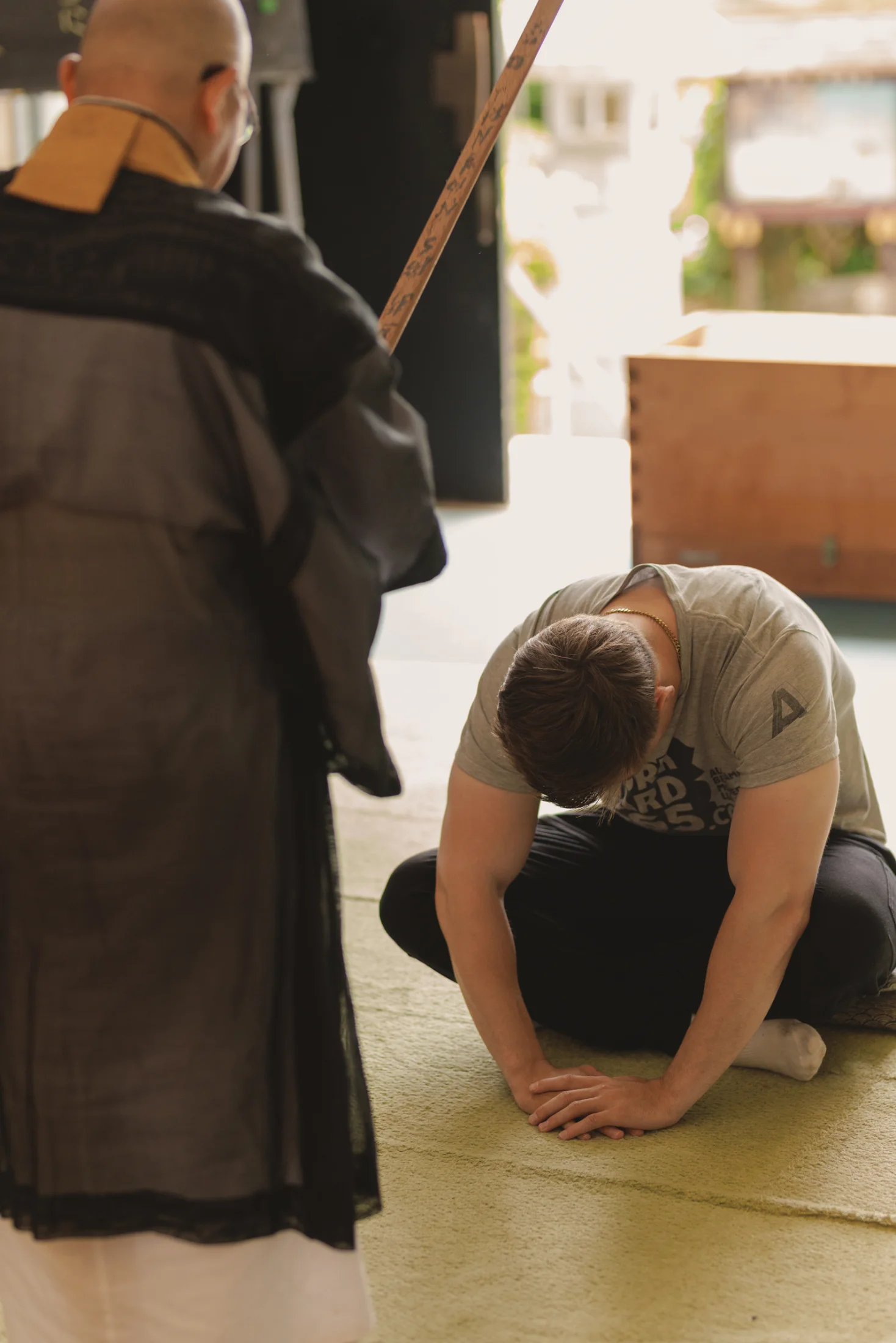
People look at the altar, the architecture, the objects and the view outside. During zazen, the relationship with the room changes. Instead of moving through it, the group remains in one place long enough for quieter details to emerge.
The light changes gradually. Small sounds that would normally disappear beneath conversation become noticeable. The presence of other participants can be felt without anyone needing to speak.
This is one reason morning suits the experience. The day has begun, but it has not yet accumulated its usual rhythm. There are fewer impressions to set aside and fewer places that everyone feels they must reach next.
The NaturaBase programme is currently organised as a short, approachable introduction rather than a retreat. The overall activity lasts approximately 90 minutes, with around one hour spent at the temple. That is enough time to receive instruction, sit and share matcha, while still leaving the remainder of the day open for exploring the Fuji Five Lakes.
Matcha after the sitting
When the period of zazen ends, the transition is not immediate.
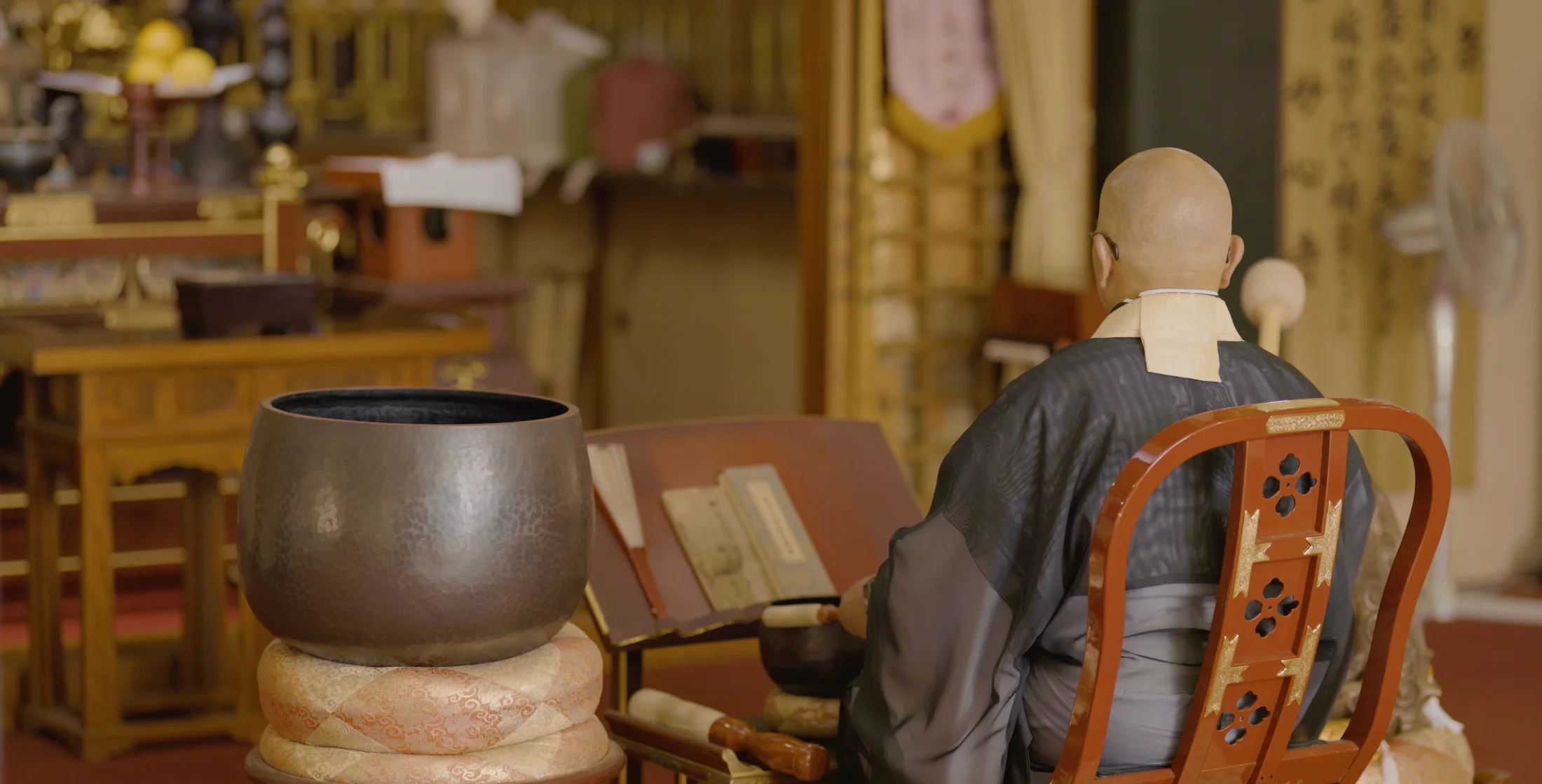
Freshly prepared matcha is served after the meditation, allowing the group to remain in the atmosphere of the temple before returning to the movement of the day.
The first sensation may be the warmth of the bowl, followed by the bitterness and vegetal flavour of the tea. Conversation can return slowly: questions about the practice, observations from the sitting or explanations offered by the monk and guide.
The current programme should not be described as a complete formal tea-ceremony lesson. Its published description promises matcha following zazen, not instruction in the full procedures of chanoyu. This distinction makes the presentation more accurate and prevents guests from arriving with expectations of costumes, elaborate utensils or a staged ceremony.
Here, matcha functions as the final part of a morning at the temple: something prepared, received and consumed with attention.
Mount Fuji is part of the place, not the performance
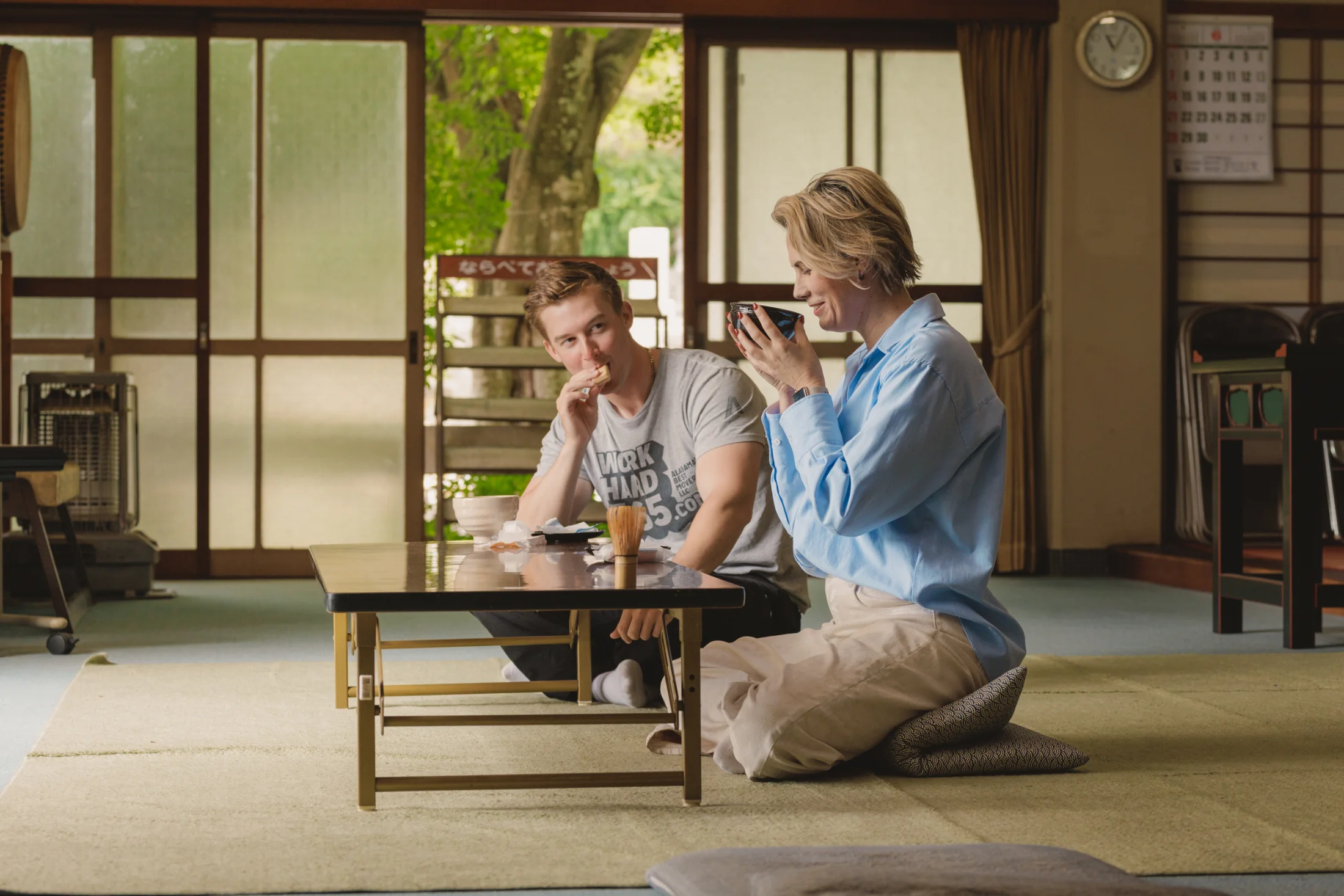
On clear days, visitors may see Mount Fuji from the temple grounds. The local municipality has previously described Kaizo-ji as a morning zazen location offering an exceptional view of the mountain. NaturaBase’s current presentation also makes clear that visibility depends on the conditions.
The view can add something memorable to the morning, particularly after leaving the meditation space. But it should not become the measure by which the experience succeeds or fails.
Mount Fuji is frequently hidden by cloud, even when the surrounding weather appears pleasant. No operator can promise when the mountain will emerge or how long it will remain visible.
This uncertainty belongs naturally to the experience. Zazen does not control the weather, and the temple does not need the mountain to justify its existence.
When Fuji is visible, it becomes part of the return to the outside world. When it is not, the session still offers the monk’s instruction, the temple setting, the sitting itself and the bowl of matcha that follows.
A new activity with a local precedent
The current NaturaBase product is new, but the idea of welcoming visitors for morning zazen at Kaizo-ji did not appear from nowhere.
A Fujikawaguchiko town tourism publication documented an initiative organised by the Oishi Tourism Association in which staying visitors participated in early-morning zazen and sutra copying at the same temple. The municipality presented it as part of a broader effort to develop meaningful morning and evening experiences for travellers spending more time in the area.
This is an important part of the activity’s identity.
It is not an imported “wellness concept” placed beside Mount Fuji because meditation is currently fashionable. It grows from a temple that has previously opened this part of its practice to visitors and from a local effort to help travellers encounter more than the region’s major viewpoints.
The present experience makes that access easier for international guests by providing a meeting point, transportation and English- or French-language support.
"It is not an imported “wellness concept” placed beside Mount Fuji because meditation is currently fashionable. "
The activity itself is new.
The temple, the practice and Kaizo-ji’s history of welcoming visitors for morning zazen are not.
Who is this experience for?
This morning is particularly suited to travellers who are curious about Japanese religious and cultural practices but do not know how to approach a local temple independently.
Previous meditation experience is unnecessary. Physical fitness is not a central part of the programme, although participants need to remain seated for part of the session and should check the current health and age requirements before booking. A chair can be provided when sitting cross-legged is not appropriate.
The experience is likely to appeal to:
- first-time visitors looking for a cultural activity beyond the main sightseeing circuit;
- solo travellers, couples or small groups comfortable with periods of quiet;
- guests interested in Buddhism, meditation or local community life;
- visitors seeking a structured morning activity before continuing around Lake Kawaguchiko.
It may be less appropriate for someone expecting a theatrical performance, an extensive lesson in Buddhist doctrine or a formal tea ceremony.
The value lies in its modest scale: a small group, direct instruction and time inside a place that continues to function independently of tourism.
Planning your morning
The meeting point is NaturaBase at 4010 Funatsu, Fujikawaguchiko . Guests should meet the guide there rather than travelling directly to Kaizo-ji. The guide then accompanies the group to the temple in Oishi.
The published programme currently lasts approximately one hour and thirty minutes. English and French guidance are listed, and the group is limited to a maximum of eight participants. Matcha is included.
Wear clean, comfortable clothing that allows you to sit without restriction. Loose trousers are generally preferable to tight denim. Socks should also be in good condition, as shoes will ordinarily be removed when entering a Japanese temple interior.
The exact starting time, minimum age, price and availability should be taken from the live activity information. Because Kaizo-ji is active, guests should also understand that an unusual religious obligation may occasionally require the session to be moved or cancelled.
What is zazen?
Zazen is a form of seated meditation associated with Japanese Zen practice. Instruction generally begins with establishing a stable posture, regulating the breath and directing attention while remaining seated. The monk leading the experience explains the approach used during the session.
Do I need previous meditation experience?
No. The activity is presented as suitable for beginners as well as people who already practise meditation. Basic instruction is provided before the sitting begins.
Do I have to sit cross-legged?
Not necessarily. The current activity information states that chairs are available for guests who need an alternative position. Any back, spinal or mobility concern should nevertheless be checked against the current participation requirements before booking.
Is this a formal Japanese tea ceremony?
No formal tea-ceremony lesson is currently advertised. Freshly prepared matcha is served after the zazen session, but the activity should not be presented as a complete chanoyu experience unless its programme later changes.
Is Mount Fuji guaranteed to be visible?
No. Mount Fuji can be obscured by cloud at any time. The temple offers views on clear days, but visibility is not guaranteed and does not affect whether the zazen and matcha portions can take place.
Where does the activity begin?
Participants meet the guide at NaturaBase in Funatsu. The published instructions indicate that the guide then transports the group to the temple. Guests should not travel directly to Kaizo-ji unless explicitly instructed to do so.
How long does the experience take?
The total published duration is approximately one hour and thirty minutes, including the journey from the meeting point. Around one hour is allocated to the temple visit itself.
What should I wear?
Wear comfortable, non-restrictive clothing suitable for sitting. Tight denim is discouraged. Clean socks are advisable because shoes are normally removed inside Japanese temple buildings.
Can the activity be cancelled by the temple?
In rare cases, yes. Kaizo-ji is an active temple, and an unforeseen religious ceremony or other obligation may require the activity to be rescheduled or cancelled.
Is the experience conducted in English?
English and French are currently listed as available support languages. The live booking page should remain authoritative because guide availability may change.
FTC BOOKING PORTALCheck availability here